


Published : 20 Sep 2015, 10:16 AM
Updated : 19 Oct 2022, 06:58 PM


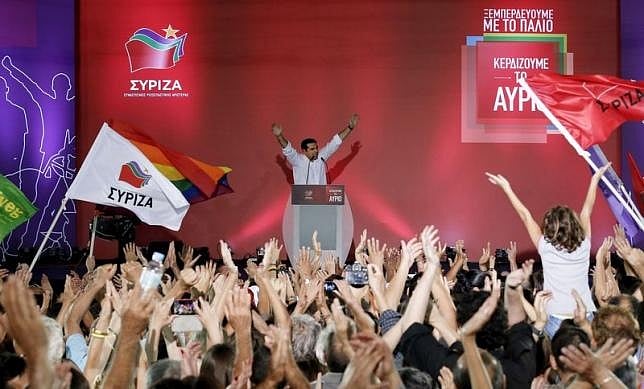
His Syriza party is in a tight election race with the conservative New Democracy party of Vangelis Meimarakis, who accuses Tsipras of incompetence in dealing with international creditors who have been bailing out the debt-strapped country.
Opinion polls suggest Tsipras may have the edge, but so narrow a one that a win for Meimarakis would not be surprising.
Neither party, however, is expected to get the roughly 38 percent of the vote generally seen as needed for a clear majority in the 300-seat parliament.
That means whoever gets the most votes - and a 50-seat bonus that goes with it - will need to form a coalition, probably with one or both of the small centrist To Potami and socialist PASOK parties.
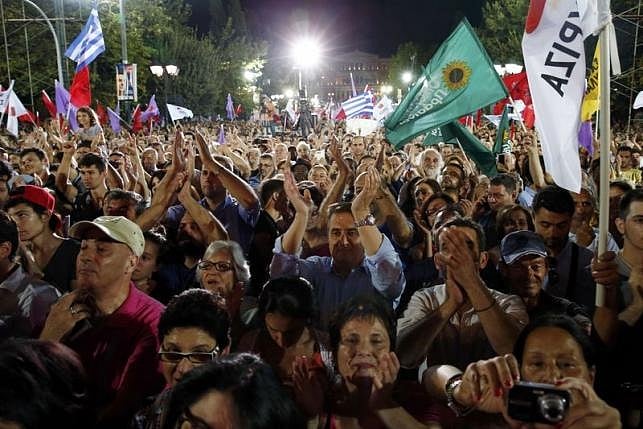
Supporters wave flags as former Greek prime minister and leader of leftist Syriza party Alexis Tsipras (not pictured) delivers his speech during the final campaign rally prior to Sunday's general elections on main Syntagma square in Athens, Greece, September 18, 2015. REUTERS
The new government will also have to arrange a recapitalisation of the country's banks, and the unwinding of capital controls imposed in June to prevent an implosion of the financial system.
Both Syriza and New Democracy have pledged to do that - but there are differences on the margins over such issues as labour reform.
Weary Greeks
Sunday's vote will be the third national ballot this year after the general election in January that brought Tsipras to power and a referendum in July on whether to accept a new bailout deal and austerity plan from the European Union.
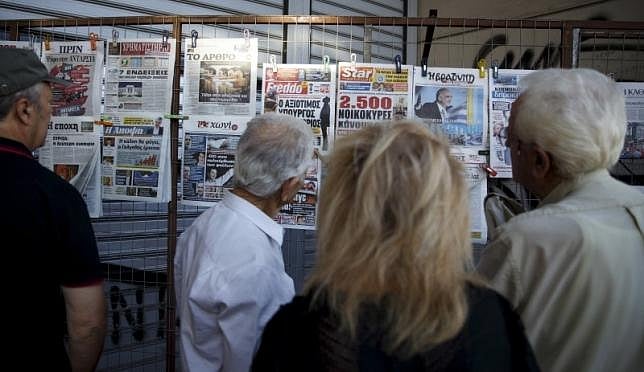
People read newspapers hanging outside a kiosk in Omonia Square in central Athens, Greece, September 19, 2015. REUTERS
He then resigned and called a snap election.
Multiple trips to the ballot box and disappointment at being rebuffed by Europe, however, have sapped the energy of many Greeks for this election - which has been relatively low key.
"It would have been better not to have these elections. Three elections within the same year is quite hard on the people but as a citizen I will do my duty," said Athens resident Yannis Partidas.
On the eastern Aegean island of Kalymnos, a taxi driver who gave his name only as Manolis was less tolerant of the situation and the years of economic hardship Greeks have endured,
"I don't care, probably I won't even go (to vote)," he told a visiting Reuters reporter.
"All the politicians are the same - idiots."







