


Published : 03 Mar 2020, 07:39 PM
Updated : 17 Oct 2022, 11:03 AM


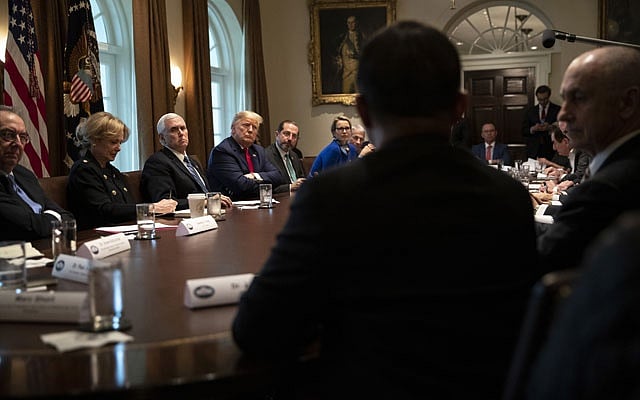
In the United States, where there are now more than 100 confirmed cases in 15 states and six deaths linked to the virus, the Trump administration sought to project an image of control even as concerns emerged about early missteps, including defective diagnostic kits and highly restrictive rules for administering the tests, both of which may have contributed to the early spread of the virus.
Officials promised to speed up delivery of testing kits, saying that they hoped to distribute more than 1 million by the end of the week.
In New York, where a 39-year-old health care worker tested positive for the virus after going to the hospital with mild respiratory symptoms, health officials said they would no longer need to send tests to the headquarters of the Centers for Disease Control in Atlanta but could perform tests in labs locally, speeding up the process.
As the number of global infections surged past 90,000, financial policymakers from the world’s seven largest economies, known as the Group of 7, discussed Tuesday ways to limit the economic fallout.
President Donald Trump, in an early morning post on Twitter, called for a “big” interest rate cut “to make up for China’s coronavirus situation and slowdown.”
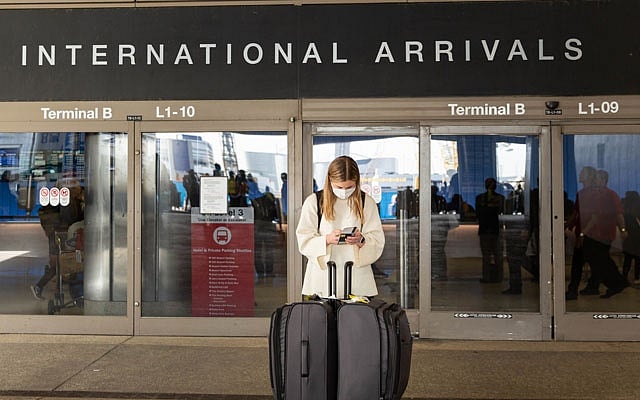
A traveller wears a mask outside the international arrivals terminal at Los Angeles International Airport in Los Angeles, Friday, Feb. 28, 2020. The number of known coronavirus cases in the US spiked this weekend, with dozens of new diagnoses bringing the total to at least 96. (Allison Zaucha/The New York Times)
But the epidemic showed little signs of waning elsewhere.
Iran remained a source of concern in the Middle East, with nearby Bahrain and Kuwait reporting dozens of new cases tied to the Iranian outbreak.
Tehran has confirmed more than 2,300 cases, but public health experts have expressed concern that authorities are understating the true breadth of the epidemic there.
Just three weeks ago, South Korea had only a handful of cases. Now there are nearly 5,000, demonstrating how quickly the virus can spread.
And officials in Italy saw the number of new cases push past 2,000 on Tuesday, even as the government sought to restore some sense of normality in Milan, the city closest to the hardest-hit areas in the country’s north.
Museums in Milan were permitted to reopen, but visitors were asked to stand about 3 feet apart.

Major cities across China have announced new travel restrictions on people who have recently visited countries where coronavirus infections are on the rise.
On Tuesday, authorities in Shanghai said that all travellers entering the city who had visited countries with significant outbreaks within the past two weeks must undergo a 14-day quarantine at home or at an approved isolation centre. Officials in Guangdong province announced similar measures, state news outlets reported Tuesday.
And a city official in Beijing announced Tuesday that all arrivals into the capital from countries struggling with outbreaks — including Iran, Italy, Japan and South Korea — would be subject to a 14-day quarantine.
At least 13 people in China were found to be infected with the coronavirus after returning from countries such as Iran and Italy, two places that have seen some of the most severe outbreaks outside Asia in recent days, according to authorities.
A 31-year-old Chinese woman had worked in a restaurant in the Italian city of Bergamo before returning home to Qingtian County, in the southeastern province of Zhejiang, where she tested positive for the virus. Seven more people who worked at the same restaurant in Bergamo were later found to be infected after they returned to Zhejiang, local authorities said.
In recent days, county officials in Qingtian have urged overseas residents to reconsider any plans to return home, citing the challenges they could pose to China’s efforts to control the epidemic.
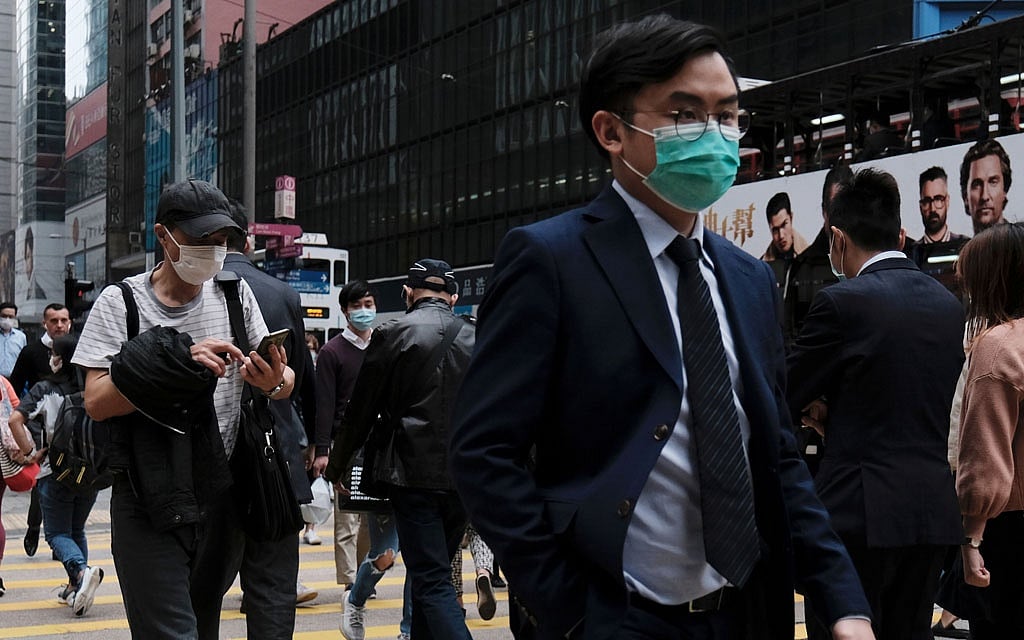
People wear protective face masks as they take their lunch breaks at the financial Central district, following the outbreak of the new coronavirus, in Hong Kong, China Mar 2, 2020. REUTERS
More than 500 Hong Kong residents stranded in Hubei province for more than a month will be repatriated on charter flights in the coming days, Carrie Lam, Hong Kong’s top official, announced Tuesday.
Those scheduled for repatriation include pregnant women, people requiring medical treatment or surgery, and 11 students scheduled to take university entrance exams, said Patrick Nip, secretary for constitutional and mainland affairs.
The evacuation comes after weeks of planning and mounting pressure from lawmakers. The Hong Kong government had previously cited public health risks and logistical challenges, as well as inadequate quarantine facilities, as a reason for not acting sooner.
“We do not feel that we have delayed the return of Hong Kong people stranded in Hubei,” Lam said. “As you are aware, even up to this point, Hubei province, particularly the city of Wuhan, is still under a very challenging situation,” she added, referring to the region at the centre of the outbreak in China.
The evacuated residents will be quarantined at a converted public housing estate in the New Territories district of Fo Tan.
©2020 The New York Times Company







