


Published : 09 Jul 2016, 11:04 AM
Updated : 19 Oct 2022, 05:21 PM




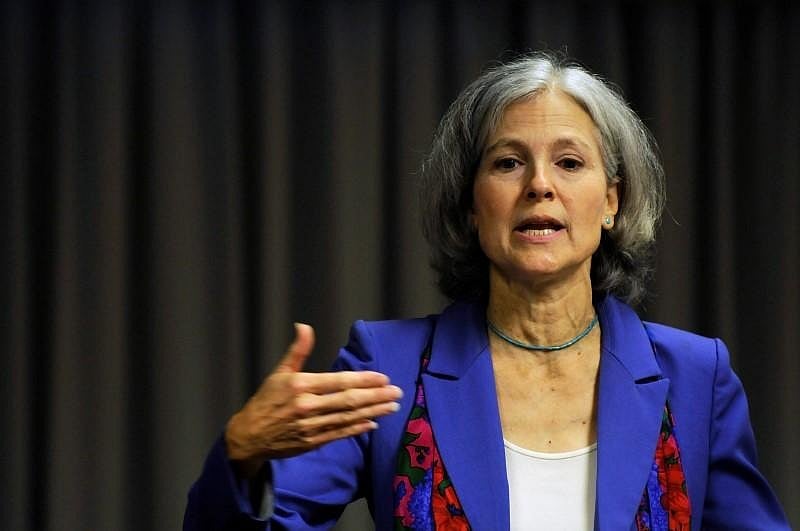
Based on 2,153 interviews, Friday's poll results suggest a strong potential for a third-party candidate - like Gary Johnson of the Libertarian Party or Jill Stein of the Green Party - to take enough of the vote in the Nov 8 presidential election to influence its outcome.
According to the Jul 1-8 poll, 21 percent of likely voters will not back Trump or Clinton.
That compares with about 13 percent of likely voters who opted out of the two main choices at the same point in the 2012 race between incumbent President Barack Obama and Republican challenger Mitt Romney.
The poll also showed a majority of American voters have an overall "unfavourable" view of both main candidates, with 46 percent of Clinton supporters and 47 percent of Trump supporters saying their top priority when voting will be to stop the opposing candidate from reaching the White House.
Demand for an alternative could be decisive in hotly contested battleground states. In Florida in 2012, for instance, Obama won by less than 1 percentage point.
If this year's race is just as tight, third-party candidates could draw enough support to flip the state from one major party to the other.
Despite this, both Johnson and Stein have a problem that make their influence hard to predict - most voters still do not know who they are.
Of likely voters, 23 percent say they are at least "somewhat familiar" with Johnson, a former governor of New Mexico. That drops to 16 percent for Stein, a physician.
Spoiler alert
Johnson could appeal to both liberals and conservatives. He wants to legalise marijuana and replace income and payroll taxes with a consumption tax.
U.S. Libertarian Party presidential candidate Gary Johnson speaks during the "Politicon" convention in Pasadena, California, U.S., June 25, 2016. Reuters
Green Party presidential candidate Jill Stein speaks at a news conference at the Green Party presidential nominating convention in Baltimore, Maryland, July 14, 2012. Reuters













