


Published : 11 Nov 2021, 08:27 AM
Updated : 14 Oct 2022, 07:02 PM


Six years later, the current standoff at the border of Poland and Belarus has echoes of that crisis, but this time, European officials insist that member states are united when it comes to defending Europe’s borders and that uncontrolled immigration is over.
What is different, the Europeans say, is that this crisis is entirely manufactured by the dictator of Belarus, Alexander Lukashenko, as a response to sanctions that the Europeans imposed on his country in the face of a stolen election and a vicious repression of domestic dissent.
“This area between the Poland and Belarus borders is not a migration issue, but part of the aggression of Lukashenko toward Poland, Lithuania and Latvia, with the aim to destabilize the EU,” Ylva Johansson, the European commissioner for home affairs, said in an interview over the summer.
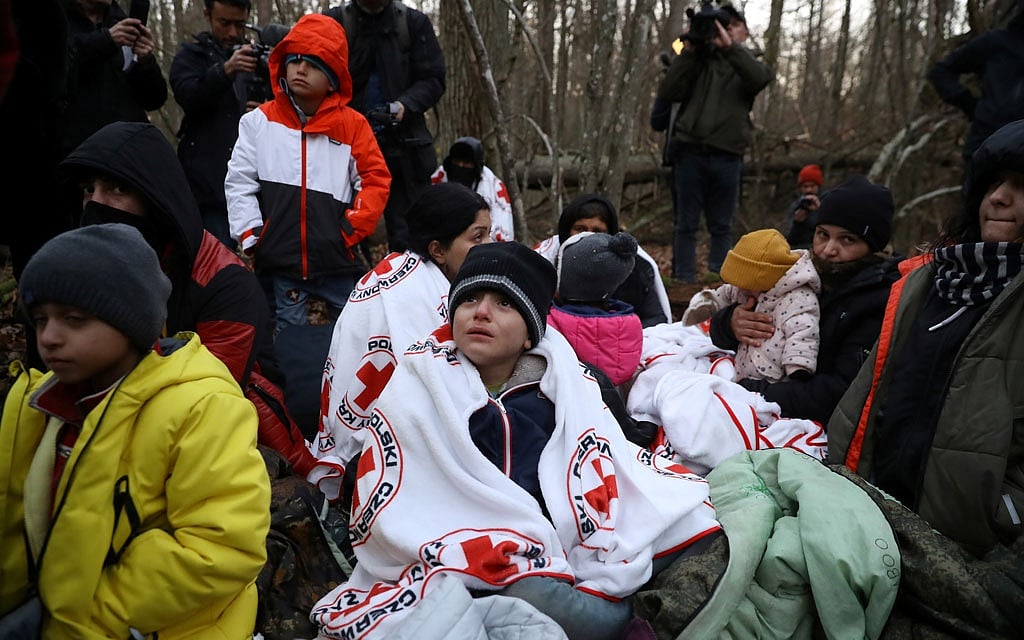
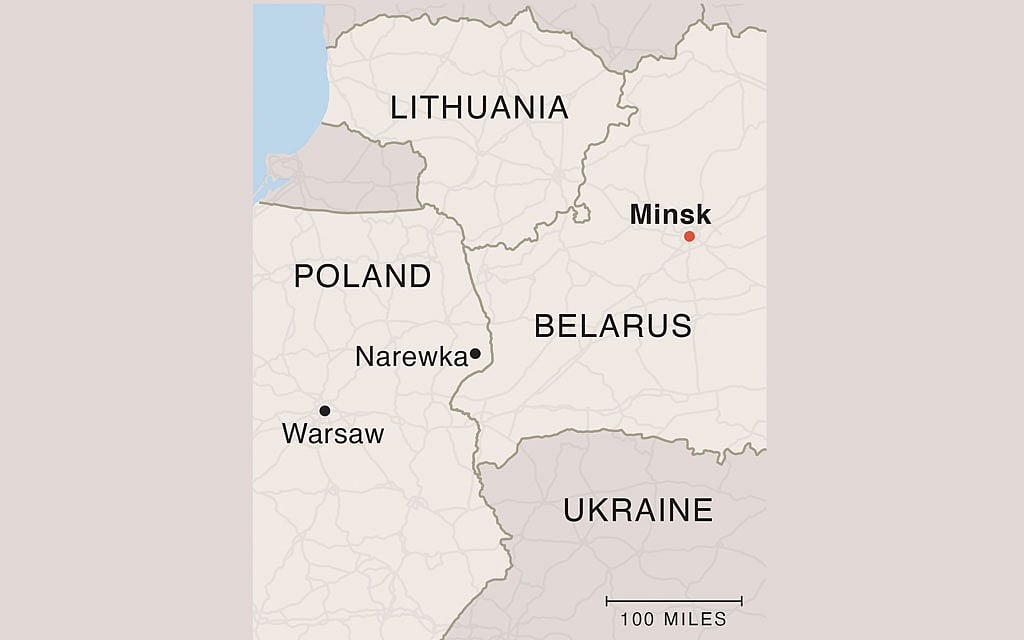
The crisis began in late August, when growing groups of migrants, mostly from the Middle East, began massing at the borders of Poland, Latvia and Lithuania, shepherded there by Belarus. That movement has now become much larger, with at least 4,000 or more men, women and children trapped in the freezing cold, without proper shelter or toilets, between Belarus and its neighbours.
Both Poland and Lithuania declared states of emergency and fortified their borders, while Belarusian forces have in some cases aided the migrants in breaking through. The border regions have been shut to journalists and aid workers, but upsetting videos and pictures of the migrants facing barbed wire have been distributed, often by Belarus itself.
On Wednesday, the German foreign minister, Heiko Maas, called Lukashenko’s tactics a “cynical power play” and said that blackmail must not be allowed to succeed. In Washington the president of the European Commission, Ursula von der Leyen, met President Joe Biden and emerged to say that what was transpiring on the Belarus border is “a hybrid attack, not a migration crisis.”
The support for Poland is especially striking while the European Union is locked in a major confrontation with the right-wing Polish government about the supremacy of European law over Polish law and about restrictions on the independence of the judiciary. In that confrontation, Brussels is withholding from Warsaw billions of dollars in funds intended to help economic recovery from the coronavirus pandemic.
Yet in an indication of how seriously Brussels takes the current standoff with Belarus, Charles Michel, president of the European Council, visited Warsaw on Wednesday to meet with Prime Minister Mateusz Morawiecki of Poland to offer solidarity — and even, perhaps, some border funds.
“Poland, which is facing a serious crisis, should enjoy solidarity and unity of the whole European Union,” Michel said. “It is a hybrid attack, a brutal attack, a violent attack and a shameful attack,” he added. “And in the wake of such measures, the only response is to act in a decisive manner, with unity, in line with our core values.”
Faced with the weaponisation of migrants from Belarus, the European Union defends Poland’s hard line even as it withholds funds over rule of law violations. The New York Times
Moscow supports Lukashenko with money and personnel. Unsurprisingly, the Kremlin said, Putin told Merkel that there was nothing he could do and that the European Union should deal directly with Lukashenko. Which is exactly what Brussels refuses to do.
But the position of Brussels is delicate, presenting the European Union with a three-pronged problem. It must show solidarity about protecting the borders of the bloc, sympathy about the humanitarian crisis unfolding there and firmness about defending the supremacy of European law.
The Europeans can hardly ignore the sight of innocent children, women and men, however manipulated they may have been, in freezing conditions, stuck between Polish border guards and troops and barbed wire, and Belarusian troops. The Belarus soldiers will not only prohibit them from returning to Minsk, the Belarusian capital where many are arriving before moving to the border, but are also actively helping them breach the Polish border.
At least 10 people have already died; other estimates are higher, but Poland has barred journalists and nongovernmental organizations from the border area.
In response, the European Union is contemplating a fifth round of sanctions, perhaps as early as Monday, aimed at Belarusian officials and at airlines that are flying migrants from the Middle East to Minsk. But few believe that new sanctions will move Lukashenko any more than previous ones have done, especially since his efforts are a response to the sanctions already in place.
“This is a very serious crisis for the European Union, not just for Poland,” said Piotr Buras, a Warsaw-based fellow of the European Council on Foreign Relations. “It’s a crisis of security, which could get much worse if Polish and Belarusian guards start shooting, and it’s a very serious humanitarian crisis, because Europe can’t accept people starving and freezing on the border.’”
Given the nature of the crisis, Buras said, Brussels should separate it from the confrontation over the rule of law: “Whatever we may think about the Polish rule of law crisis, the EU must act in its own interest.”
But the Polish government, which no longer has a clear majority in parliament, is itself politically stuck, Buras said. “The problem is not that the EU doesn’t want to help Poland because of the rule of law,” he added. “It’s the other way around — it’s very difficult for this Polish government to accept help from EU institutions that they are fighting on another front. And the government wants to present itself as the sole saviour and defender of the Polish people.”
The European Union has offered Poland help with its own border guards, known as Frontex, significantly expanded since the 2015 crisis and based in Warsaw, said Camino Mortera-Martinez, a Brussels-based fellow of the Centre for European Reform. And Brussels also has asylum support staff members who can help screen migrants to judge their qualifications for asylum.
But Poland has rejected both offers and insists on keeping the border area sealed. One reason is its fight with Brussels and its unwillingness to accept help. Warsaw also does not want the oversight of its actions that Frontex might provide, said Luigi Scazzieri, a research fellow in London who is also at the Centre for European Reform.
Nor do Warsaw or Brussels want a screening procedure that will act as a “pull factor” to give Lukashenko and more migrants the hope that they can get into Europe this way.
“The concern on the government side, and this is why they’re so firm, is that if there is even a process to let people in, this will create a narrative that this is a place where people from Iraq and Syria can be processed into Europe, and the numbers won’t be 4,000, as now, but 30,000,” said Michal Baranowski, director of the Warsaw office of the German Marshall Fund.
So policymakers are in a real conundrum for now, Scazzieri said. In the longer run, he suggested that sanctions against the airlines would reduce the numbers of migrants, and if the borders remained closed and were reinforced further, fewer would risk the journey.
And at some point, he said, Lukashenko “will understand that too many migrants in Belarus will create domestic problems.”
© 2021 The New York Times Company













