Published : 24 Oct 2026, 04:03 PM
Updated : 24 Oct 2026, 04:03 PM


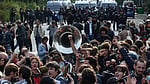
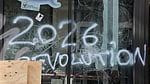
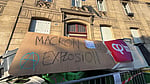
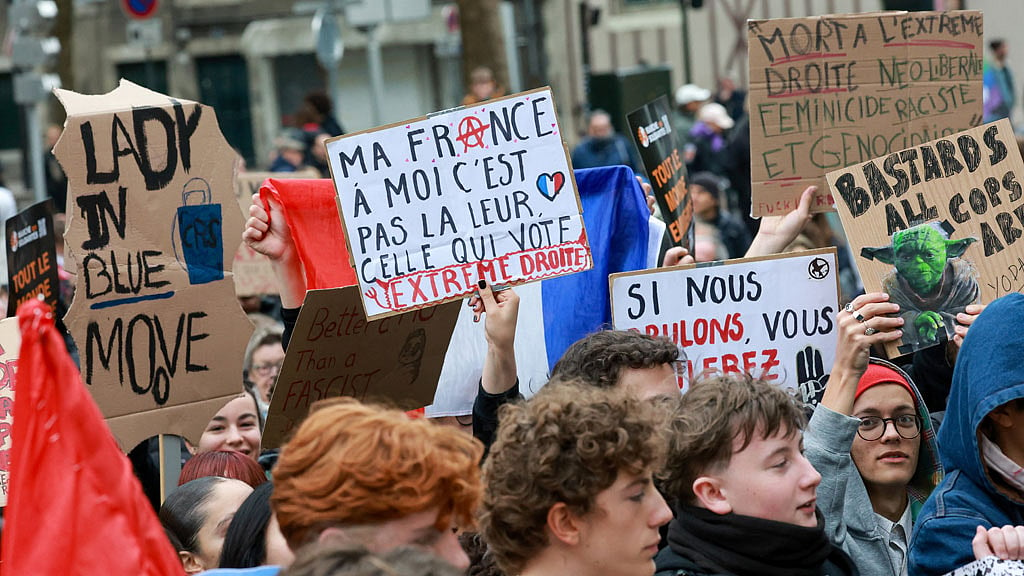
France is on high alert ahead of fresh nationwide demonstrations a week after the country was rocked by its worst civil unrest in decades, the BBC reports.
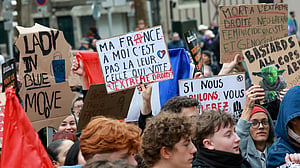
Despite sweeping government restrictions, hundreds of thousands of people organised by student groups, trade unions, and a resurgent gilets jaunes (yellow-vest) movement are expected to take to the streets on Saturday against a backdrop of worsening cost-of-living pressures and looming public spending cuts.
The interior ministry has deployed 70,000 police officers following sharp criticism from opposition parties over security failures during the violence on Oct 17.
Interior Minister Laurent Nunez warned that authorities would be "uncompromising with the vandals, with the looters, and all those who commit acts of violence", pointing to online calls for unrest from the radical extreme left.
Justice Minister Gerald Darmanin confirmed that 232 people have already been imprisoned and more than 1,100 have appeared in fast-track court hearings -- with around 260 facing organised gang charges.
Prosecutors have been directed to seek severe penalties, including protest bans, the revocation of voting rights, and social media disqualifications.
The unrest originated with high-school pupils protesting against dilapidated classroom conditions and severe staff shortages before escalating into wider anti-government agitation.
President Emmanuel Macron met student representatives on Friday, pledging a series of educational reforms from Monday.
However, student leaders maintained their call to mobilise. While Macron decreed that only gatherings organised by registered trade unions would be authorised, local enforcement remains fragmented.
Blanket bans have been imposed in Lyon, Nice, and Montpellier, whereas Marseille reversed its earlier prohibitions.
In Paris, a student-led march has been rerouted away from the centre; major cultural sites, including the Louvre, Musée d'Orsay, and Picasso Museum, have shut, shopfronts have been boarded up, and Paris Saint-Germain's domestic fixture has been postponed to Monday.
The revived gilets jaunes collective has listed over 500 rallies and 200 separate actions demanding Macron's resignation, whilst refusing to condemn the Oct 17 unrest and accusing the police of brutality.
During a visit to Limoges -- where the historic 19th-century town hall was torched last week -- Prime Minister Sebastien Lecornu confirmed the state would fund its complete reconstruction.
The volatility unfolds ahead of next spring's pivotal presidential election.
With polls indicating Macron's centrist bloc could fail to reach the second-round run-off, the race is increasingly framed as a contest between Marine Le Pen's hard-right National Rally (RN) and Jean-Luc Melenchon's radical-left La France Insoumise (LFI).
Melenchon has accused the president of "destroying the republican state" through heavy-handed policing, while Orleans has emerged as an immediate potential flashpoint as left-wing counter-demonstrators converge on an RN party conference where Marine Le Pen -- currently appealing against an EU fund embezzlement conviction is scheduled to address supporters.