


Published : 08 Sep 2020, 04:07 AM
Updated : 17 Oct 2022, 11:12 AM


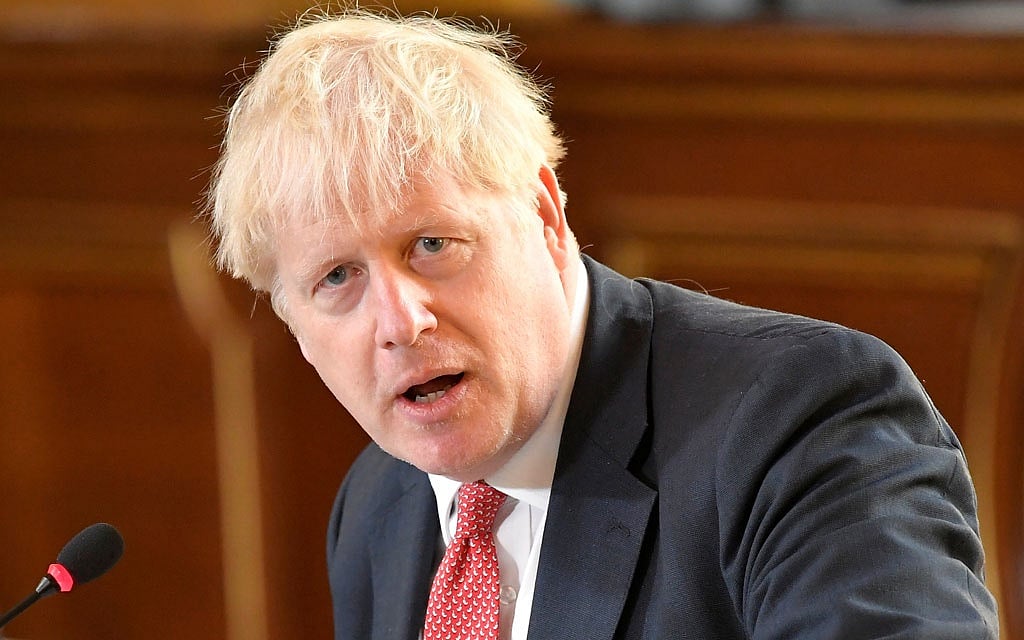


Seven months after Britain exited the European Union, its negotiations with the bloc over a permanent trade agreement have fallen into an eerily familiar cycle of recrimination, brinkmanship and warnings of a “no-deal Brexit,” the same dire scenario that dominated British politics this time a year ago.
On Monday, Prime Minister Boris Johnson threatened to break off the talks if there was no deal in place by Oct. 15, 2 1/2 months before the official deadline of Dec. 31. And his government prepared legislation that could undermine parts of the political agreement, relating to Northern Ireland, that it struck last October to withdraw from the bloc after 47 years.
Yet for all the Groundhog Day-like similarities, Britain is in a very different place than it was a year ago — cast off from Europe, consumed by the battle against the coronavirus and facing an economic crisis that has already sapped the popularity of Johnson’s Conservative government.
That gives Johnson far less leverage to push the European Union on the disputed points of state subsidies of British industry and fishing rights, according to experts. Brussels has shown no sign of yielding, particularly on the subsidies, all but guaranteeing that the latest round of talks, this week in London, will end in deadlock.
Johnson seemed to be preparing the ground for some kind of breakdown, insisting that a no-deal Brexit would be a “good outcome” for Britain that would give it control over its laws and fishing waters, and free it up to make trade deals with other countries, including the United States.
“We will prosper mightily as a result,” he declared.
Analysts dismissed much of this as posturing, aimed at hard-line Brexiteers in his own party and designed to send a message that Johnson will be tougher with the bloc than his predecessor, Theresa May.
But the legislation affecting Northern Ireland, first reported by The Financial Times, was an unexpected development that could have far-reaching consequences, not just with the Irish, but also with the European Union and the United States.
A truck is driven over a bridge on the border between the Republic of Ireland and the United Kingdom near Jonesborough, Northern Ireland, on Nov. 20, 2019. In its Brexit withdrawal agreement, Britain agreed to a complicated series of customs arrangements that would preserve an open border between Northern Ireland and the Republic of Ireland. (Laetitia Vancon/The New York Times)
Other defenders of Ireland, including the Democratic presidential nominee, Joe Biden, would likely view any undermining of the agreement as a threat to the Good Friday Accord, which ended decades of sectarian violence in Northern Ireland. That, in turn, could jeopardise a trade negotiation with Washington — something that President Donald Trump, an ardent supporter of Brexit, has enthusiastically backed.
“The UK government might want to see how the US election plays out,” said Anand Menon, a professor of European politics at Kings College London. “The outcome of the election is going to have a massive bearing on what this government is going to do.”
Reneging on the so-called Northern Ireland protocol would also make it more difficult for Britain to conclude a trade deal with the European Union, several experts said, because negotiators in Brussels would view their British counterparts with even greater suspicion and demand more restrictive language.
“They would say: ‘You’re refusing to implement the agreement we already have. How we can negotiate a new agreement with you?’” said Sam Lowe, an expert on trade at the Centre for European Reform, a research group in London.
British officials played down suggestions that they plan to rip up the agreement. Lowe said he viewed it less as an effort to renege than to increase Britain’s leverage by asserting that it is in the driver’s seat.
He said any changes would be likely to apply to bureaucratic procedures, like whether companies must file a declaration for goods they ship from Northern Ireland to Britain.
As the negotiations have ground on, both sides have dug in their heels. The European Union is demanding that Britain agree to rules that would prevent it from pouring state subsidies into businesses that can then export freely to the continental market. The British want to have the freedom to support companies in emerging high-tech fields like biotechnology and artificial intelligence.
So far, London has made no counterproposals. That drew a sharp rebuke from the chief European negotiator, Michel Barnier, who last week told an Irish research institute that Britain had “not engaged constructively” and accused it of a “lack of engagement” on core questions.
Johnson’s chief negotiator, David Frost, fired back, vowing in an interview with the Mail on Sunday that Britain would never become a “client state” of the European Union.
Fishermen wait to set sail from Brixham, England, on Feb. 26, 2020. Hotly disputed points in the Brexit negotiations include state subsidies of British fishing rights. (Andrew Testa/The New York Times)
The question is whether Johnson can afford to risk a failed negotiation. His popularity has already taken a beating over the course of the pandemic because of a perception that his Conservative government botched its response. In Keir Starmer, he faces a more competent leadership in the opposition Labour Party than he did with the previous leader, Jeremy Corbyn.
A no-deal Brexit would accelerate calls for independence in Scotland, where polls are already showing a surge in support for leaving the United Kingdom. Nationalists in Northern Ireland would likely seize on any signs that Britain was not living up to its promises about the border to call for the reunification of Ireland.
Despite all the theatrics, analysts said they believed Johnson would ultimately strike a deal with Brussels, much as he did last year after a similar round of brinkmanship. The danger, with only 2 1/2 months left before the deadline, is that he could miscalculate or simply run out of time, particularly if his government becomes preoccupied dealing with a second wave of the coronavirus.
“Boris Johnson still wants a deal, he still needs a deal,” said Mujtaba Rahman, an analyst at the Eurasia Group, a political risk consultancy. “The increasing temperature was inevitable, and a recognition that this is the critical window to do the deal. But seeing through all of this, it’s very hard to be confident there will be a deal.”
©2020 The New York Times Company










