


Published : 02 Jan 2020, 10:15 PM
Updated : 08 Apr 2022, 02:18 AM


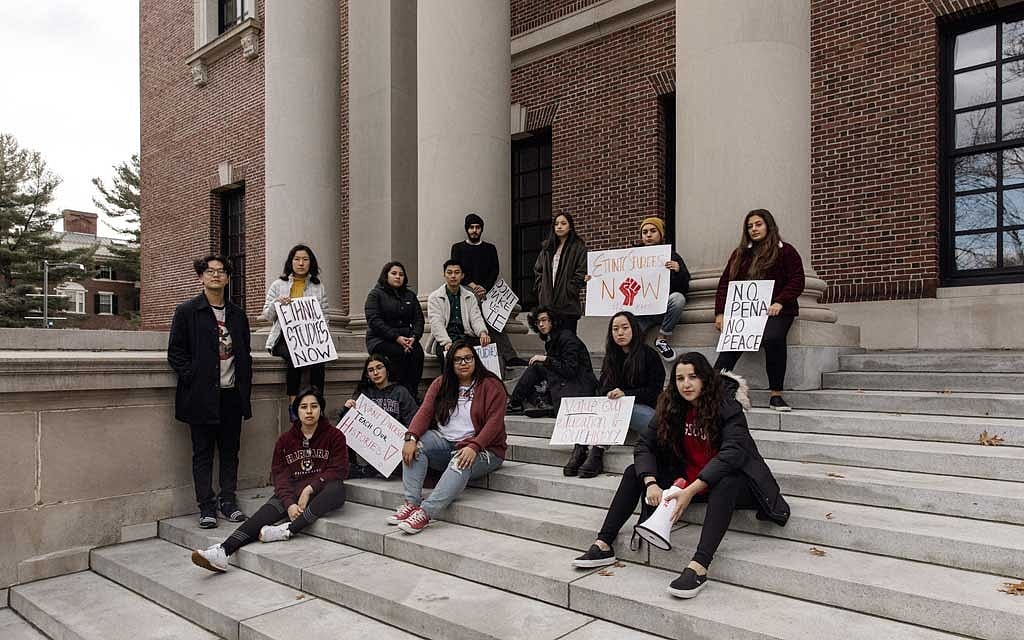
The students sprang into action, occupying an administration building and disrupting a faculty meeting. They submitted a letter to administrators demanding transparency about the tenure process and the creation of an ethnic studies department. And on the day in December that early admissions decisions were to be released, black, Latino and Asian students protested in the admissions office, accusing the university of using them as tokens in its professed commitment to diversity, while failing to invest in academic areas critical to their lives.
It is an unsettled moment at Harvard. The university is still fighting a lawsuit challenging its use of race-based affirmative action in admissions; a district court judge ruled in Harvard’s favour in October, but the plaintiffs are appealing.
But at the very moment that Harvard is defending its use of race in admissions, citing diversity as a key component of the education it provides, students of colour are saying that once they are on campus, Harvard devalues their history and experiences and fails to retain professors who support them.
Several students who testified during the legal challenge to Harvard’s admissions policies, saying it was important for the school to be able to consider race in admissions, are now among those criticising the decision to deny tenure to the professor, Lorgia García Peña.
One of them, Catherine Ho, 20, a junior, took part in the December protest at the admissions office, where students held signs with messages like “After You Admit Us, Don’t Forget Us!” and “Want Diversity? Teach Our Histories!”
Ho, who is Vietnamese-American, accused Harvard of using her and other students who testified to burnish its image at the trial and afterward, while refusing to listen to what they said they needed in terms of resources once they got to campus.
“I am tired of Harvard using my story without giving me ethnic studies so I can fully understand what my story even means,” Ho said during the protest, to cheers from the other students. She added, “Harvard, stop using our stories when you won’t listen to us.”
Another student, Laura Veira-Ramirez, 21, a senior, was one of several who worked part-time in the admissions office, doing outreach to minority applicants or those who came from poor backgrounds or would be the first in their families to go to college.
Lately, she said, she and other students had felt uncomfortable about reassuring those prospective students that they would feel welcome at Harvard.
“We need more than just letting us in,” said Veira-Ramirez, who came to the United States from Colombia, without legal permission, when she was 3 years old. Veira-Ramirez has protection from deportation under Deferred Action for Childhood Arrivals, an Obama-era program that protected young unauthorised immigrants.
“We need resources once we get to campus,” she said, “and part of those resources is an ethnic studies program.”
The students have not been alone in voicing concern over the decision to deny tenure to García Peña. Scholars from around the country have written to Harvard’s president expressing dismay with the decision, and Harvard faculty have demanded a review of the tenure process, with an eye to whether it is undermining the university’s effort to diversify its faculty.
García Peña declined to comment, as did a spokeswoman for Harvard.
Lawrence S. Bacow, Harvard’s president, has declined to discuss the reasons for denying García Peña tenure, citing the confidentiality of the process. The dean of the Faculty of Arts and Sciences, Claudine Gay, has said that she wants to increase offerings in ethnic studies but believes that hiring more faculty must come first, before creating a new major. Last June, she announced that Harvard would hire three to four new faculty working in ethnic studies; the search is still ongoing. Gay also said in response to the faculty concerns that she would conduct a review of the tenure process.
Efforts to create an ethnic studies program at Harvard go back several decades. Undergraduates now have two ways to pursue ethnic studies: Students majoring in history and literature can focus on the subject, and students can minor in ethnicity, migration, rights. The ethnic studies track in history and literature was created in 2017, the minor in 2009. The students who are protesting now want a full-fledged department and the opportunity to major in ethnic studies.
García Peña has been involved in both of the existing programs, as well as the Department of Romance Languages and Literatures’ program in Latinx studies. (Latinx is a gender-neutral term for people of Latin American heritage, used commonly in academia.)
In an online article published last year, García Peña wrote that ethnic studies programs make universities “a little less racist, a little less white.”
“They provide students with spaces for thinking and writing about important questions,” she wrote. “They also provide support for students of colour who are made to feel in every other course, like second class citizens who are reminded that they don’t belong.”
In December, a group of Harvard faculty and administrators who teach in Asian American, Latino and Native American studies or run the existing programs that support ethnic studies released a letter about García Peña’s tenure denial that was suffused with a sense of frustration with what they said was the continual institutional resistance faced by their fields.
They said that the denial of tenure to García Peña had “severe repercussions” on their efforts to recruit and retain top faculty in their disciplines.
García Peña’s supporters have also cited two troubling incidents from last year. In September, García Peña found a hateful note tacked to her office door that attacked her race and gender. And in October, several students of colour in one of her classes were questioned by Harvard University police officers when they were putting up an art project in Harvard Yard, an activity for which García Peña had received permission.
Cornel R. West, who holds a joint appointment between Harvard Divinity School and the Department of African and African American Studies, said that many students believed that the decision to deny tenure for García Peña was driven by racism and sexism. He said he did not think that was the case, at least without clear evidence, but he did think that the decision was wrong.
“She belongs at Harvard, period,” he said.
©2020 The New York Times Company










