


Published : 09 Aug 2020, 01:29 AM
Updated : 17 Oct 2022, 11:11 AM


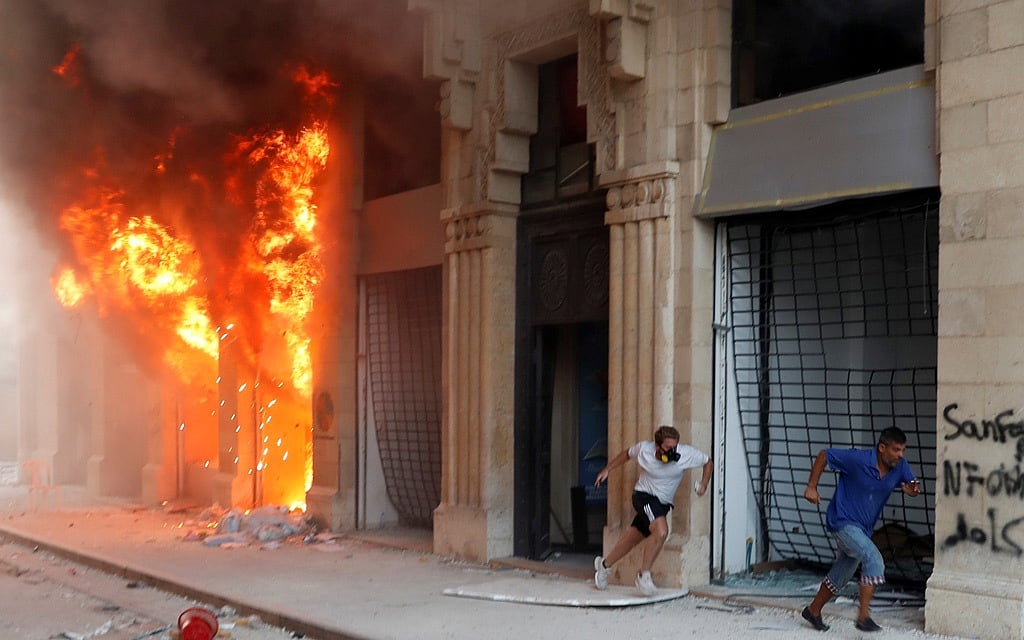
Many Lebanese see the blast, which sent a shock wave through the capital that destroyed entire neighbourhoods and killed at least 154 people, as the latest and most dangerous manifestation of the corruption and negligence of the country’s political elite.
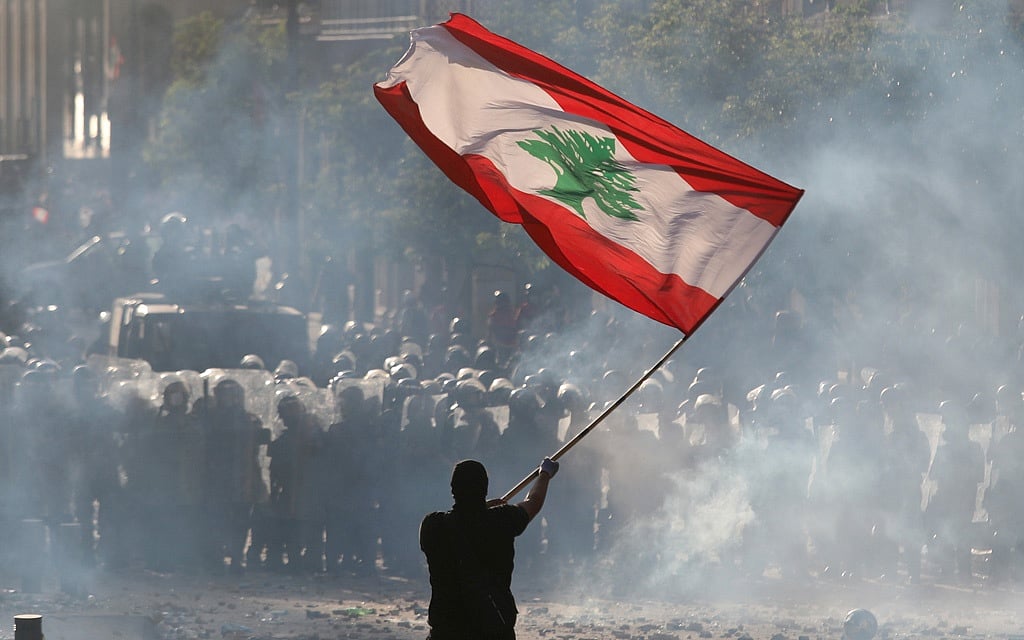
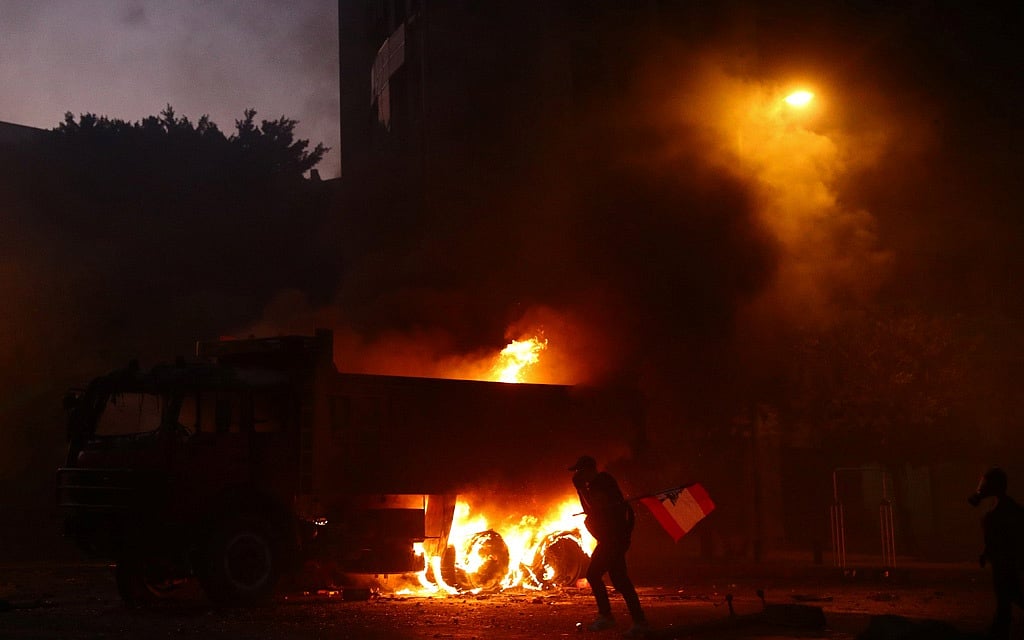
The clashes turned the streets near the Parliament building into battle zones, where demonstrators pulled down metal and concrete barricades blocking access to the area and threw rocks at the security forces, who fired back with volleys of tear gas.
“Haven’t they quenched their thirst for blood? We came here peacefully, and they do this?” said Rasha Habbal, a 21-year-old student who had come to protest with her 57-year-old mother. Both had been tear-gassed.
“Either they go and we stay, or they stay and we leave,” Habbal said of the country’s leaders.
Large crowds also gathered to demonstrate in the central Martyrs’ Square nearby, where protests demanding the removal of the country’s top politicians have flared since last fall. Many said it was anger at what they had lost in the blast that drove them into the streets.
“I lost my house, my car, my job; I lost friends,” said a protester, Eddy Gabriel, who carried a photo of two neighbours who had died in the blast. “There is nothing to be afraid of. Everything is gone.”
A demonstrator waves the Lebanese flag in front of riot police during a protest in Beirut, Lebanon, August 8, 2020. Reuters
Anger at Lebanon’s political class has been building since last fall, when protests toppled a prime minister, but the explosion, and indications that it was rooted in governmental neglect, have pushed tensions to the boiling point.
Lebanese officials have said the explosion Tuesday happened when 2,750 tons of ammonium nitrate, a compound often used to make fertiliser and bombs, suddenly combusted, perhaps because of a fire started by welders working nearby. The industrial chemical had been stored in the port since 2014.
The dead included 43 Syrians, the Syrian state news agency said Saturday. Lebanon hosts about 1 million Syrian refugees, and many other Syrians live and work in the country.
The blast injured 5,000 people and pushed at least 250,000 from their homes. The prime minister has vowed to investigate the blast and hold all those who were behind it accountable, but many Lebanese remain sceptical that justice will be done.
President Michel Aoun on Friday said the blast could have been caused by a bomb or “foreign interference,” without providing details or evidence. In a televised speech, Hassan Nasrallah, the secretary-general of Hezbollah, the powerful militant group and political party, denied his group had any connection to the chemicals, the blast or the port.
Many Lebanese accuse Hezbollah of using the port to smuggle and store weapons and have suggested that the group would have wanted access to the chemicals to make bombs. But no evidence has surfaced linking the group to the chemicals or the explosion.
Anger at the country’s top politicians was tangible at the protests in the square, where protesters erected gallows and conducted ceremonial hangings of cardboard cutouts of Aoun; Nabih Berri, the speaker of Parliament; and Nasrallah of Hezbollah.
But the fury targeted not just specific figures but also the political system itself, in which everything from top governmental posts to civil service jobs are allocated according to a complex sectarian system. Many Lebanese consider that system, and the power brokers who use it to enrich themselves and channel patronage to their supporters, to be the source of many of the country’s problems.
“It’s a corrupt government; they have to be held accountable,” said Marilyn Kallas, 21, wielding a broom she used to help clean up a damaged neighbourhood before coming to the protest. “Hopefully they will resign.”
Siding with the protesters, four members of Parliament resigned Saturday. Sami Gemayel, the head of Kataeb, a Christian opposition party, said its three legislators had quit and called on others to resign for the “birth of a new Lebanon.”
Paula Yacoubian, an independent member of Parliament, also resigned, she confirmed in a text message.
The resignations fell far short of the number needed to prompt new elections for the 128-seat body.
A demonstrator reacts as a truck is seen on fire during a protest following Tuesday's blast, in Beirut, Lebanon August 8, 2020. Reuters
While government assistance to the blast victims has been minimal, foreign aid has streamed in, along with technicians and medics who are helping identify buildings at risk of collapsing and treating the wounded.
The office of President Emmanuel Macron of France announced that an international aid summit will be held by video conference Sunday, co-hosted by France and the United Nations. Macron was the first foreign leader to visit Lebanon since the blast, and he walked through some of the hardest-hit areas to speak with residents, something that Lebanon’s own president and prime minister have not done, likely to avoid becoming the targets of public anger.
The United States is providing more than $15 million in aid, and President Donald Trump said Friday that he would join Sunday’s videoconference.
Ahmed Aboul Gheit, the head of the Arab League, said Saturday that he would seek to mobilise support from Arab countries after meeting with Aoun.
“We are ready to help with all our means,” Aboul Gheit said.
In the weeks before the blast, the number of coronavirus cases reported daily had begun to spike, and many parts of the country were suffering from lengthy power cuts.
Despite drawing large numbers of people, the protest movement has so far failed to make significant progress toward putting a new governing system in place.
Many of the country’s top politicians and party leaders are former militia commanders from Lebanon’s 15-year civil war, which ended in 1990, and the Lebanese accuse them of looting the country while failing to ensure basic services, like regular electricity and drinkable water.
“It had become clear that this regime could not deliver, but now it has become clear that it can kill and obliterate an entire neighbourhood,” said Sami Atallah, director of the Lebanese Centre for Policy Studies. “The question to me is, is this going to be a game-changer, and what does it mean to have a game-changer?”
©2020 The New York Times Company










