


Published : 31 Aug 2018, 07:39 PM
Updated : 05 Aug 2022, 06:43 PM


But there has been no mention of the plight of the over one million Rohingya people who have fled “ethnic cleansing” in Myanmar and taken shelter in Bangladesh.
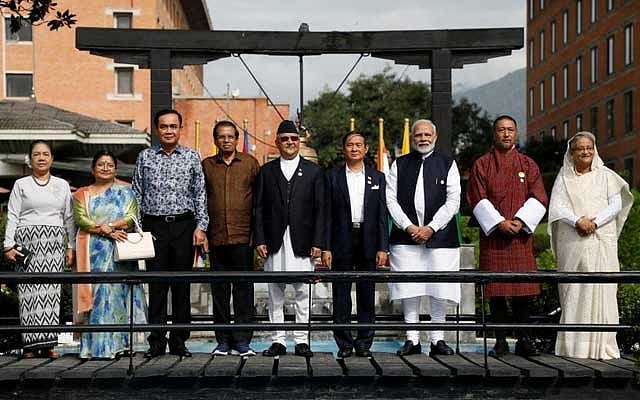
From the just concluded fourth summit in Kathmandu, the leaders of the seven countries along the Bay of Bengal expressed their resolve to achieve, leveraging on BIMSTEC’s unique position as a bridge linking South and Southeast Asia, an enhanced level of economic and social development in the region, and remain fully committed to consolidate and deepen cooperation among member states.
This is to make the organisation, established in 1997 and now being seen as an alternative to SAARC by many as Pakistan is not a member of this grouping, into an effective platform to promote peace, prosperity and sustainability.
They reiterated their pledge to work collectively towards making BIMSTEC a stronger, more effective and result-oriented organisation for achieving a peaceful, prosperous and sustainable Bay of Bengal region in a joint declaration issued on Friday.
Bangladesh, India, Nepal, Bhutan, Sri Lanka, Myanmar and Thailand are the members of the grouping which received much attention in recent years following India-Pakistan tension that resulted in postponement of 2016’s SAARC summit in Islamabad.
The grouping is promoting 14 priority sectors of development and common concerns including trade and investment, transport and communication, tourism and people-to-people contact as the forum is focused on economic and technical cooperation.
But countering terrorism gets a priority with the member states holding national security chiefs’ meetings regularly. The next meeting will be held in March next year in Thailand.

Rohingyas make their way from Teknaf’s Hariakhali to the refugee camps. Photo: mostafigur rahman
The Kathmandu declaration also avoided the issue though it is being seen by many as a security challenge for the region if it remains unresolved for years. Myanmar President Win Myint attended the summit.
The leaders in the Kathmandu declaration called upon all countries to devise a “comprehensive” approach for countering terrorism.
They deplored terrorist attacks in all parts of the world, including in BIMSTEC countries, and strongly condemn terrorism in all its forms and manifestations wherever and by whomsoever committed.
There can be no justification whatsoever for any act of terrorism, they stressed.
The leaders affirmed that the fight against terrorism “should target not only terrorists, terror organisations and networks but also identify and hold accountable States and non-State entities that encourage, support or finance terrorism, provide sanctuaries to terrorists and terror groups and falsely extol their virtues”.
The approach, they suggested, should include preventing financing of terrorists and terrorist actions from territories under their control, blocking recruitment and cross-border movement of terrorists, countering radicalisation, countering misuse of internet for the purposes of terrorism and dismantling terrorist safe havens.
The BIMSTEC leaders reiterated their position that terrorism continues to pose a serious threat to peace and stability in the region.
They also expressed determination to strengthen cooperation and coordination among the law enforcement, intelligence and security agencies.
They decided to hold meetings at the level of BIMSTEC home ministers and continue with the meetings of the national security chiefs.
The leaders also reposed their faith “unequivocally” in the UN Charter.
They said they look forward to the signing of the BIMSTEC Convention on Mutual Legal Assistance in Criminal Matters, and called upon the member states for its early ratification.







