


Published : 16 Jun 2020, 05:54 PM
Updated : 17 Oct 2022, 11:08 AM


Her mentor, a drag queen named Merrie Cherry, who is black, said she had seen silent marches in other states and would have felt safer attending an event like that, West Dakota recalled.
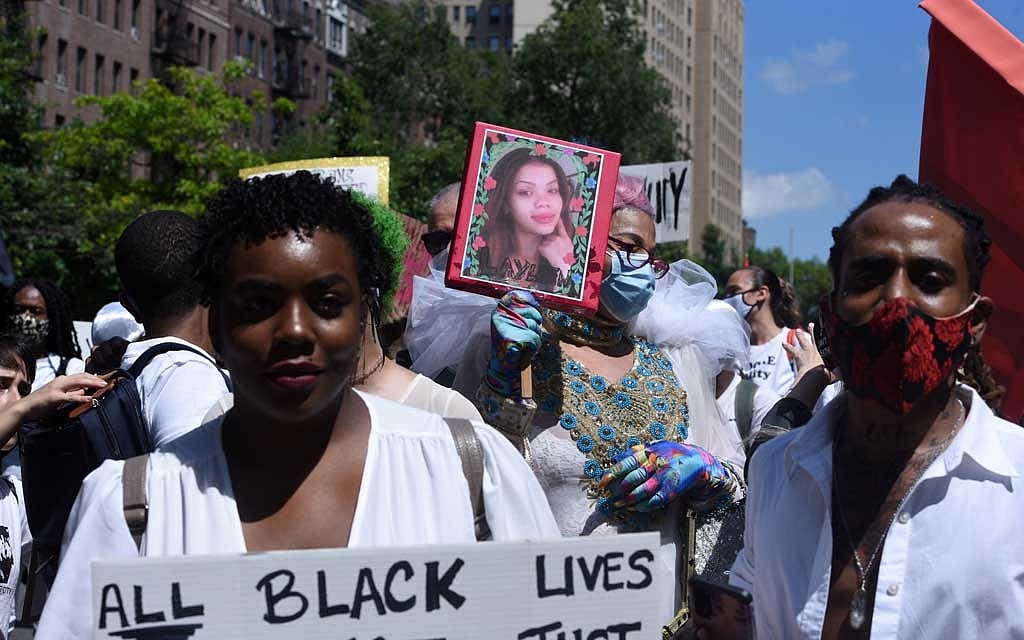
And so she had an idea: a rally for black trans people that would evoke one of the most notable protests in New York history, the Silent Parade, when the NAACP assembled nearly 10,000 people in 1917, all wearing white and silently marching down Fifth Avenue to demand an end to violence against blacks.
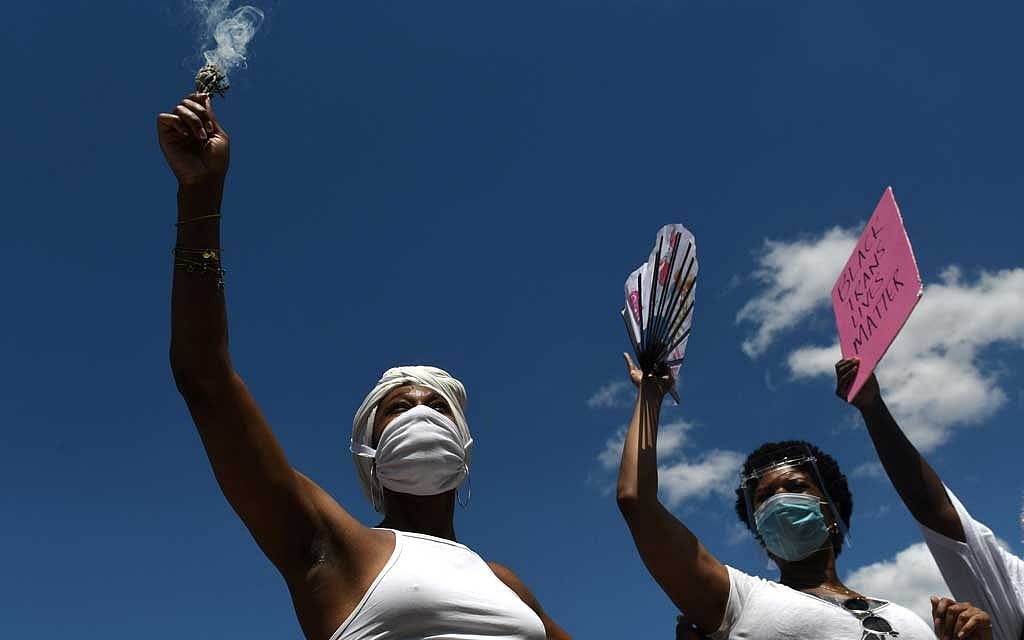
Two weeks later, West Dakota’s idea blossomed into one of the most striking demonstrations that New York has seen since the killing of Floyd, a gathering of thousands of people in a sea of white. Its size and intensity stunned bystanders, participants and the organisers themselves.
“Something just sort of clicked for me,” West Dakota said. “We don’t have to wait for that to happen. We can do it ourselves.”
The “Brooklyn Liberation” march on Sunday flooded the grounds of the Brooklyn Museum and spilled out several blocks in each direction.
Though crowd turnouts for marches are often difficult to determine, organisers said 15,000 people took part. The police have not released their own estimate, but videos from the scene showed a sea of people stretching several blocks from Grand Army Plaza, down Eastern Parkway, with some eventually making their way to Fort Greene Park.
The vast majority of the protesters wore masks, and safety teams stationed along the route gave out hand sanitizer. But the crowd was so large that 6-foot social distancing was often not possible. Officials have expressed concerns that the Floyd protests could lead to the spread of the coronavirus, though there is no evidence of that so far in New York.
One speaker at the rally was Melania Brown, sister of Layleen Polanco, a transgender woman who was found dead in 2019 in a cell at Rikers Island.
“Black trans lives matter! My sister’s life mattered!” Brown said in her speech. “If one goes down, we all go down — and I’m not going nowhere.”
Black transgender people not only bear a disproportionate burden of police violence but also face high rates of violence and harassment on the street. The American Medical Association said last fall that killings of transgender women of colour in the United States amounted to an epidemic.
Two more black transgender women nationwide were killed in less than 24 hours while the event was coming together. Dominique Fells, 27, known as Rem’Mie, was found with stab wounds in Philadelphia on June 8, Rolling Stone reported. A day later, Riah Milton, 25, was found shot multiple times in Liberty Township, Ohio.
Then, on the Friday before the rally, the Trump administration finalised a regulation that erases protections for transgender patients against discrimination by doctors, hospitals and health insurance companies.
Eliel Cruz, director of communications for the New York City Anti-Violence Project, who helped organise the march, said he was amazed at how many people showed up for the demonstration. He recalled that when he organised a rally after Polanco’s death, about 600 or 700 people attended.
“The violence that’s affecting black trans women and black trans folks is finally getting the attention that it deserves,” Cruz said.
After the phone call that inspired the idea of the march, West Dakota, who had little experience organising protests, turned to friends, including Fran Tirado, who until recently produced Netflix content for LGBTQ audiences.
Those friends, in turn, reached out to their own networks. Ultimately, Tirado said, over 150 people joined the organising team — many of them nonblack queer people of colour who volunteered to work under the direction of black transgender-led organisations like the Okra Project and the Marsha P. Johnson Institute.
West Dakota asked Mohammed Fayaz, an illustrator from Queens, to create the rally’s widely shared poster.
Fayaz’s distinctive style has helped popularise Papi Juice, a Brooklyn art collective for queer and trans people of colour that throws popular parties.
Raquel Willis, a black transgender writer and activist who spoke at the rally, called the organising effort a “new, grander version” of the power of community that queer and trans people of colour have always had.
“It felt like we had arrived in a new era,” she said.
© 2020 The New York Times Company













