


Published : 28 Aug 2021, 02:32 PM
Updated : 14 Oct 2022, 06:57 PM


He dodged mortar attacks and Taliban ambushes and, eventually, repeated death threats from insurgents who regarded him as a spy. One text message read, “You are a traitor. You work for the infidels. We are going to kill you.” His third son, just 7 at the time, was kidnapped for ransom by militants in 2017.
On Aug 14, as the Taliban were storming across Afghanistan, his family of nine was evacuated on a US military flight. By the time they touched down in Virginia, the insurgents had entered Kabul and taken full control of the country.
“Everyone is calling me and saying, ‘You are a very lucky person,’” he said.
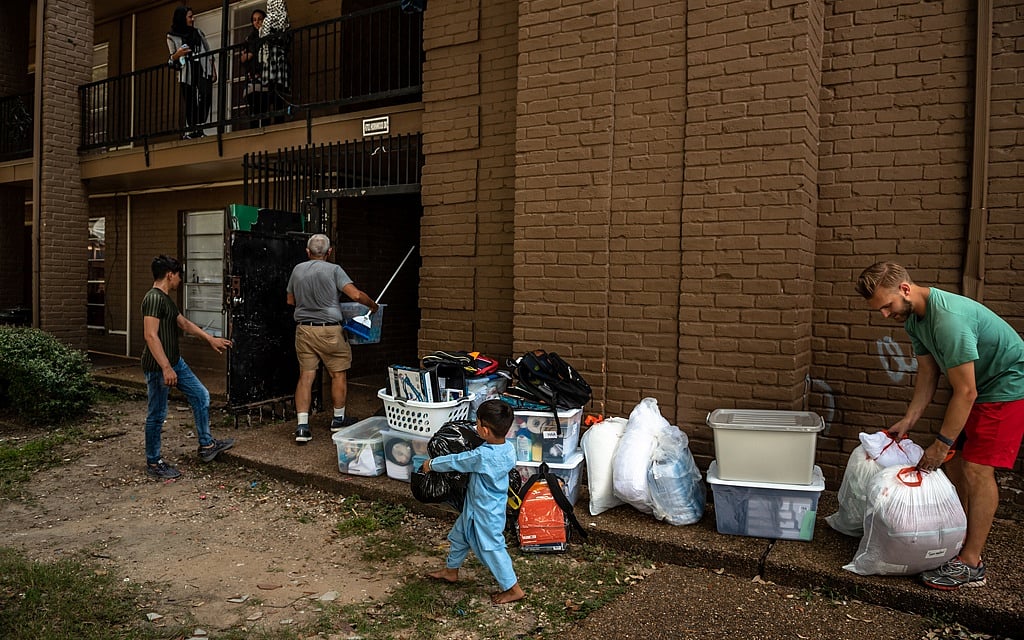
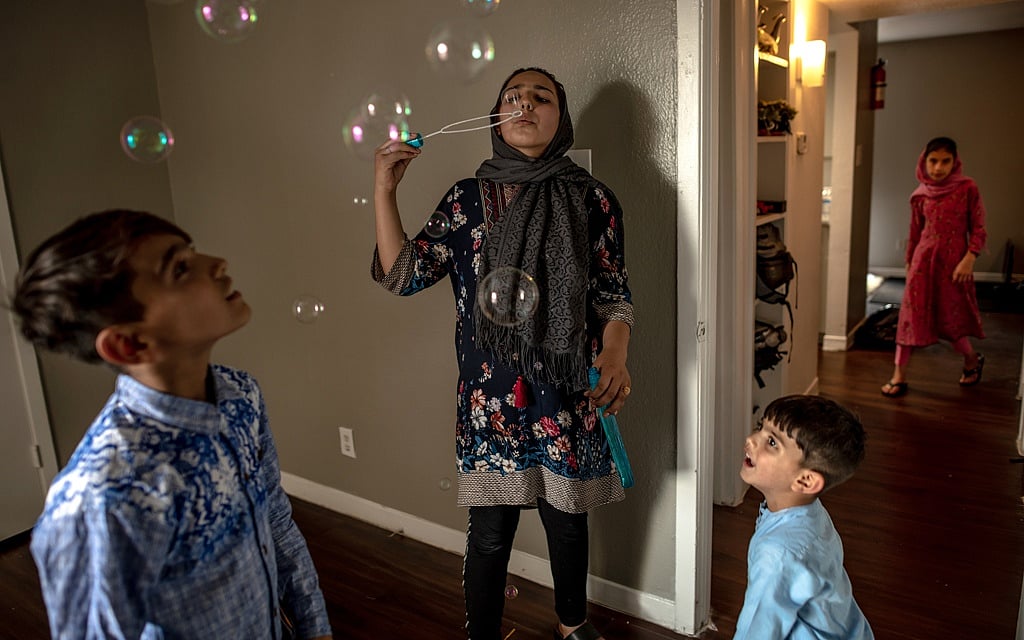
This week, the family was settling into a new apartment in Southwest Houston. The atmosphere was festive. Brand-new kitchen items, cleaning supplies and toys, donated by a local nonprofit group, spilled out of large storage bins. Brishna, 13; Huzzaif, 11; and Murtaza, 2, blew bubbles.
But Yousafzai and his wife, Bibi, worried for the fate of several brothers, nephews and cousins, who also had worked for the Americans. The attack Thursday at the Kabul airport and the fast-approaching US withdrawal made it less likely that they would get out any time soon.
Despite all the trauma, they said, their only daughter now has a future very different from the one she would have had in a Taliban-controlled Afghanistan. “I can study in school and become somebody,” Brishna said.
And for Huzzaif, who was kidnapped four years ago and held for ransom, there would no longer be any fear. “I can walk comfortably to places,” he said. “My mother doesn’t have to worry about me being stolen anymore.”
The Yousafzai family’s saga with the Americans started in 2007, when Zar Mohammad, the youngest and most educated of six brothers, applied for a job with the US military. The money was good, and the family believed in the US mission to root out extremists and develop their homeland.
Then 30, he travelled from his home in Jalalabad to Kabul, where he easily passed oral and written exams demonstrating his English proficiency.
Soon, he was attached to US Army units in Kandahar, a hotbed of Taliban activity, and Zabul province, where the Taliban enjoyed support among many villagers and reaped financial rewards from cultivating opium.
Yousafzai won accolades for his performance and helped three brothers, three nephews and a brother-in-law secure jobs on bases. With the salary he earned, he was able to build a two-story section for his family in the extended-family compound.
Maj Austin Bird, who commanded the Army engineer company at the base, appointed him chief interpreter. Together, they taught Afghan military personnel how to use and maintain equipment, like bulldozers and backhoes.
Yousafzai went on combat missions with Bird’s soldiers in several provinces, and they came under fire on and off the base.
But there were light moments too, and a friendship blossomed.
“I remember celebrating the birth of his fourth child” in 2012, Bird said in an interview. “We discussed the joys of fatherhood over tea. Zar and I talked about how great it was to be a father and the unique joys of having both boys and girls.”
Sometime in 2011, Yousafzai was notified by US intelligence personnel that he was being targeted by insurgents. He should vary his travel routes back and forth to the base and try to disguise himself, they advised.
He remained devoted to his work but became increasingly uneasy. He decided to apply for a special immigrant visa to relocate to the United States.
“When you went home, everybody knew you worked for the Americans,” Yousafzai recalled.
His world became smaller. He avoided leaving home, except to go to work.
“Quit your job,” said one of the texts he received. “We can see you. You are teaching the infidels.”
In 2012, his eldest son, Abrar, then 6, was on his way home alone from a nearby mosque when a car approached with three men inside. The men called out to him, and when he backed away, one of them stepped out and tried to snatch him. He managed to escape.
Threats against Yousafzai intensified. He was blamed by members of the community for the killing of a village elder by US commandos.
In 2015, he quit his job with the military and moved to Kabul, where he took a position with the government as an audit manager, putting his accounting degree to use.
But his troubles were not over. As he was riding back to Kabul from Jalalabad, where his family had remained for a time, insurgents sprayed his car with gunfire. He emerged unscathed.
In 2017, Huzzaif was kidnapped while walking home from school with two friends. Days went by without any news.
Then a caller with an unidentified number demanded $200,000 to release the child alive. On the phone, Yousafzai could hear Huzzaif being whipped. The boy cried, begging his father to pay the ransom.
Yousafzai told the caller that he had $10,000. “You are an asset of the Americans,” the voice said.
He scrambled to gather as much money as he could, borrowing from family and friends, providing few details to his wife about their child, who was being shackled and beaten. The kidnappers set impossible deadlines — five days, three days — until they finally accepted $40,000.
Huzzaif, who had been born with a heart defect, returned home even more frail. He woke up screaming at night.
Yousafzai moved his family to Kabul.
In 2019, to his dismay, the US authorities denied his application for a special immigrant visa. He immediately filed an appeal and reached out to Bird for help.
“Why they denied him, I never got a clear answer,” Bird, who had written several recommendation letters for Yousafzai over the years, recalled.
By the time he was notified by consular officials that his application had been approved, in August last year, he had been trying to get a visa for nine years. Still, the process stalled. The coronavirus, which had caused embassy closures, brought consular operations to a standstill.
One night last year as they were waiting, when everyone was fast asleep, a car bomb exploded outside their house in Kabul. Shrapnel struck heads, knees, arms and chins. The children can still roll up sleeves and pants legs to show scars.
“I was just desperate to get to America,” Bibi Yousafzai said.
In late July, shortly after President Joe Biden pledged that he would expedite the departure of U.S. allies, Yousafzai received an email from the US Embassy informing him that he could board a relocation flight to the United States.
On Aug 12, after Yousafzai and his wife had tested negative for the coronavirus and every family member had passed a medical exam, the family was notified that they had been booked on an evacuation flight leaving Kabul Aug 14.
They sold their appliances, mattresses and furniture as quickly as they could, telling people outside their immediate circles that they were moving to India. Yousafzai scribbled a resignation letter, which he asked a colleague to deliver.
On the appointed day, the family drove to the airport and boarded the military plane, carrying 10 bags loaded with their possessions, including two valuable rugs.
After the processing at Fort Lee in Virginia, they flew to Houston, where YMCA International Services, a resettlement agency, received them. On Tuesday, they moved into their apartment — half a world away from everything that had come before.
Neighbours stopped by to say hello and to teach Bibi Yousafzai how to use the electric stove, so she could bake the naan dough that she had kneaded.
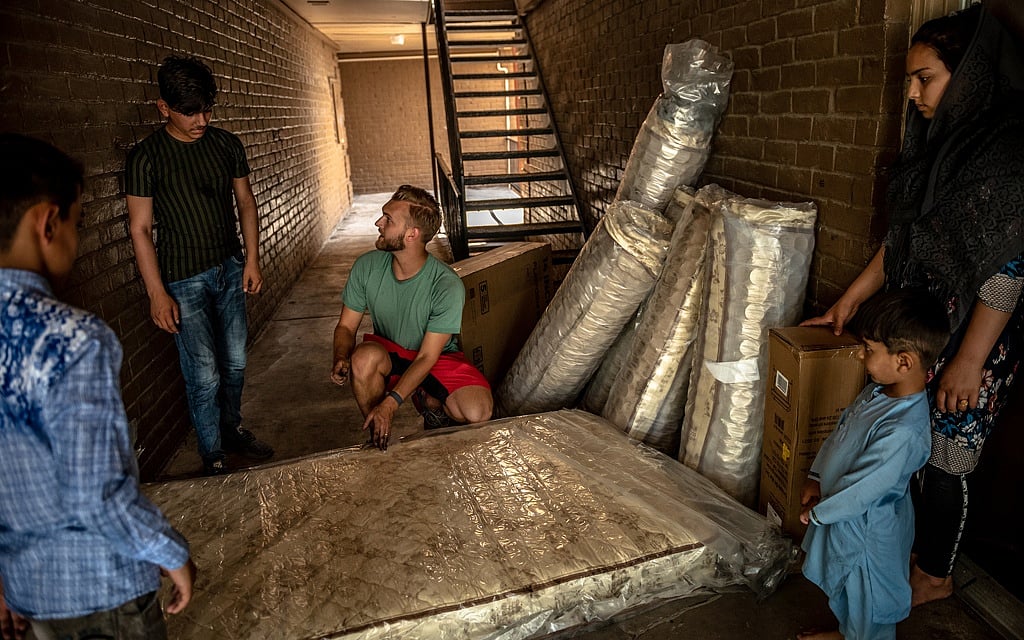
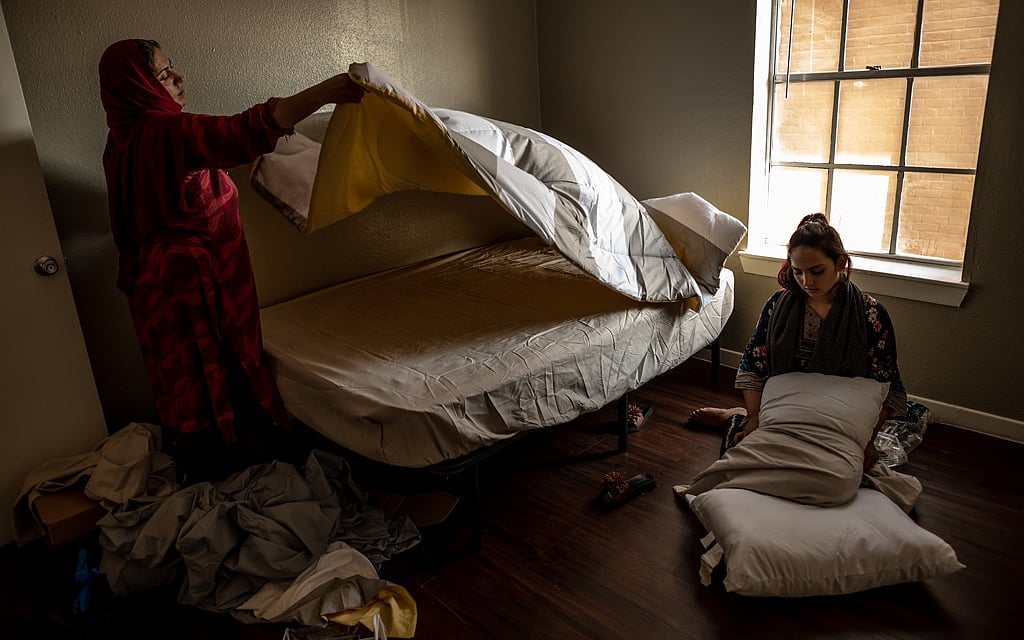
Volunteers from Houston Welcomes Refugees showed up with boxes of items to furnish the family’s new home. The children gleefully retrieved robots, cars and other toys. As the beds were being set up, Melad, 6, and Murtaza, 2, bounced on the mattresses.
Bibi Yousafzai hugged the iron; she admired the crockery, glasses and porcelain bowls as she unwrapped them. “One day I will speak English and talk to you guys,” she said through her husband.
A text popped on Yousafzai’s phone from Bird, asking for the Yousafzai children’s clothing sizes. He planned to visit on Labour Day weekend with his family.
By Thursday, five Yousafzai children were starting school — close enough to walk, which was fortunate, because the family has no car.
Yet within days of arriving, Yousafzai was facing a quintessential American problem as he juggled drop-offs at three schools with getting to appointments. “I am having time management challenges,” he said ruefully.
On their first outing to a Walmart, everyone was bewildered by the wide selection of products and the size of the store.
“America does have everything,” Bibi Yousafzai said as she scanned the aisles.
In addition to basic household supplies, the couple filled the cart with bananas, pears, plums and honey cake. In the cookie aisle, they tossed in a pack of vanilla Oreos.
Their first US shopping spree set them back $82.43, which Yousafzai paid in cash.
On the way home, he muttered that he needed to find a job very soon.
© 2021 The New York Times Company













