


Published : 21 Dec 2019, 03:10 PM
Updated : 17 Oct 2022, 11:50 AM


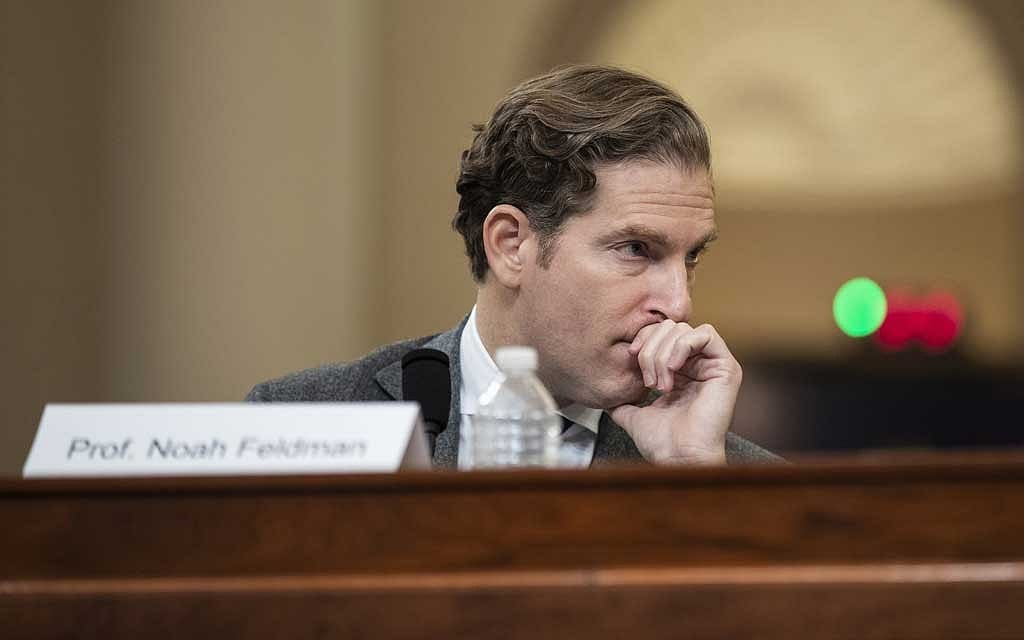
Impeachment happens, according to Noah Feldman, a Harvard law professor, only when the House transmits the articles of impeachment to the Senate.
So “technically speaking,” he said, “the president still hasn’t been impeached.”
That idea has left much of the legal academy unconvinced, including Laurence Tribe, one of Feldman’s colleagues at Harvard. “The argument is textually bizarre, historically inaccurate, structurally misguided and functionally misleading,” Tribe said.
Feldman was one of three constitutional scholars to testify in favour of impeachment before the House Judiciary Committee this month. Jonathan Turley, a law professor at George Washington University and the sole scholar invited by Republicans to testify against impeachment at that hearing, also disagreed with Feldman.
Trump was impeached Wednesday, Turley said. “Article I, Section 2 says that the House ‘shall have the sole power of impeachment.’ It says nothing about a requirement of referral to complete that act.”
The question of precisely when impeachment happens would ordinarily be of interest to almost no one. But it has taken on at least symbolic weight given Speaker Nancy Pelosi’s statement that the House may not transmit the articles of impeachment until it is satisfied that the Senate will conduct a fair trial.
Feldman set out his views in a Bloomberg Opinion article Thursday and elaborated on them in an interview. History supported his position, he said, as the framers of the Constitution drew on English procedures under which the House of Commons brought charges of impeachment to the House of Lords.
“The act known as impeachment was an act that took place in the upper house when people from the lower house appeared at the bar of that other house and said, ‘We hereby impeach so-and-so for high crimes and misdemeanours,’” Feldman said.
He added that the term itself supported his view.
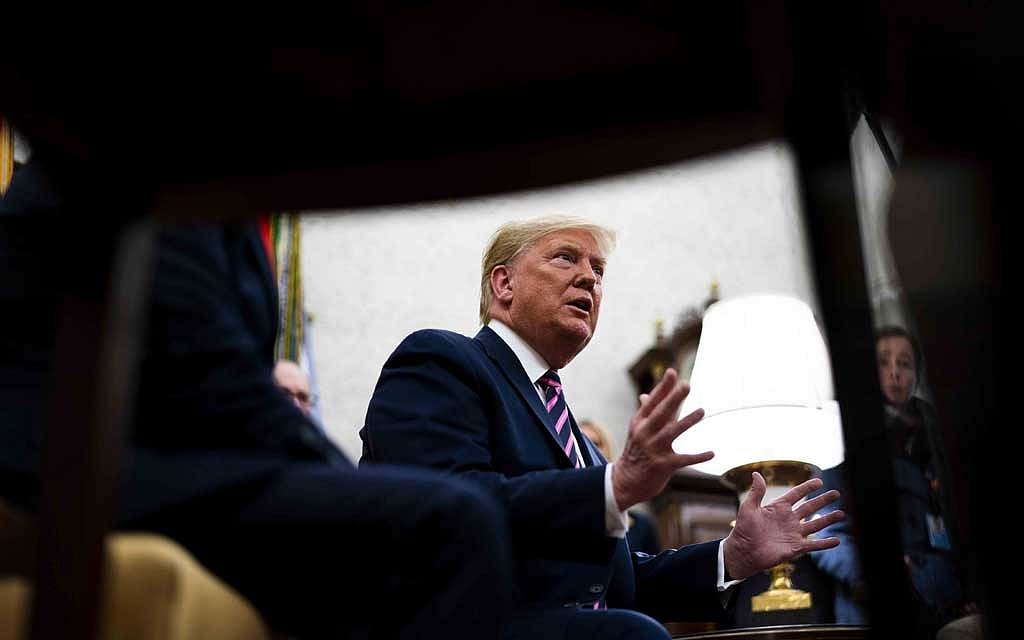
President Donald Trump makes remarks with Rep Jeff Van Drew (D-NJ) during their meeting in the Oval Office of the White House in Washington, Dec 19, 2019. Stung by impeachment, Trump, barring the unforeseen, will be the first American president to face voters after being charged with high crimes and misdemeanours. The New York Times
But impeachment is functionally similar to a criminal indictment, and few people would say a grand jury had not indicted someone after voting to do so, even if no trial followed. But Feldman said that was a poor analogy.
The Constitution itself is terse. As Turley noted, it gives the House “the sole power of impeachment,” which suggests that the House may also decide when it has impeached the president. The Senate, by contrast, is granted “the sole power to try all impeachments.”
In his article, Feldman wrote that “the constitutional logic of impeachment” requires the House to transmit the articles before the president can be said to have been impeached. “A president who has been genuinely impeached,” he wrote, “must constitutionally have the right to defend himself before the Senate.”
Feldman and Tribe used the same thought experiment to come to opposite conclusions on the question of when impeachment happens. Suppose, they said, that President Richard Nixon had not resigned in the face of pending impeachment, as he did, but after the House voted for articles of impeachment and before transmitting them to the Senate.
“If Nixon had resigned in the few minutes between a House impeachment and the transmission of the articles,” Feldman said on Twitter, “constitutionally he would not have been impeached.”
Tribe took the contrary view. “We would all say, for sure, that Nixon had been impeached,” he said.
Feldman was not without allies. “A vote to impeach without attempting a prosecution (like not delivering the articles) is unrecognisable historically as ‘impeachment,’” Jed Shugerman, a law professor at Fordham, wrote on Twitter.
The debate struck some observers as fit for a faculty lounge but of no larger consequence. The two Harvard professors were “engaged in what may truly, and literally, be described as a paradigmatic *academic* debate about whether the House has already impeached Trump,” Martin Lederman, a law professor at Georgetown, wrote on Twitter.
On that point, Tribe and Feldman were united in their disagreement, if for different reasons.
“There are academic debates all the time that have no direct relevance to public discourse,” Feldman said. “This one is paradigmatically not an academic dispute. It’s paradigmatically a dispute about what people are saying in the highest circles of the US government about the most significant thing Congress can do under the Constitution.”
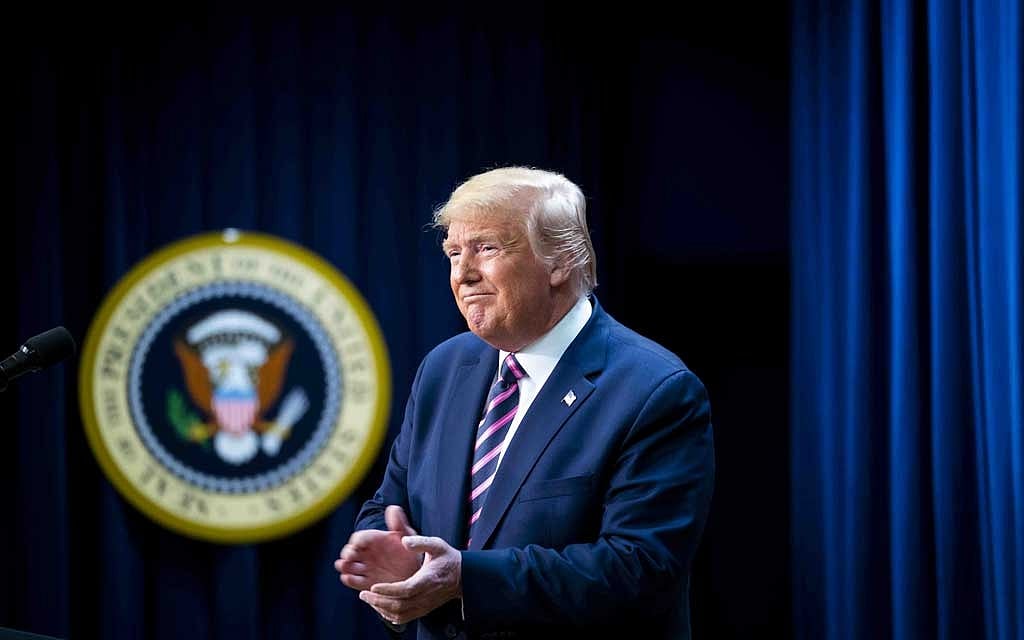
President Donald Trump at the White House Summit on Transforming Mental Health Treatment to Combat Homelessness, Violence, and Substance Abuse in Washington on Thursday, Dec 19, 2019. Trump has said he looks forward to defending himself in an impeachment trial in the Senate. The New York Times
“It does affect things atmospherically,” he said. “If the president latches onto the idea that one of the Democratic experts who testified before the House Judiciary Committee says he hasn’t been impeached yet,” Tribe said, “that will become a kind of distracting rallying cry.”
Still, Feldman acknowledged that the upshot of his position was “more symbolic than practical.”
“The only consequence is that if some time passes and they never present the articles, the president can begin to say, with credibility, that he has not actually been impeached,” Feldman said.
Frank Bowman, a law professor at the University of Missouri and author of “High Crimes and Misdemeanours: A History of Impeachment for the Age of Trump,” said “the technical argument that Trump is not really and truly ‘impeached’ without transmission of the articles is unconvincing to me. But I also think it’s irrelevant.”
What was more urgent, he said, was questioning what he called Pelosi’s “silly, counterproductive strategy” of holding off sending the charges to the Senate.
In an article in The Atlantic, Bowman wrote that “it is no proper business of the House to forestall a senatorial verdict, however deplorable it may think it, with procedural tricks.”
“The Democrats’ implied assertion that the House has any say in the procedures the Senate adopts for an impeachment trial,” he added, “smacks of hypocrisy.”
On Wednesday, almost every news outlet in America published headlines saying that Trump had been impeached. Was that wrong?
Feldman said he had no quarrel with the headlines, which he noted used an acceptable colloquial shorthand. But, he added, “it’s not accurate in a technical, historical or constitutional sense.”
© 2019 New York Times News Service













