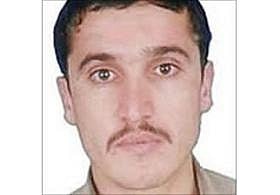
Al Qaeda No 2 killed in Pakistan
Atiyah abd al-Rahman was killed on Aug 22 in Waziristan of Pakistan, a senior US official has said
bdnews24.com News Service
bdnews24.com
Published :
27 Aug 2011, 06:32 PM
Updated :
10 Aug 2022, 05:21 PM
Washington, Aug 28 (bdnews24.com/Reueters) -- The number two leader of al Qaeda, Atiyah abd al-Rahman, was killed on August 22 in Pakistan, a senior US official has said.
The official on Saturday, however, did not say how Rahman was killed, but said it happened in Waziristan, northwest Pakistan.
The death, coming soon after the May killing of al Qaeda leader Osama bin Laden, was a huge blow to the extremist organisation, the US official said.
"Atiyah's death is a tremendous loss for al Qaeda, because (Ayman al-Zawahri) was relying heavily on him to help guide and run the organisation, especially since Bin Laden's death," the official said. Zawahri replaced bin Laden as the leader of al Qaeda after bin Laden was killed, also in Pakistan.
"The trove of materials from Bin Laden's compound showed clearly that Atiyah was deeply involved in directing al Qaeda's operations even before the raid. He had multiple responsibilities in the organisation and will be very difficult to replace," the US official said.
US Defence Secretary Leon Panetta said last month on a visit to Afghanistan that he believed the strategic defeat of al Qaeda was within reach if the United States could kill or capture up to 20 remaining leaders of the core group and its affiliates.
"We're within reach of strategically defeating al Qaeda and I'm hoping to be able to focus on that, working obviously with my prior agency as well," said Panetta, who ran the CIA until the end of June.
Believed to be in his late 30s, he was a close confident of Osama Bin Laden, who was killed in Pakistan in May by US special forces.
Atiyah joined Bin Laden in Afghanistan as a teenager in the 1980s. He later gained a reputation within al-Qaeda as an explosives expert and Islamic scholar.
He retreated with Bin Laden to the Afghanistan-Pakistan border region after the US-led invasion of Afghanistan in late 2001, and became a link to other Islamist militant groups in the Middle East and North Africa.
In June 2006 the US military recovered a letter he wrote to the late Abu Musab al-Zarqawi, the Jordanian who ran al-Qaeda in Iraq, chastising him for alienating rival insurgent groups and attacking Shia Muslims.
Abd al-Rahman is also said to have successfully brokered a formal alliance with the Algerian Salafist Group for Preaching and Combat (GSPC), which changed its name to al-Qaeda in the Islamic Maghreb.
More recently, he was reportedly appointed al-Qaeda's emissary in Iran.
bdnews24.com/mrh/pks/0040h