


Published : 26 Aug 2021, 12:29 AM
Updated : 14 Oct 2022, 06:57 PM


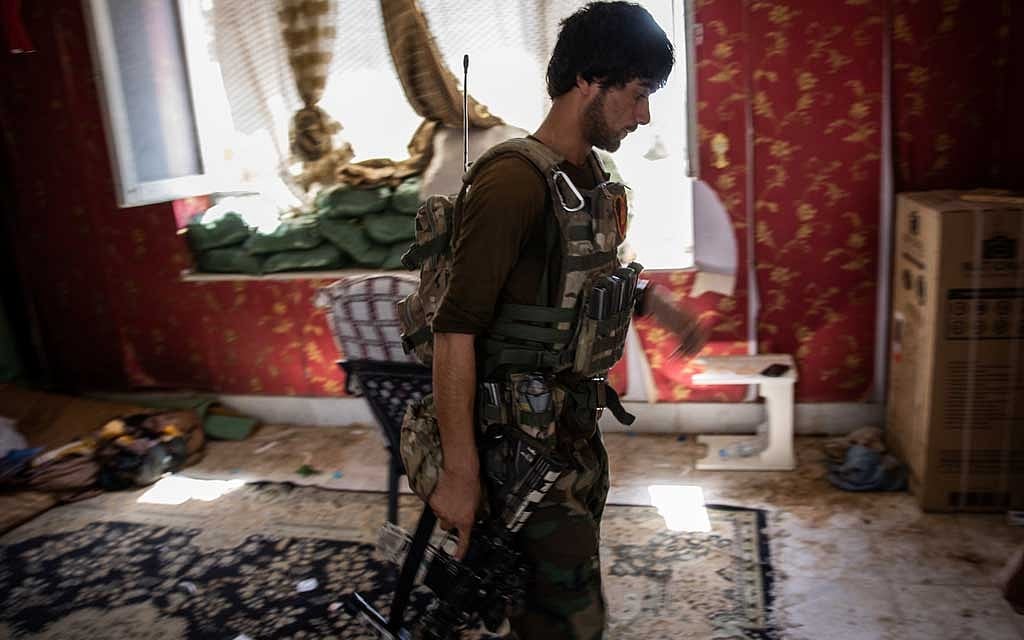
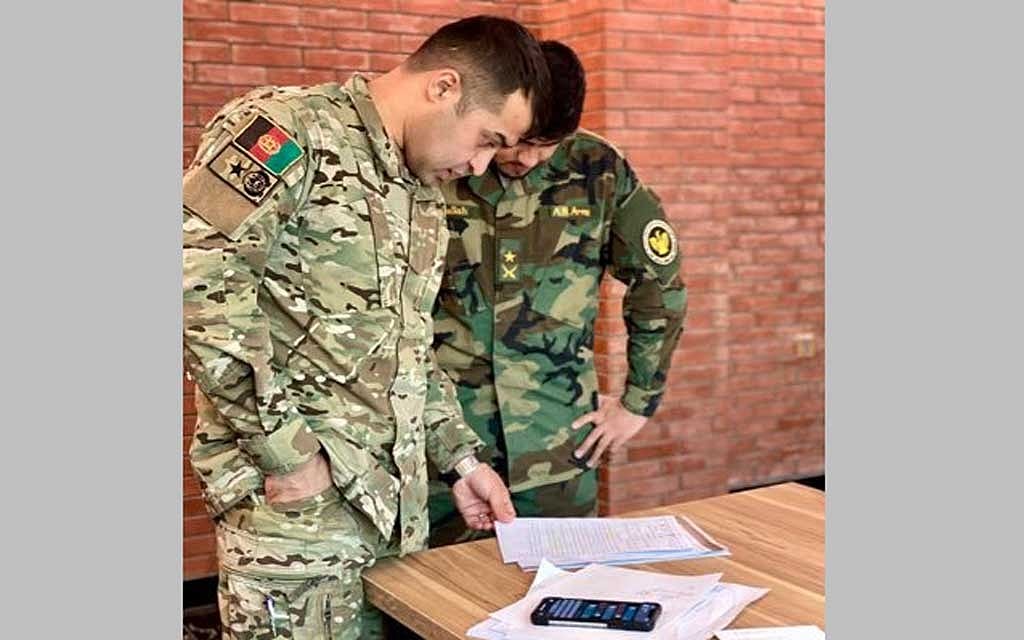
Lt Gen Sami Sadat, who commanded the Afghan National Army’s 215 Maiwand Corps in southwestern Afghanistan, wrote an article published by The New York Times on Wednesday, saying he is “exhausted”, “frustrated”, and “angry”.
Sadat, who served as a senior director in Afghanistan’s national intelligence agency, said he fought “day and night, nonstop,” in southern Afghanistan’s Helmand Province against an escalating and bloody Taliban offensive for the past three and a half months.
“Coming under frequent attack, we held the Taliban back and inflicted heavy casualties. Then I was called to Kabul to command Afghanistan’s special forces. But the Taliban already were entering the city; it was too late.”
He said it pains him to see US President Joe Biden and Western officials blaming the Afghan Army for collapsing “without mentioning the underlying reasons that happened”.
“It’s true that the Afghan Army lost its will to fight. But that’s because of the growing sense of abandonment by our American partners and the disrespect and disloyalty reflected in Mr Biden’s tone and words over the past few months. The Afghan Army is not without blame. It had its problems — cronyism, bureaucracy — but we ultimately stopped fighting because our partners already had.
“Political divisions in Kabul and Washington strangled the army and limited our ability to do our jobs. Losing combat logistical support that the United States had provided for years crippled us, as did a lack of clear guidance from US and Afghan leadership.”
The three-star general in the Afghan Army led 15,000 men in combat operations against the Taliban in southwestern Afghanistan for 11 months and lost hundreds of officers and soldiers.
“That’s why, as exhausted and frustrated as I am, I wanted to offer a practical perspective and defend the honour of the Afghan Army. I’m not here to absolve the Afghan Army of mistakes. But the fact is, many of us fought valiantly and honourably, only to be let down by American and Afghan leadership.”
President Ashraf Ghani named him commander of Afghanistan’s special forces, the country’s most elite fighters two weeks ago, while battling to hold the southern city of Lashkar Gah from the Taliban.
Lt Gen Sami Sadat. Photo from Twitter
“There is an enormous sense of betrayal here. Mr Ghani’s hasty escape ended efforts to negotiate an interim agreement for a transition period with the Taliban that would have enabled us to hold the city and help manage evacuations. Instead, chaos ensued — resulting in the desperate scenes witnessed at the Kabul airport.”
“It was in response to those scenes that Mr Biden said on Aug 16 that the Afghan forces collapsed, ‘sometimes without trying to fight’. But we fought, bravely, until the end. We lost 66,000 troops over the past 20 years; that’s one-fifth of our estimated fighting force.”
Sadat pointed out three reasons behind the Afghan military’s collapse.
First, former US president Donald Trump’s February 2020 peace deal with the Taliban in Doha “doomed us”, the Afghan commander said. “It put an expiration date on American interest in the region.”
Second, the Afghanistan Army lost contractor logistics and maintenance support critical to their combat operations.
Third, the “corruption endemic” in Ghani’s government that “flowed to senior military leadership and long crippled our forces on the ground irreparably hobbled us”, Sadat said.
The Afghan commander said well-documented corruption that rotted the country’s government and military “really is our national tragedy”.
He said the Trump-Taliban agreement shaped the circumstances for the current situation by “essentially” curtailing offensive combat operations for US and allied troops. The US air-support rules of engagement for Afghan security forces effectively changed overnight, and the Taliban were emboldened.
“They could sense victory and knew it was just a matter of waiting out the Americans. Before that deal, the Taliban had not won any significant battles against the Afghan Army. After the agreement? We were losing dozens of soldiers a day.”
Afghan forces still kept fighting, but then Biden confirmed in April he would stick to Trump’s plan and set the terms for the US drawdown.
“That was when everything started to go downhill.
The Afghan forces were trained by the Americans using the US military model based on highly technical special reconnaissance units, helicopters and airstrikes. They lost their superiority to the Taliban when their air support dried up and ammunition ran out.
Contractors maintained their bombers and their attack and transport aircraft throughout the war. By July, most of the 17,000 support contractors had left. A technical issue now meant an aircraft — a Black Hawk helicopter, a C-130 transport, a surveillance drone — would be grounded.
The contractors also took proprietary software and weapons systems with them. They physically removed helicopter missile-defence system. Access to the software that Afghan forces relied on to track our vehicles, weapons and personnel also disappeared. Real-time intelligence on targets went out the window, too.
The Taliban fought with snipers and improvised explosive devices while Afghan forces lost aerial and laser-guided weapon capacity. And since they could not resupply bases without helicopter support, soldiers often lacked the necessary tools to fight. The Taliban overran many bases; in other places, entire units surrendered.
Biden’s full and accelerated withdrawal only exacerbated the situation, ignoring conditions on the ground, Sadat said.
The Taliban had a firm end date from the Americans and feared no military reprisal for anything they did in the interim, sensing the lack of US will.
“And so the Taliban kept ramping up. My soldiers and I endured up to seven Taliban car bombings daily throughout July and the first week of August in Helmand Province. Still, we stood our ground.”
“The final days of fighting were surreal,” Sadat said, “We engaged in intense firefights on the ground against the Taliban as US fighter jets circled overhead, effectively spectators.
“Our sense of abandonment and betrayal was equalled only by the frustration US pilots felt and relayed to us — being forced to witness the ground war, apparently unable to help us. Overwhelmed by Taliban fire, my soldiers would hear the planes and ask why they were not providing air support. Morale was devastated. Across Afghanistan, soldiers stopped fighting.
“We held Lashkar Gah in fierce battles, but as the rest of the country fell, we lacked the support to continue fighting and retreated to base. My corps, which had carried on even after I was called away to Kabul, was one of the last to give up its arms — only after the capital fell.
“We were betrayed by politics and presidents.
“This was not an Afghan war only; it was an international war, with many militaries involved. It would have been impossible for one army alone, ours, to take up the job and fight. This was a military defeat, but it emanated from political failure,” said Sadat, a graduate of the Defence Academy of the UK who has a master's degree from King’s College London.













