


Published : 13 Aug 2021, 01:50 AM
Updated : 14 Oct 2022, 06:56 PM


With the Taliban’s sudden gains in Kandahar, in the country’s southern Pashtun heartland, and Herat, a vital cultural and economic hub, the insurgents appear to be nearing a complete military takeover. Only four major cities — including the capital, Kabul — remain under government control, and two of them are under siege by the Taliban.
Both cities were heavily defended, in battles that raged for weeks. But increasingly, the Afghan security forces appear to be collapsing, with many soldiers and policemen reported to be deserting or even changing sides in some places.
Both cities offer resonant victories for the Taliban, who have swept across the country in a brutal military campaign since international troops began withdrawing in May. The insurgents now control over half the country’s 400-odd districts. And with the fall of Kandahar and Herat, along with another provincial capital south of Kabul, Ghazni — all on Thursday — the insurgents will control 12 provincial capitals.
Kandahar, in particular, is a huge prize for the Taliban. It is the economic hub of southern Afghanistan, and it was the birthplace of the insurgency in the 1990s and served as the militant’s capital during their five-year rule. By seizing the city, the Taliban can effectively proclaim a return to power, if not complete control.
For weeks, a mix of Afghan army, commando and special police units have desperately tried to hold Kandahar city as it came under Taliban siege. But Thursday, Taliban fighters broke through nearly every front line surrounding the city, according to members of the security forces. They also overran Kandahar’s central prison Wednesday, freeing hundreds of inmates, using a strategy of swelling their ranks practiced for well over a decade.
Many Afghan forces retreated to the governor’s compound, which also came under attack by insurgents, according to a member of the Afghan security forces. The road to Kandahar’s airport also came under heavy fire from Taliban fighters. Within hours, nearly all commando and special police units had fled the city, effectively handing it over to the Taliban, according to officials and witnesses.
At the same time, to the northwest in Herat, the Taliban seized control of the city’s police headquarters after weeks of intense fighting. But Afghan forces and militias loyal to Ismail Khan, a former warlord, struggled to fend off the insurgents attacks as they advanced deeper into the city, even with the added support of Afghan and US air campaigns that have tried to slow the Taliban’s advance, officials said.
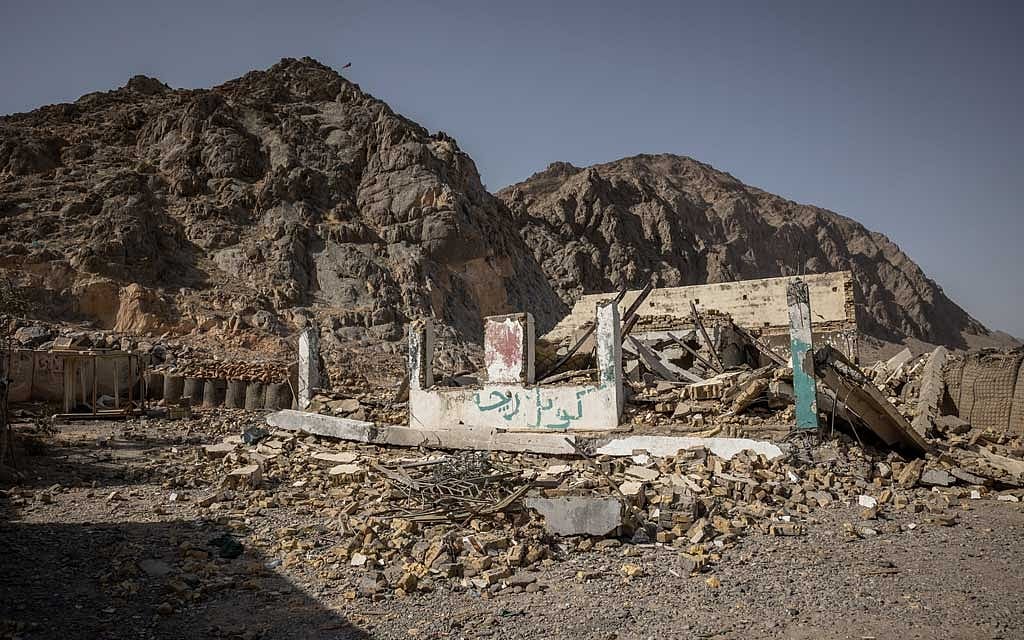
A police outpost, Aug. 4, 2021, was destroyed by the Taliban after the group had briefly overrun it this month in Kandahar, Afghanistan. The Taliban seized nine cities over six days in a major escalation of their military offensive. (Jim Huylebroek/The New York Times)
“Most compounds collapsed without fighting,” said Sami Nusrat, a spokesperson for the Herat police. “Some compounds and houses were burned down by the Taliban. The Taliban are opening fire into the air to celebrate.”
Ehsan Shafiq, a resident of Herat city, described hearing intense fighting Wednesday night. But by the following morning, the Taliban barely fired a shot as they flooded into the city from the east in an apparent surrender of Herat by government forces.
“They took it everywhere; the forces had already left there before. It was the process of surrender of Herat to the Taliban,” he said. “Now they stand at every square and are placed in government offices.”
Earlier Thursday, the Taliban also took control of Ghazni, a provincial capital and strategic city about 90 miles south of Kabul. By capturing Ghazni, the Taliban are in a better position to carry out attacks on Kabul, the country’s capital, from the south.
©2021 The New York Times Company







