Published : 26 Sep 2026, 07:53 PM
Updated : 26 Sep 2026, 07:53 PM


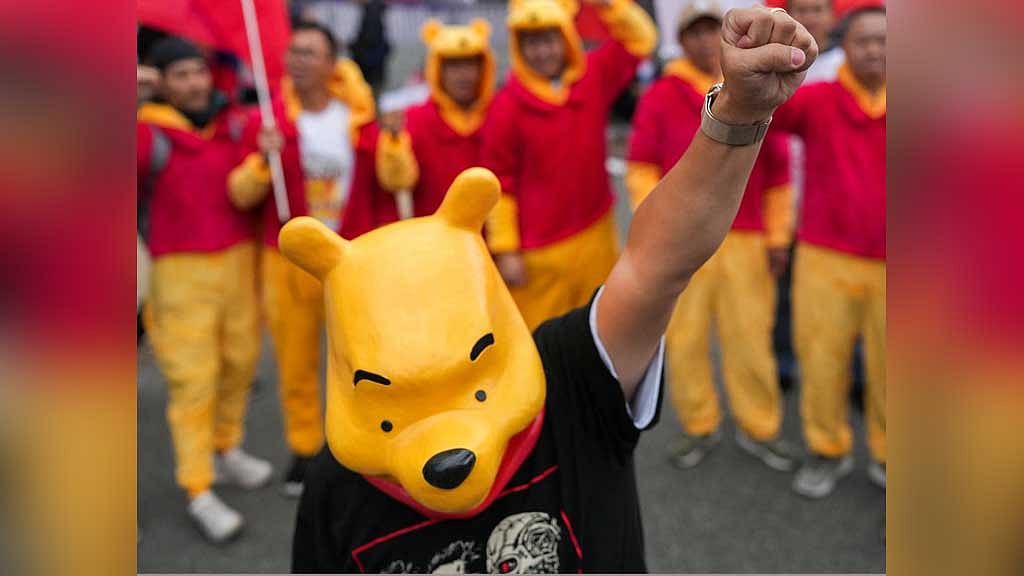
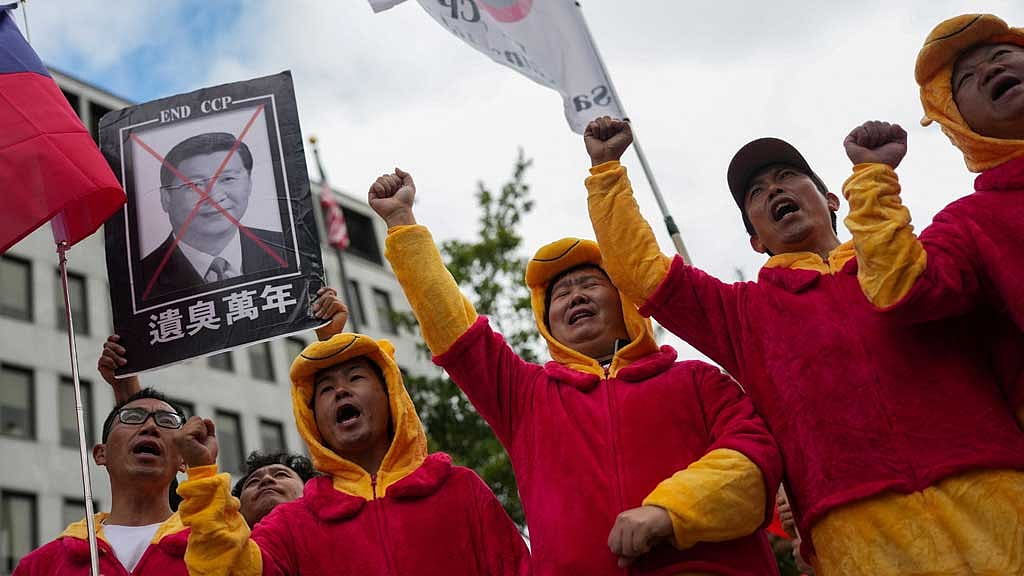
Winnie the Pooh has once again stepped into the political spotlight as protesters took aim at Chinese President Xi Jinping during his visit to the United States.
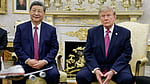
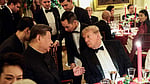
The protesters gathered on Thursday as US President Donald Trump hosted Xi and his wife Peng Liyuan at a White House state dinner, Firstpost reports.
They shouted slogans including “Free Hong Kong”, “Xi Jinping, you’re not welcome” and “Freedom for political prisoners”, the Indian news outlet said.
Some waved Taiwanese flags and held signs calling for religious freedom and an end to what they described as dictatorship.
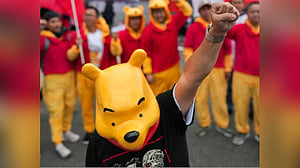
Pooh-clad protesters were also seen outside the Waldorf Astoria, where Xi and Peng have been staying.
Videos of the demonstrations have circulated on social media, with protesters shouting, “Xi Jinping, step down! Communist Party, step down!”
The choice of costume stems from a series of online comparisons between Xi and the cartoon bear.
In 2013, when Xi visited the US, a social media user placed a photograph of him walking with then US President Barack Obama alongside an image of Pooh walking with Tigger.
Similar comparisons followed in 2014 and 2015.
In 2015, Xi was photographed emerging from the roof of his Red Flag limousine while inspecting troops. A photo of a Pooh toy in a small car was then placed alongside it.
The comparison was reportedly the most censored image of 2015, with Global Risk Insights saying Chinese authorities viewed it as an attempt to undermine the dignity of Xi and the presidential office.
Chinese authorities subsequently restricted images and references to Pooh.
In 2017, the words “Winnie the Pooh” were briefly blocked on Weibo and Baidu.
A year later, Christopher Robin was blocked, while HBO was also blocked after comedian John Oliver mocked Xi’s apparent sensitivity to the comparisons, according to Firstpost.
Pooh imagery has since been used by critics to express dissent.
Protesters in Hong Kong wore Pooh masks during pro-democracy demonstrations in 2019, while the character also appeared in protests against China’s Covid-19 lockdowns.
In 2019, student Luo Daiqing was sentenced to six months in prison after retweeting an image of Xi’s face superimposed on Pooh’s body, the report said.
Rongbin Han, an associate professor of international affairs at the University of Georgia, told National Public Radio (NPR) that critics have used the bear as a stand-in to denounce Chinese government policies.
That association has made Pooh a recurring symbol of protest against Xi and the Chinese government, Firstpost reported.