


Published : 11 Sep 2014, 07:10 PM
Updated : 08 Aug 2022, 07:09 PM


At least 30 people were killed and 86 others injured in the Iraqi capital in a pair of twin attacks that coincided with the unannounced visit of US Secretary of State John Kerry, security sources said Thursday.
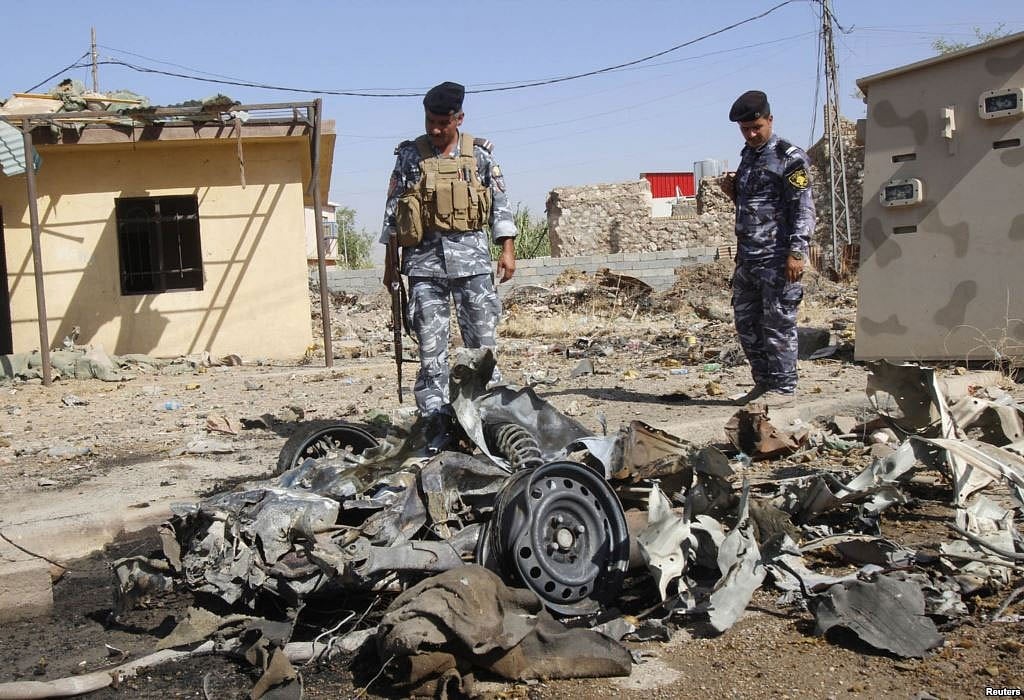
The first two blasts Wednesday took place in the mostly Shia southeastern neighbourhood of New Baghdad, killing 20 people and injuring 56.
A car bomb targeting a police station exploded, while a suicide bomber blew himself up near a cinema.
The second double attack took place Wednesday evening in the eastern neighbourhood of al-Ghadir where two vehicles blew up near a popular market, killing 10 people and injuring 30, the security sources said.
The attacks coincided with the arrival of Kerry in Baghdad on an unannounced visit at the beginning of a regional tour which will include Jordan and Saudi Arabia and is designed to build support for Washington's campaign against the Islamic State (IS) Sunni extremist group in Iraq and Syria.
In the Saudi city of Jeddah, Kerry will meet Thursday with representatives of Saudi Arabia, Kuwait, the United Arab Emirates (UAE), Bahrain, Oman, Qatar, Jordan, Egypt and Turkey.
The coalition aimed at fighting the IS jihadis would be the "broadest possible" and would be designed to last for "months or even years", Kerry said before starting his trip.
In a possible reflection of the Saudi-Iranian struggle for influence in the region, the Islamic Republic criticized the emerging coalition, saying some of its members backed “terrorists” in Iraq and Syria, an apparent reference to several Gulf Arab states including Riyadh who back Syrian rebel groups.
Foreign ministry spokeswoman Marzieh Afkham, speaking on state television about the US-led alliance, said there were "severe misgivings about its determination to sincerely fight the root causes of terrorism".
She made no mention of a prime-time speech on Wednesday in which President Barack Obama announced he had authorized stepped-up US air strikes in Iraq and would for the first time extend the aerial assault into Syria.
Obama also vowed to beef up support for moderate rebels fighting to overthrow Syrian President Bashar al-Assad.
Also on Wednesday, in Baghdad, Kerry endorsed Iraqi Prime Minister Haider al-Abadi's plans to mend Baghdad's ties with Sunnis and Kurds, and said Abadi's new Shi'ite-led government was "the heart and backbone" of the fight against Islamic State.
Kerry, on a tour of the Middle East to build military, political and financial support to defeat the militants, said "a new and inclusive Iraqi government has to be the engine of our global strategy against ISIL."
Kerry arrived in Jeddah, the summer seat of the Saudi government, to seek support for a number of initiatives that Washington hopes will undermine the militants.
The initiatives include efforts to stop the flow of money to the group by tackling oil smuggling and cracking down on contributions from private donors, the senior U.S. State Department official told reporters travelling with Kerry.
MILITARY CAMPAIGN
In the Jeddah talks, Kerry will urge regional television news outlets, specifically Al Jazeera and Al Arabiya, to air anti-extremist messages, said the senior US official.
"They need to get at the clerics because the clerics can get at the mosques in the neighbourhood and they have to expose ISIL for what it is," the official told reporters.
Saudi Arabia is pivotal, say US officials, because of its regional stature and influence with Sunni Arabs.
The White House says it will target the group's "leadership, logistical and operational capability," and attempt to "deny it sanctuary and resources to plan, prepare and execute attacks.”
Saudi Arabia's senior clergy have been attacking Islamic State and al Qaeda over the past month, denouncing the militant groups as heretical and saying it is forbidden to support them.
US officials said a critical component of the plan to train and equip the Syrian insurgents, who have received only modest American backing so far and have failed to coalesce into a potent fighting force, was the Saudis' willingness to allow use of their territory for the US training effort.
UAE ambassador Yousef al Oteiba, writing in the Wall Street Journal, said his country was ready to join what he termed a coordinated international response that should to be waged not only on the battlefield but also against militant ideology.







