Published : 29 Sep 2026, 11:41 AM
Updated : 29 Sep 2026, 11:41 AM


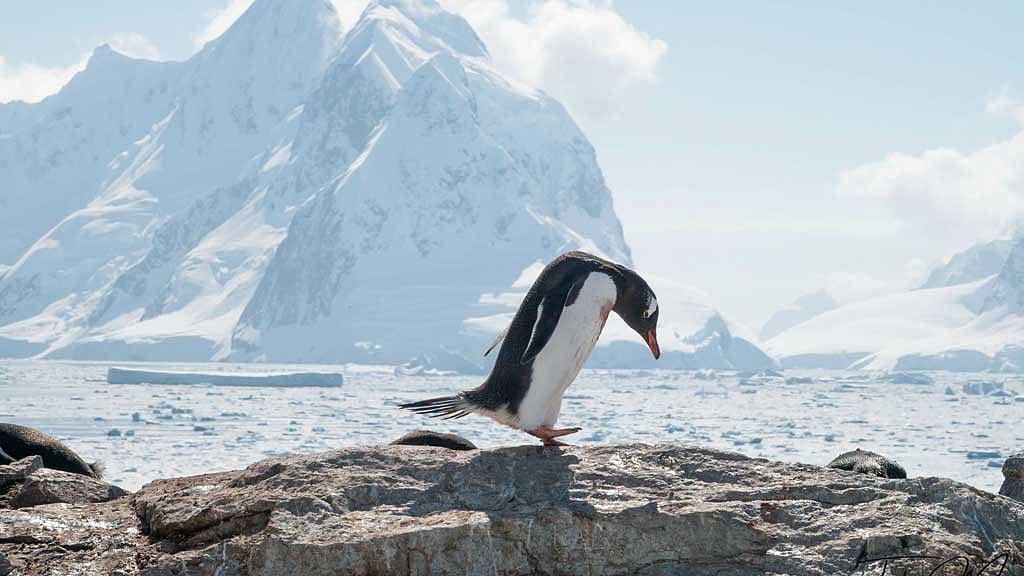
Scientists have identified a new species of penguin for the first time in more than 100 years, after finding evidence that gentoo penguins comprise four distinct species.
Researchers identified the previously unknown species, named Pygoscelis kerguelensis, as part of a study published in Communications Biology.
The research was led by penguin experts including Chilean and University of California, Berkeley biologists.
The new species, also known as the southeastern gentoo penguin, lives on the remote Kerguelen Islands in the Indian Ocean, around 1,200 miles north of Antarctica.
The discovery marks the first identification of a new penguin species by scientists in more than a century. The last was the northern rockhopper penguin in 1921, according to BBC Wildlife.
Although Pygoscelis kerguelensis may look identical to other gentoo penguins, researchers found that the differences lie in their genetics.
The study identified four evolutionary lineages of gentoo penguins: northern, southern, southeastern and eastern.
Northern gentoo penguins, Pygoscelis papua, live on the Falkland Islands and Martillo Islands, while eastern gentoo penguins, Pygoscelis taeniata, are found on the Crozet, Marion and Macquarie islands.
The southern gentoo has a larger number of genes linked to “heat generation, fat and lipid storage and light perception” because of its cold habitat, as per a University of California, Berkeley media statement.
The study also found that the eastern gentoo has more genes linked to “enhanced diving capacity” and “energy-efficient carbohydrate metabolism”.
Researchers said future projections indicate that the southeastern, northern and eastern penguins will face “severe habitat losses”, while the southern gentoo may expand its range.
The southern gentoo is the only one of the four species that lives in Antarctica.
“In Antarctica, of course, other species, not the gentoo, are threatened by climate change. But the gentoo is of most concern in the sub-Antarctic region,” Juliana Vianna, one of the study’s senior authors and a professor at Andrés Bello National University in Santiago, Chile, said in the University of California, Berkeley statement.
Vianna said non-Antarctic penguins are expected to experience habitat loss because of climate change and warming oceans, along with habitat destruction.
She said it is “very important” for conservation experts around the world to take action to protect the three threatened gentoo species.