Published : 22 Sep 2026, 04:49 PM
Updated : 22 Sep 2026, 04:49 PM


Companies betting that AI devices will usher in a post-smartphone era are facing growing privacy concerns that could slow adoption of the emerging technology.
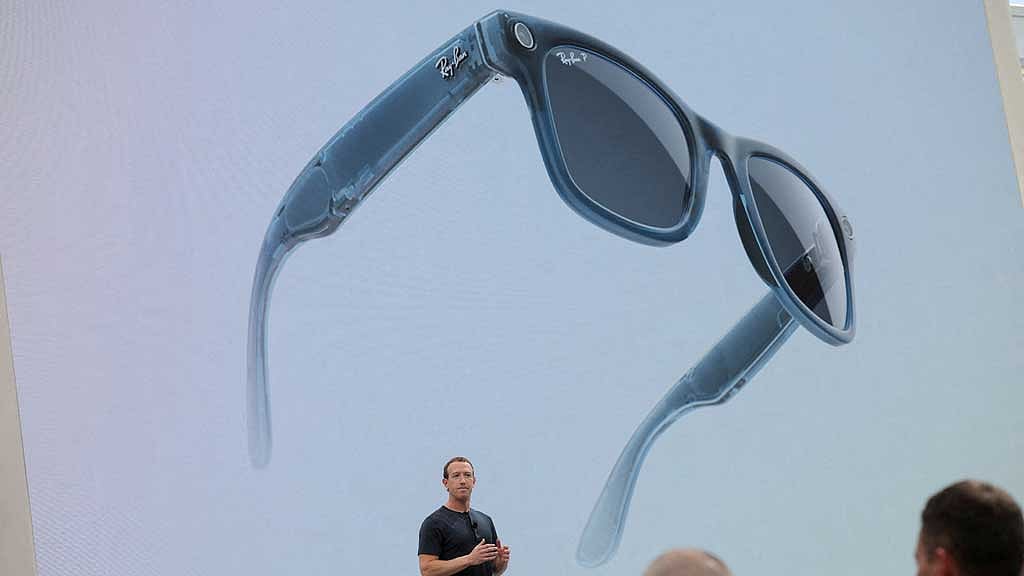
The backlash has been particularly strong against Meta's Ray-Ban smart glasses, which combine familiar eyewear designs with artificial intelligence capable of seeing, hearing and responding to the surrounding environment.
The glasses have drawn scrutiny from privacy lawsuits, users concerned about covert recordings and critics warning that widespread AI eyewear could weaken expectations of anonymity and consent. Several UK venues, including pub chain Wetherspoon, have restricted their use.
Meta is expected to unveil camera-free smart glasses as early as Wednesday at its Connect conference, according to media reports, as technology companies compete for a share of the more than $600 billion smartphone market.
Device makers are experimenting with glasses, pins, pendants and voice recorders that attach to smartphones, according to Reuters interviews with technology executives, analysts and legal experts. Some companies are seeing stronger demand from businesses than consumers.
The outcome of the privacy debate could shape the development of AI wearables as a new computing platform. Features such as always-on cameras, microphones and environmental awareness can make the devices more useful, but could also become barriers to adoption if consumers do not trust them.
Samsung plans to enter the smart-glasses market later this year through partnerships with Gentle Monster and Warby Parker, although it does not see the devices as replacements for smartphones.
"The winning form factors will be the ones that make interaction more natural, useful and trusted," said Jay Kim, executive vice president at Samsung's mobile division.
AI devices could become more difficult to develop if companies cannot address privacy concerns, particularly for startups whose products depend on collecting information from users' surroundings.
OpenAI CEO Sam Altman has described an "always-on device" that could understand a user's surroundings and know when to assist or remain silent.
Altman said such a device would ultimately need to process information locally rather than continuously sending it to cloud servers, arguing that users would be reluctant to have a device watching and listening to their lives while transmitting that information externally.
He said local AI processing could take a couple more years depending on how quickly OpenAI can scale its processors.
Privacy experts say the challenge is that AI devices become more useful as they collect more information, including footage of people who may never have agreed to being recorded.
Meta Faces Lawsuit Over Recordings
A lawsuit against Meta and Luxottica of America alleges that recordings captured by smart glasses were uploaded to Meta's servers and viewed by human annotators to train AI systems.
The lawsuit alleges that recordings included people changing clothes, using bathrooms and handling financial information. Ryan Clarkson, whose firm represents consumers in the case, said people recorded by the glasses often appeared unaware they were being filmed.
Meta said a light that cannot be switched off while recording is intended to protect people nearby, and that the camera is disabled if the light is covered or tampered with.
The company said it disagrees with the allegations and will contest the lawsuit. Meta also said reviewing user data to improve products is common across the industry and that it removes identifying information from such data.
Luxottica and OpenAI did not immediately respond to Reuters requests for comment.
Camera-Free Alternatives Gain Traction
The privacy backlash has encouraged some companies to develop smart glasses without cameras.
Shenzhen-based startup Even Realities introduced its camera-free G1 glasses in 2024 and launched its G2 flagship in November 2025. Founder Will Wang said consumers increasingly associate smart glasses with covert recording and that cameras should be introduced only when stronger safeguards are available.
The company, valued at $1 billion in July, expects to end the year with a few hundred thousand users, with consumers accounting for about 90 percent of its sales, Wang said.
San Francisco-based Pocket is taking a different approach with a phone-mounted recorder that requires users to press a button before capturing conversations. The company said about 170,000 devices were in use eight months after launch, including among employees at DoorDash, Michelin and Santander.
Plaud, which makes card-shaped and wearable AI recorders, has also focused on visible recording controls. Its $249.99 Plaud One Explorer Edition records only when activated and alerts bystanders with lights or an audio announcement.
The company has 2.5 million users and more than $100 million in annual recurring revenue.
Jitesh Ubrani, a director at research firm IDC, said privacy concerns around AI devices were not unprecedented, noting that smartphones also faced similar concerns when cameras and microphones became widespread.
"As a society, we want to make sure there’s consent and awareness when people are being recorded," Ubrani said. "That’s different from being opposed to recording altogether."