


Published : 16 Apr 2022, 09:20 AM
Updated : 03 Aug 2022, 10:03 AM


Europe already had two continental tournaments: the wildly popular Champions League and the broadly tolerated Europa League. Why not add a third, then — one that encompassed all of the teams that were not quite good enough to qualify for the other two competitions?
Why not advertise this new tournament as a way to make European football more “inclusive,” a prize available to the sort of teams that have been locked out of major finals for decades? And make sure to include a single, resentful representative from each of the powerhouse leagues of western Europe? And how about a long, cumbersome and deeply unappealing name?
And yet, though the Conference League as a concept seemed nothing short of folly, the sort of notion that could only be conjured up by a stifling and self-important bureaucracy, we are rapidly approaching the point where we have to acknowledge the improbable: It is, as it turned out, a good idea.
Its games are competitive. Its stadiums are full, or close enough. The teams involved, even the ones that might have been expected to view this new league as an encumbrance, are sufficiently invested in the idea of winning it. There has been at least one angry encounter in a tunnel, the sure sign of a competition with meaning.
Countries that have for years had precious little interest in the final stages of Europe’s showpiece tournaments have found themselves enjoying the best kind of football: winner-take-all in the springtime. Even those fans who initially saw the Conference League as a money-grab, a consolation prize and — worst of all — an entirely artificial construct have been won over.
That unexpected, immediate success is intriguing. The prime charge against the Conference League — as it always is against any newfangled competition — was that it lacked history and therefore could not possibly have any purpose, authenticity or heft.
The past is what football generally mines for meaning. Teams that win the Champions League or a domestic title are weighing themselves against all the teams that have gone before. By winning, these teams can etch their names in the pantheon of their predecessors.
That the Conference League can matter to those involved without any of that history, though, suggests that meaning in football does not function quite as we have assumed it does.
Value is not an innate thing. The Champions League does not carry more weight than any other tournament by divine right. It will not always necessarily be seen as the game’s highest peak; its beginnings, too, were accompanied by such considerable scepticism that the English, initially, did not deign to grace it with their presence.
Nor can significance be reliably measured in pounds, dollars and euros. The Champions League is not the most important tournament because it is the most lucrative; it is the most lucrative because it is the most important. Someone — probably SoftBank, if we’re honest — could launch a far richer competition at any point but would not make it more meaningful.
No, value is not inherent. Rather, it is applied. It is a form of cultural convention, a tacit agreement among players and coaches and executives and, particularly, among fans: We determine which tournaments matter.
The Conference League illustrates that axiom perfectly. The tournament is important because those involved have decreed it to be important.
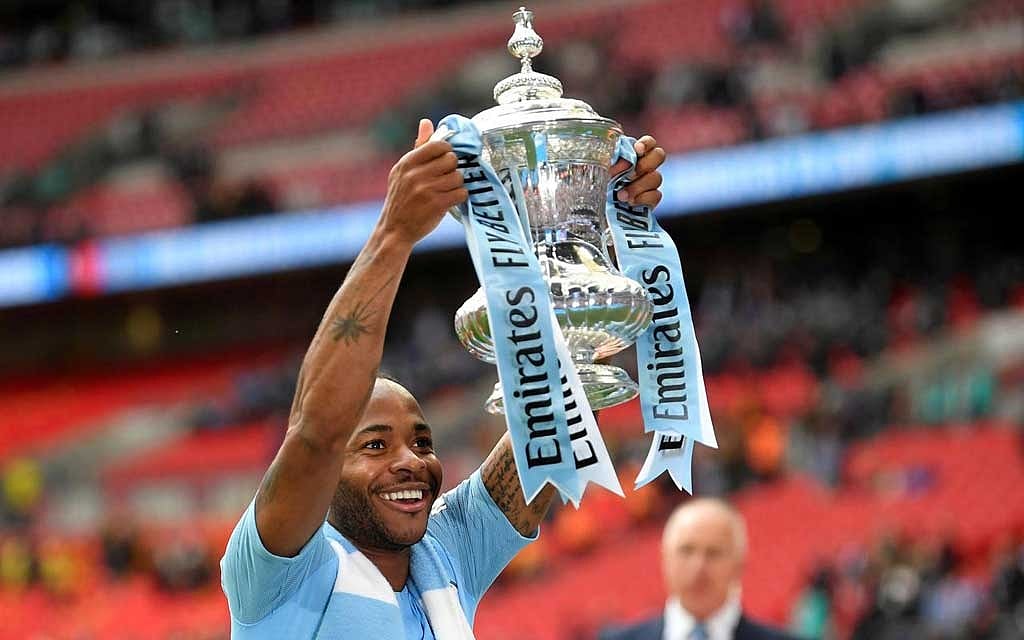
So, too, in reverse, goes the fate of the FA Cup. Anyone who has ever spoken with an English football fan of a particular vintage will know that there once was a time when the FA Cup final was the highlight of the season.
The buildup started hours before kickoff. Fans streamed down by train, car and horse-and-cart by the thousands, ribbons tied to their lapels, hands clasping rattles, just to be on Wembley Way to watch their heroes. To win the cup was, the myth goes, better than winning the league because the whole country watched the cup final.
Myth is, perhaps, a touch harsh. As recently as the mid-1990s, the day of the FA Cup final was the centrepiece of the English football calendar. For years, it was the only game regularly broadcast on television. It was a more widely accessible occasion, and therefore a more memorable one.
Mythical or not, the FA Cup’s status has diminished over the last three decades. The cup no longer matters quite so much as it once did, not because the competition has changed — it has not — but because the circumstances around it have.
The creation of the Premier League necessitated proclaiming that competition’s significance at the expense of almost everything else, and after a while, the propaganda became self-fulfilling. football’s natural order shaped itself around the league. The FA Cup became an afterthought.
The Premier League, too, heralded the dawn of football as a televised product; the cup would no longer be exceptional merely because it was broadcast. At the same time, the game’s increased internationalism and the advent of the Champions League made Europe a priority for more teams than ever before and a richer prize, too. The FA Cup got a little lost in the mayhem.
That is not to say that, from the perspective of 2022, the FA Cup does not matter, or that it does not produce drama, romance, intrigue or glory. The competition does on all fronts. But its value relative to the rest of the game has been reduced, both for those involved with the games and those watching them.
A competition’s meaning is not fixed. It can rise and fall, depending on our tastes. The game — that uneasy alliance of all of those who play and watch and run and love football — decides what matters.
The Europa Conference League is a useful reminder. It might easily have failed, had the cynicism of the major European leagues — the ones who believe that all anybody wants is to watch the same teams play each other, over and over again, in various combinations — proved infectious. That it has thrived is not simply because it was a good idea. It is because we accepted that it was a good idea and because we decided that it mattered.
EMOTIONAL INCONTINENCE
We are, you will have noticed, in the future these days. You can tell because there is Wi-Fi on planes now. There is an app on your phone that lets you read any language under the sun, as in "Star Trek," up to and including Welsh. There are electric cars on the road and countless, pointless NFTs and an ever-rolling culture war seemingly designed to splinter society because nobody ever guaranteed that the future would be good.
And yet, for all that — despite the undeniable fact that it is 2022 — this week Kenny Shiels, a man employed as the coach of Northern Ireland’s women’s team, seemed to suggest that his players found it harder to respond to conceding a goal than a men’s team would because women are more “emotional” than men.
Now, obviously, this is an offensive, absurd thing to say. It is self-evidently sexist and the perpetuation of a harmful stereotype by someone in a position of power and authority. It does not, really, suggest that Shiels is in quite the right job.
But there is one question that is, perhaps, worth addressing. Has Shiels — a former player and the son of a former player — ever seen any men’s football?
Has he not witnessed the histrionics, the performed outrage and the screeching hyperbole that accompanies every single result, good or bad; the gimlet-eyed fury of managers who feel they have been wronged; the overwrought celebrations that accompany the scoring of a simple tap-in or the garment-rending that follows the conceding of an avoidable goal?
And if he has, has he never stopped and wondered if maybe the better question is whether men are too emotional for this game?
ON THE ROAD, FOREVER
Speaking of histrionics: Manchester City edged Atlético Madrid on Wednesday night, not by rising above its opponent’s fabled cynicism but by matching it. “No team in the world is as good at this as Atlético,” City coach Pep Guardiola said. His players did a decent impression, though, and for that they deserve credit.
That game was, however, only the third most compelling story of the quarterfinals. Villarreal, written off as no-hopers before the last 16, let alone the final eight, snatched a late equaliser to eliminate Bayern Munich; Real Madrid, meanwhile, emerged triumphant from an evening of two comebacks against Chelsea, a game that instantly warrants a place in the ranks of modern Champions League classics.
More warranting of an emotional response is the story of the Ukrainian club Shakhtar Donetsk. That the team has been unable to return to its home city for years — ever since the Russian invasion of Ukraine in 2014 — has slowly become one of those strange circumstances that European football just kind of accepts.
Shakhtar has used Lviv, Kharkiv and, most recently, Kyiv as its residence-in-exile, and after a while everyone seemed to accept that rootlessness: Oh yes, Shakhtar is at home in the Champions League again, hundreds of miles from home.
Now, as my colleague Tariq Panja noted, the club has been displaced again, this time to Istanbul, where its first team trained after leaving Ukraine, and to the Croatian city of Split, where its academy players have found shelter after the outbreak of war, once again. Central to organising that offer of sanctuary was the club’s Croatian technical director, Darijo Srna (who ranks, as it happens, among my top 20 favourite players of all time).
Srna knows some of what his young charges are going through. His life was interrupted by war in his homeland, too, when he was roughly the same age as some of them are now.
©2022 The New York Times Company













