


Published : 25 Jul 2021, 03:04 PM
Updated : 08 Apr 2022, 01:05 PM


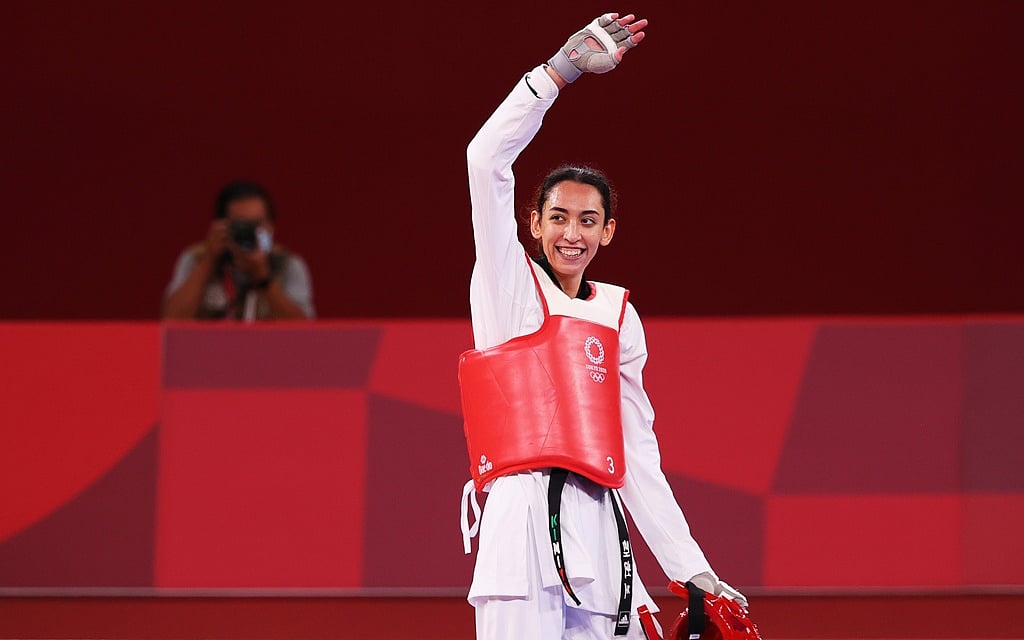
Alizadeh, the bronze medalist in the 57-kilogram taekwondo division at the Rio Games, made short work of beating Nahid Kiyani in a bout that was overlaid with far more political intrigue than sporting tension.
The two fighters’ entrances highlighted how Alizadeh’s life had changed since she left Iran last year to start a new life in Germany. Alizadeh, who had once complained about being forced to wear a headscarf, marched confidently into the auditorium, wearing her hair loose and showing her fist to a television camera that was trained on her. Kiyani, meanwhile, was accompanied by a female member of her entourage; both women wore headscarves.
Alizadeh, the taller of the two, dominated throughout before recording an 18-9 victory. She and Kiyani, who are close friends, embraced. Alizadeh then walked over to acknowledge the Iranian coaching staff.
In her second contest Sunday, Alizadeh scored an impressive victory, defeating Jade Jones, the two-time defending Olympic champion from Britain, 16-12.
Alizadeh’s medal win in Rio turned her into an overnight celebrity in Iran, where female sports stars remain a rarity. She announced her defection in an Instagram post in 2020, excoriating the Iranian government for oppressing women.
“They took me wherever they wanted. I wore whatever they said. Every sentence they ordered me to say, I repeated. Whenever they saw fit, they exploited me,” she said in the post, which was accompanied by a black-and-white photo of herself in a headscarf, holding her head in her hands while sporting her taekwondo uniform.
A few months before her defection, Saeid Mollaei, a judoka, also left Iran for Germany after claiming he had been pressured to throw a bout to avoid the possibility of facing an Israeli opponent. Mollaei is representing Mongolia at the Tokyo Games.
©2021 The New York Times Company













