


Published : 29 Jan 2022, 10:17 PM
Updated : 03 Aug 2022, 11:28 AM


But this time, the usually morale-boosting “we’re all in this together” gesture was a necessity, as the company’s mountains, like those throughout ski country, faced hiring shortfalls and a surge of omicron-driven COVID cases. Having executives chip in “was not only a goodwill gesture, but it definitely helped with staffing levels,” said Jim Laing, chief human resources officer at Aspen Skiing Co. The company’s hiring has been down about 7 p[ercent this winter, and at one point it had 275 employees out sick on one day. “We didn’t shut down a restaurant, a shop or a lift,” he said.
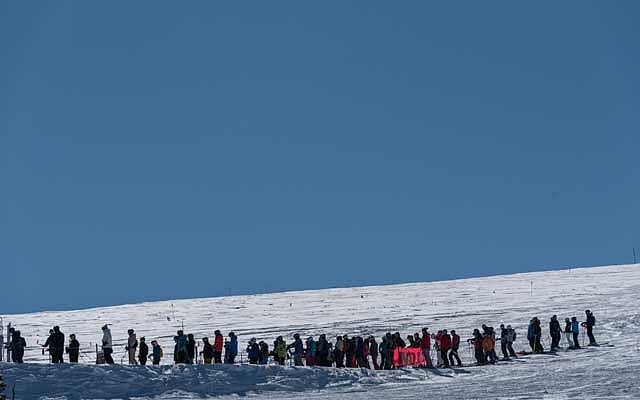
Across the United States, ski areas both big and small have been scrambling to keep lifts spinning, terrain open and crowds of pandemic-weary skiers happy and fed. “Every resort in the country is experiencing some level of staffing shortages,” said Doug Fish, president and founder of the Indy Pass, which gives access to 81 independently owned ski areas.
At Killington, in Vermont, where winter staff is down 20 percent to 30 percent, according to resort spokesperson Kristel Killary, only one of three base-area rental locations is open and some on-mountain restaurants offer limited service on weekdays. Nearby, Magic Mountain, lacking enough ski patrollers to operate safely, didn’t open at all one day in early January. Likewise, New Hampshire’s Black Mountain was shuttered for five days because of a COVID outbreak among staff. Other New Hampshire resorts, including Attitash, Wildcat and Crotched Mountain, struggled to open much of their terrain.
At Crested Butte Mountain Resort, in Colorado, the T-bar that offers access to many of the resort’s signature steeps hasn’t operated yet this season, requiring guests to hike — skis or snowboard in hand — anywhere from 15 minutes to a half-hour or more to reach those slopes. (“Lift ops are hiring!” reminds a sign at the start of the hike.) Staffing shortages forced Utah’s Alta to cancel its traditional New Year’s Eve torchlight parade and fireworks display. And Timberline at Mount Hood in Oregon didn’t open its Summit Pass area for two days in mid-January.
The weather affected ski operations, too, as later-than-usual snowfall in the Rocky Mountains challenged resort preparation, while warm temperatures and below-average snowfall at Eastern resorts taxed snow-making resources. The Pacific Northwest experienced heavy snowfall and frigid temps that wreaked havoc on roads and utilities; a record-breaking 200-plus inches of snow fell in Lake Tahoe during December.
As guests have encountered these disruptions, some have taken to social media to air frustrations, and many have directed their comments toward Vail Resorts, which operates 37 ski areas and offers the multiresort Epic Pass. Epic Pass holders accuse Vail of using a flawed business model that exacerbates this year’s challenges. The Instagram account Epic Lift Lines (started in spring 2021) has nearly 36,000 followers, and an online petition to “hold Vail Resorts accountable,” launched in late December by Jeremy Rubingh, a Seattle skier frustrated with logistics at Vail-owned Stevens Pass, has been signed by almost 44,000 people. Complaints run the gamut from no parking spots and lengthy lift lines to a lack of open terrain and limited operating hours and services at Vail Resorts’ ski areas across the country.
Rubingh, 41, a documentary filmmaker and commercial fisherman, typed the petition on his phone after driving one hour and 45 minutes from his home to Stevens Pass to find plenty of snow but more than half of the mountain closed. “I think we should all have a little grace around the pandemic and the impact it has, but when I looked around at what every other ski area in the state was doing, they had the majority of their lifts and 90 percent or more of their terrain open,” said Rubingh, an Epic Pass holder. “I felt disenfranchised as a customer.”
Vail Resorts spokesperson Jamie Alvarez said in an email that “the impacts of omicron on our workforce was significant over the holidays. At some resorts, we had more than 10% of our employees excluded at once.” Alvarez said that meant resorts could not open some terrain and restaurants, and everything from parking to transportation and ski and ride school was affected. She said the numbers have since subsided, and the company is still trying to hire. Alvarez also cited a recent announcement that Vail Resorts will add or upgrade 21 lifts across its ski areas for next season, part of a $320 million capital investment.
Rubingh and other commenters point to a recent surge in Epic Pass sales as one of the primary culprits behind the disruptions. According to a December shareholder report, Vail Resorts sold 47 percent more passes this winter than the previous season, in part because it lowered the price by 20 percent; that equates to 700,000 more passes.
But according to the company’s data, not all those passholders have been skiing: In a mid-January report to investors, Vail Resorts said total skier visits, as of Jan. 2, were down 1.7 percent from the comparable time period the previous season, and down 18.3 percent from the same period in 2019-20. The company also limited day ticket sales between Christmas and New Year’s and over the Martin Luther King Jr. holiday weekend and will do so again from mid- to late February.
Many ski areas have seen robust business, though. According to Destimetrics, which tracks lodging at mountain resorts, December occupancy at 18 Western ski destinations was up 37 percent over December 2020 (and almost 12 percent over the same period in 2019). Small ski areas are busy, too, like Mount Ashland, in Oregon, which is on track to break its visitation record this season, said Michael Stringer, director of marketing and development for the nonprofit resort near the California border.
Soaring Real Estate Prices, Lack of Housing
Labour issues in the ski industry go beyond temporary COVID absences. Vail Resorts has been involved in negotiations with the ski patrollers at its Park City resort, in Utah, for a year and a half, and just reached an agreement to raise their wages. The National Ski Areas Association, a trade group, reported in June 2021 that 605 of resorts surveyed were not fully staffed the previous winter. But the pandemic exacerbated existing issues. The well-documented spike in mountain real estate prices, accompanied by the conversion of many long-term rentals into more lucrative short-term ones, have put housing out of reach for scores of workers who earn notoriously low wages. The No. 1 reason for staffing shortages at its resorts, said Laing, is the lack of available housing. “Everything dried up,” he said. “Overnight, we went from challenge to crisis mode.”
Moreover, in a tight labour market, the traditional perks of a free season pass and time to ski that have offset lower wages no longer hold the same appeal. Even the return of international students with J-1 nonimmigrant visas, a labor pool that larger resorts typically relied on pre-pandemic, is not enough to fill the gap. And reflecting a similar trend in the larger hospitality industry, resorts have found food and beverage jobs the most challenging positions to fill.
To address some of these issues, at least a dozen individual resorts — plus multi-area operators such as Boyne Resorts, which owns and operates 10 ski areas, and Vail Resorts — increased their minimum wages in the past year, with many offering $15 per hour, and sometimes more. Vail also announced in early January that all hourly employees will receive a $2-an-hour, end-of-season bonus for hours worked since Jan 1.
Ski areas aim to offer more employee housing options, too, although demand far outstrips supply. “Many communities got caught flat-footed, but we’ve been investing in dorms and housing for decades,” said Stephen Kircher, president and CEO of Boyne Resorts, whose mountains include Big Sky, in Montana; Sunday River, in Maine; and Boyne Mountain, in Michigan. Most recently, Boyne converted a hotel at Sunday River into a dorm. Jackson Hole Mountain Resort, in Wyoming, added some 120 beds to its housing pool this winter for a total of just under 300. (The resort employs about 1,700 workers, said Ty Hoath, the chief administrative officer.)
Aspen Skiing Co offers more than 1,000 employee beds, but that is not enough. This fall, the company took an unusual approach with its Tenants for Turns programme, asking local homeowners to rent a room for at least four months to ski area employees and offering them a season’s ski pass as a bonus. The program received mixed reviews on social media, but Laing said the overall response was “great,” with 30 residents signing up to offer housing.
What to Expect
Resort operators believe the problems will ease as the season progresses. “It is getting better — that’s the good news,” said Geoff Hatheway, Magic Mountain’s president, who helped park cars and flip burgers at the ski area over the holidays to help offset a 10 percent staffing shortage. “We’re continuing to recruit, and we’re finding more staff.”
Vail-owned Crested Butte has hired more lift attendants and aims to open its closed T-bar by the end of January, said the general manager, Tara Schoedinger. (She doesn’t know if the sign at the beginning of the hike brought in any applicants.) “I feel like it will be a really normal experience if someone comes today or this weekend,” said Schoedinger, noting that because of abundant snowfall in late December, more terrain is actually open than usual at this time of the season.
As for Stevens Pass, there is a new interim general manager who grew up skiing the resort and posts daily to a blog with operating updates. The ski area aims to have its coveted backside runs open within a couple of weeks, Doug Pierini, chief operating officer and senior vice president of Vail Resort’s Western region, said in mid-January. “Staffing is our biggest hurdle, but we changed quite a bit up there in just the past couple of weeks,” he added.
Measures catalysed by the pandemic that bypass the need for in-person interactions — online ticket and rental purchases, on-mountain ticket pickup boxes, more grab-and-go food — also help. And at some mountains, required reservations for parking and for holders of the other two big multiresort passes, Ikon and Mountain Collective, as well as limits on daily ticket sales, help manage skier numbers. The latter two steps have allowed Jackson Hole to get by with fewer staffers with almost no disruptions, said Hoath.
In addition to maintaining employee numbers, ski areas must contend with burnout and the potential for sagging morale, especially this season. That’s why in mid-January, the Indy Pass launched a Love Your Lifty campaign, which encourages guests to show appreciation for any resort worker by posting a photo or story to social media. Weekly drawings award Indy Passes for next winter to posters and the employees they highlight. “We did it to create awareness,” said Fish. “The average consumer just shows up and thinks, ‘What’s going on? Why isn’t that run groomed? Why isn’t that lift running?’ They’re not used to that.”
“Anything people can do to show some appreciation of how hard people are working would be so appreciated,” said Laing. “It would absolutely make their day.”
© 2022 The New York Times Company










