Published : 26 Sep 2026, 10:05 PM
Updated : 26 Sep 2026, 10:05 PM


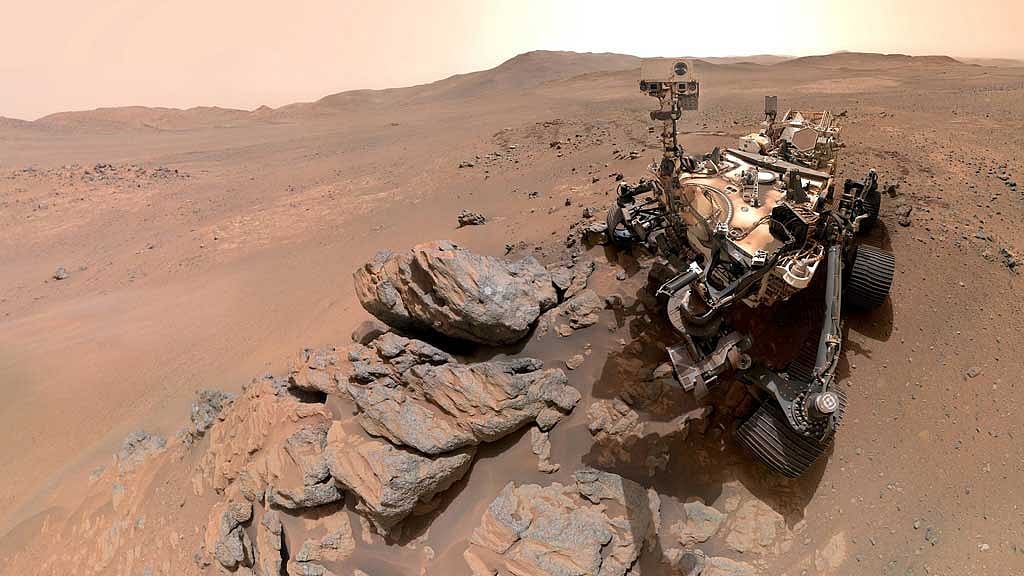
NASA’s Perseverance rover has found evidence of a complex sequence of ancient water activity in a geological area of Mars’ Jezero Crater, with rocks showing signs of having interacted with water at least three times.
The findings come from the “Margin Unit”, which stretches along the inner edge of the crater’s rim and the shoreline of an ancient lake.
The study was published on Monday in Communications Earth & Environment.
When Perseverance reached the area in September 2023, scientists had expected to find sedimentary rocks formed from layers of sand deposited over time.
Instead, the rover found igneous rocks, which can preserve detailed records of when and how they formed.
Scientists had been particularly interested in the area because Mars orbiters had detected strong signals of carbonate minerals, which on Earth often form in shallow oceans and lakes that can support life.
The rover’s SuperCam instrument analyses the mineral composition of rocks by firing a laser at targets up to 6.5m away and studying the resulting plasma.
Perseverance has analysed more than 185 bedrock targets across the Margin Unit.
Study lead author Candice Bedford, a research scientist at Purdue University, said the findings show the area became a “crossroads for aqueous systems”.
Perseverance explored the Margin Unit across about 265m of elevation.
At higher elevations, it found coarse-grained, crystalline rock containing olivine, with little evidence of interaction with water.
The olivine-rich rock formed from magma deep underground, cooling slowly enough for large mineral grains to develop before reaching the surface as the overlying ground eroded.
Lower down, on the former lakebed, the rock had been transformed, with fractured olivine grains and silica between them.
NASA says carbonate and silica are important in the search for ancient life because water interacting with olivine on Earth can release hydrogen, which some microbes use as a food source.
The process also leaves carbonate and silica, which can preserve traces of past microbial activity.
Scientists can establish the sequence of the Margin Unit’s interactions with water, although they cannot determine when each episode occurred.
During the first episode, carbon-dioxide-rich groundwater reacted with olivine, creating carbonate-filled ridges along fractures in the bedrock at lower elevations. As softer surrounding rock eroded, the carbonate-filled fractures were left standing.
The second interaction may have been linked to the lake that once occupied Jezero Crater.