Published : 19 Oct 2026, 05:25 PM
Updated : 19 Oct 2026, 05:25 PM


Scientists have identified genetic mechanisms in a jellyfish capable of reversing its own ageing cycle, raising hopes that similar processes could one day be triggered in human cells to treat age-related diseases, the BBC reports.
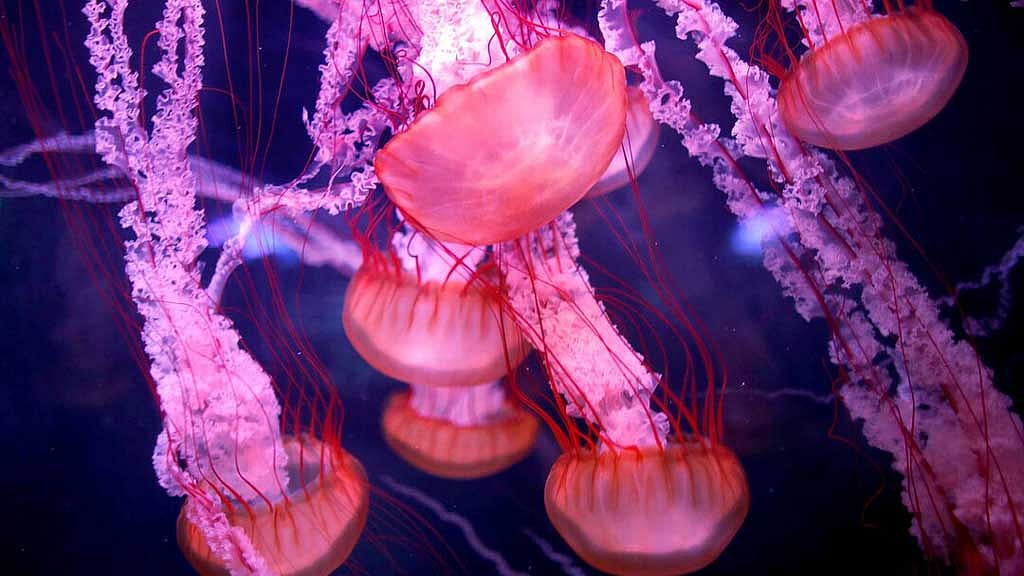
The species, Turritopsis dohrnii, is known as the “immortal jellyfish” for its ability to revert from an adult form back to an earlier larval stage when placed under physical stress.
Rather than dying, the animal essentially restarts its lifecycle -- a feat researchers say is unique in the animal kingdom.
Marine biologist Maria Miglietta of Texas A&M University at Galveston, who has put the creatures through starvation, overheating and abrupt salinity changes, told the BBC each new jellyfish can in theory repeat the cycle indefinitely.
“From one jellyfish that doesn’t die, then you get this colony that can form hundreds more,” she said.
The mechanism behind it is transdifferentiation, in which mature cells shed their specialised identities, revert to a stem-cell-like state and re-specialise into new cell types -- effectively turning back the clock at cellular level.
A 2022 study found that Turritopsis dohrnii carries extra copies of genes responsible for repairing DNA damage and maintaining telomeres, the protective structures at the ends of DNA strands that typically degrade with age.
Separate research by Miglietta found overlapping gene activity between the jellyfish’s rejuvenation phase and genes linked to longevity in humans.
Michael Koldobskiy, a paediatric oncologist and physician-scientist at Johns Hopkins, told the BBC the findings could have far-reaching implications.
He said the ultimate goal would be to find molecular switches that could coax human tissues into more youthful states -- potentially accelerating recovery from strokes or heart attacks, or reversing degeneration in conditions such as Alzheimer’s disease.
“We’re not going to shrink down to an embryo again and restart,” Koldobskiy said, the BBC reported, “but at the organ and tissue level, I think it’s very much a possibility.”
Miglietta and Koldobskiy are now working together to test whether the jellyfish’s rejuvenation pathways can be replicated in human cells.
Despite its resilience, the species is not indestructible. Miglietta told the BBC some lab specimens appear unable to rejuvenate, and those that can may face limits on how often. In the wild, the animals remain exposed to predators, food shortages and environmental disruption.
“It’s comforting to think that nature has found a solution to one of the main problems of humans: ageing and death,” Miglietta said.