


Published : 22 Jun 2016, 08:09 PM
Updated : 19 Oct 2022, 05:19 PM


"If there was enough money then we could possibly do it earlier but there is not as much now as the Apollo programme had," ESA Director-General Jan Woerner said, referring to the US project which landed the first people on the moon.
Woerner says a permanent human settlement on the moon, where 3D printers could be used to turn moon rock into essential items needed for the two-year trip to Mars, would be a major step toward the red planet.
US space agency NASA hopes to send astronauts to Mars in the mid-2030s and businessman Elon Musk, head of electric car maker Tesla Motors, says he plans to put unmanned spacecraft on Mars from as early as 2018 and have humans there by 2030.
The ESA's Woerner said it would take longer.
A spacecraft sent to Mars would need rockets and fuel powerful enough to lift back off for the return trip and the humans would need protection from unprecedented physical and mental challenges as well as deep-space radiation.
Woerner would like to see a cluster of research laboratories on the moon, at what he calls a "moon village", to replace the International Space Station when its lifetime ends and to test technologies needed to make the trip to Mars.
That could be funded and operated by a collection of private and public bodies from around the world, he said in an interview at the ESA's Operations Centre.
"There are various companies and public agencies asking to join the club now, so they want to do different things, resource mining, in situ research, tourism and that kind of stuff. There is a big community interested," he told Reuters.
"The moon village is a pit stop on the way to Mars," Woerner said, adding that new 3D printing technology could be used to build material and structures out of rocks and dust, doing away with the cost of transporting everything needed for a mission.
"To test how to use lunar material to build some structures, not only houses, but also for a telescope or whatever, will teach us also how to do it on Mars," he said.
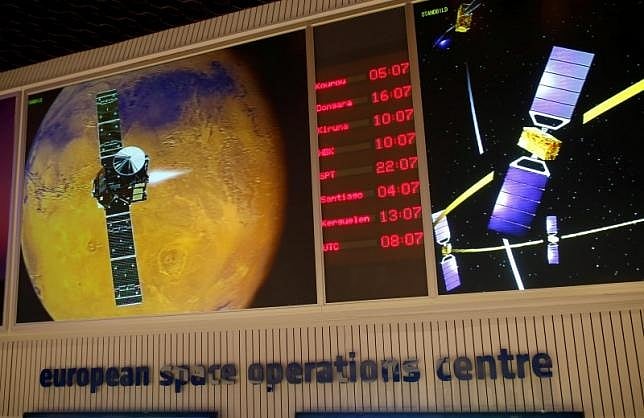
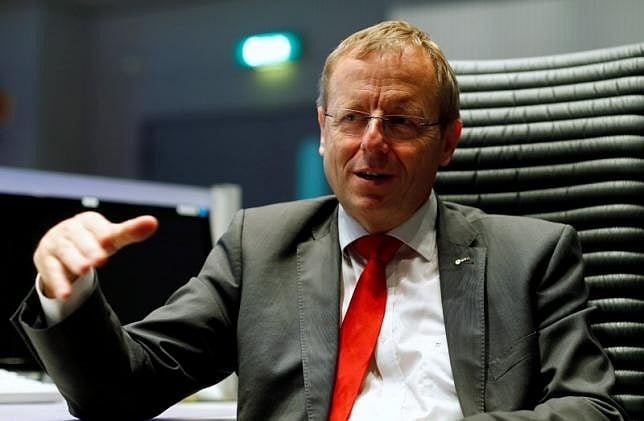
Jan Woerner, Director General of the European Space Agency (ESA) gestures during an exclusive Reuters interview in the main control room of the European Space Operations Centre (ESOC) in Darmstadt, Germany June 17, 2016. Reuters













