


Published : 12 Nov 2014, 11:09 PM
Updated : 19 Oct 2022, 07:43 PM


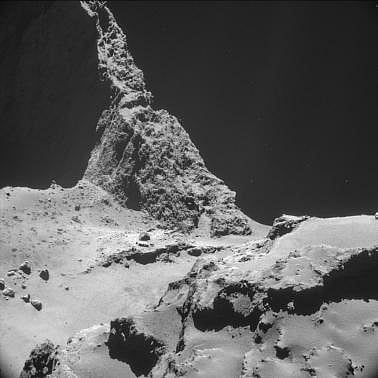
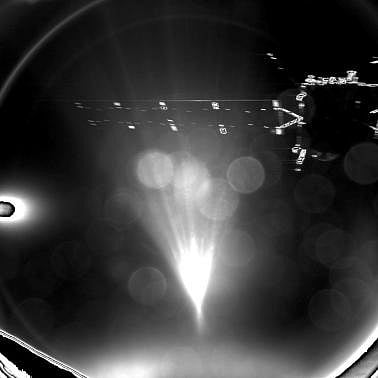
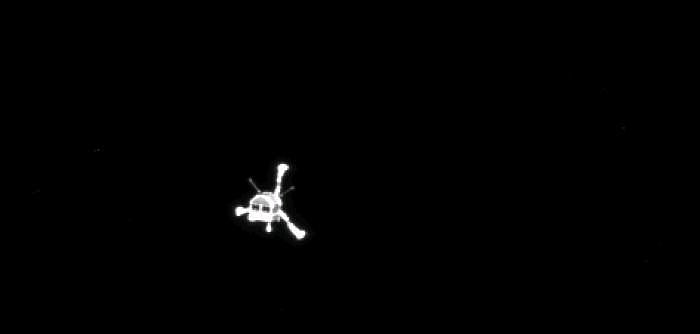

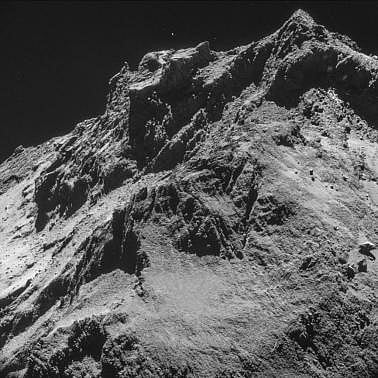
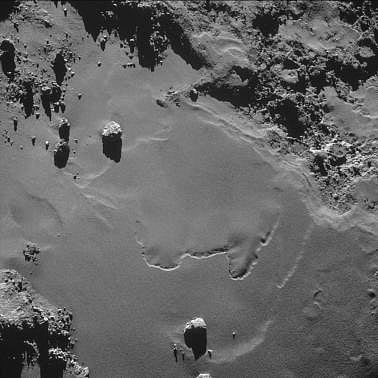
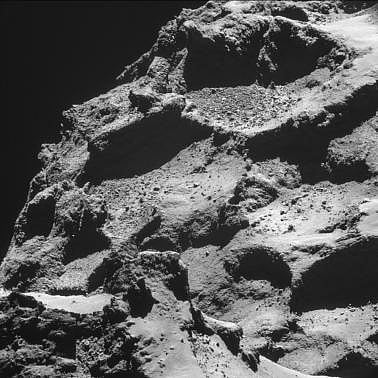
The 100-kg (220-pound) lander - virtually weightless on the comet's surface - touched down on schedule at about 1100 ET after a seven-hour descent from spacecraft Rosetta around half a billion kilometres (300 million miles) from Earth.
During the launch, harpoons designed to anchor the probe, named Philae, failed to deploy and the ESA is having to consider options for re-firing them to ensure it does not drift back into space.
Scientists hope that samples from the surface of 67P/Churyumov-Gerasimenko will help show how planets and life are created as the rock and ice that make up comets preserve organic molecules like a time-capsule.
Comets come from the formation of Earth's 4.6-billion-year-old solar system and scientists believe they may have brought much of the water in Earth's oceans.
The comet 67P/Churyumov-Gerasimenko. REUTERS/ESA/Rosetta/NAVCAM - CC BY-SA IGO 3.0 Reuters s
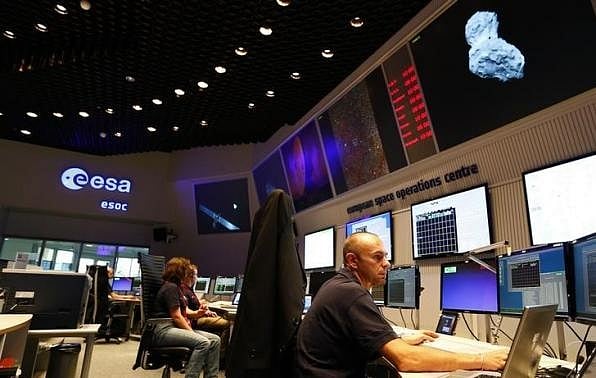
"How audacious, how exciting, how unbelievable to be able to dare to land on a comet," NASA's director of Planetary Science, Jim Green said at the European Space Operations Centre in Germany after the landing was announced.
Manmade craft have now landed on seven bodies in space: the moon, Mars, Venus, Saturn's moon Titan, two asteroids and comet Tempel-1, which was hit by a NASA probe.
Among several records set by the mission, Rosetta has become the first spacecraft to orbit a comet rather than just flying past to take pictures.
Rosetta reached the comet, a roughly 3-by-5 km rock discovered in 1969, in August after a journey of 6.4 billion km that took 10 years, five months and four days - a mission that cost close to 1.4 billion euros ($1.8 billion).
"What really nails this experience for me are the images," Daniel Brown, an expert in astronomy at Nottingham Trent University, said via email after three-legged Philae had relayed data and images back to Earth as it moved towards the comet.
"Especially exciting will be getting the results of the samples recovered from below the surface and seeing their chemical composition," he said.







