Published : 29 Sep 2026, 07:36 PM
Updated : 29 Sep 2026, 07:36 PM


Archaeologists in Egypt uncover a 1,700-year-old tomb in the Western Desert, revealing how people mourned their dead under Roman rule.
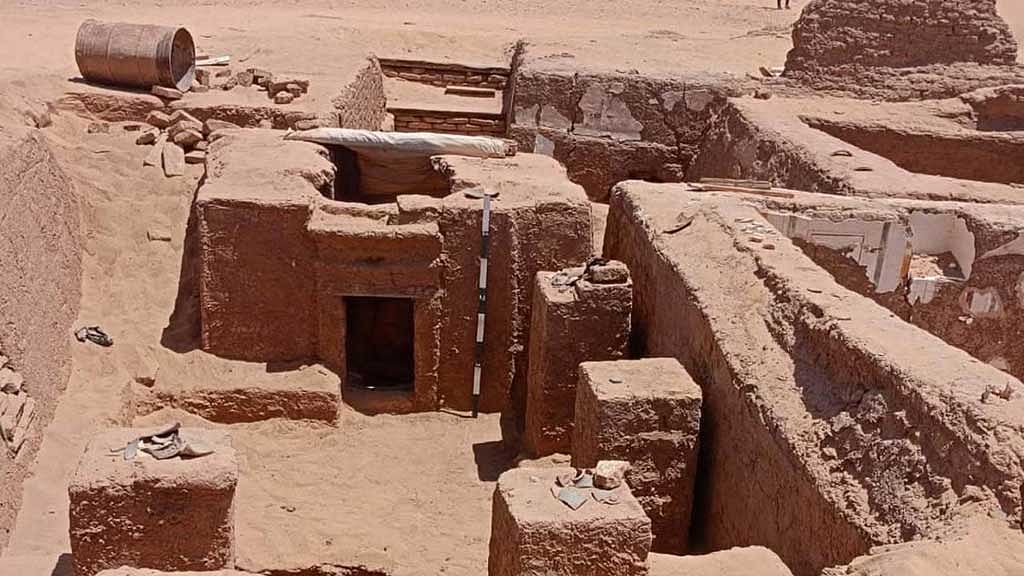
The pyramid-shaped limestone tomb was built for a prominent man and his wife. Inside, an Egyptian mission finds a stone plaque carrying a 19-line lament in Greek for a man named Bisichthes, praised as a wise counsellor, reports The Independent.
Researchers believe he was a judge who lived in the late third or early fourth century AD.
The poem ends with his son, Sarapion, speaking to him directly and urging him to accept the offerings of his grieving children.
A 14-step staircase leads to the entrance, which is decorated with hieroglyphs, including protective spells for the afterlife and a scene from the Amduat, an ancient Egyptian text about the sun god Ra's journey through the underworld.
The team also finds an offering table, a washing basin, pottery, and a bronze coin bearing the image of Emperor Constantine, suggesting the tomb was reused in a later period, according to The Independent.
Egypt's tourism and antiquities minister, Sherif Fathi, says the discovery reflects the succession of civilisations the country has seen. Hisham Al-Lithi, secretary-general of the Supreme Council of Antiquities, says it sheds light on burial rituals and religious life in the region under Rome.
Researchers say the mix of Greek verse and Egyptian-style architecture shows the multicultural character of the Western Desert.
Greek became a key language of administration and culture after Alexander the Great's conquest in 332 BC and stayed so after Egypt became a Roman province in 30 BC.
The ministry has not confirmed whether any human remains were found. LiveScience first reported the discovery.