Witness disputes nephew's statement
Tells ICT-1 that Razakars or Pakistani troops never came to his native village of Nalbunia. Full story
bdnews24.com News Service
bdnews24.com
Published :
05 Sep 2012, 08:32 AM
Updated :
09 Aug 2022, 04:13 PM
Dhaka, Sep 5 (bdnewsw24.com)—A defence witness for Jamaat-e-Islami leader Delwar Hossain Sayedee on Wednesday countered his nephew's testimony who had appeared as a prosecution witness and said collaborators never attacked his native village of Nalbunia.
Appearing as the second witness for the Sayedee, 68-year-old Abdul Razzak Akhand said his nephew Abdul Halim Babul's claim that Sayedee had led a band of Razakars, collaborators of the Pakistani Army, to loot and arson at his village was false.
Babul had testified at the tribunal in January this year and said he was 55 years old although his uncle Akhand said he was barely eight years during the war, which makes him 48 currently.
He told the first war crimes tribunal of Bangladesh, "Razakars never came to our village, nor did Pakistani troops. Neither were there any such incidents of loot, arson or pillage during the Liberation War."
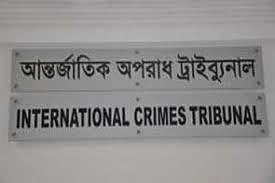
The three-judge International Crimes Tribunal-1, set up to try crimes against humanity during the 1971 War of Independence, indicted Sayedee on 20 counts of war crimes on Oct 3, 2011.
On Wednesday, Akhand said, referring to his nephew, "Babul was only eight at that time."
Babul's mother Shafia Khatun is Akhand's eldest sister who had married their neighbour. Thus the witness claimed to know what had happened to his next-door neighbour in the same village.
However, when asked, Akhand said his sister was over 85 years of age. When asked if Babul was the eldest of his nephews, the witness replied, "Yes, among those living."
Akhand explained that Shafia had four children before Babul. Replying to another question the witness said Babul has two more younger brothers, Bahadur and Modhu. When asked how old they were Akhand said Bahadur was not yet 40 and Modhu was about 35.
The prosecutor then asked a few other questions and returned to the topic asking the witness, "So where were Bahadur and Modhu during the war?"
"They were at home," the witness promptly replied.
There was a visible unease amid the defence counsels who attempted to say that this could not be a right question and tribunal member Justice Anwarul Haque looked inquisitively at the prosecutor who reassured him that he had indeed asked the right question.
Justice Haque then indicated the defence that they better not speak up and let the answer be as it was.
'Defence prompting witness'
Throughout the cross-examination of the witness, prosecution repeatedly complained that the defence counsels were prompting answers.
At one point the tribunal presided over by Justice Jahangir Hossain, with the Chairman Justice Mohammad Nizamul Huq absent, told the witness to face away from the defence counsels and face the judges.
He directed a court assistant to move the chair so that the witness had his back partially turned towards the defence.
Generally, the witnesses are seated in front of the judges to their right close enough to the defence benches for the witness to hear hushed murmurs.
Justice Huq joined the proceedings after the lunch recess, however.
Generally, the witnesses are seated in front of the judges to their right close enough to the defence benches for the witness to hear hushed murmurs.
Although the witness had said there were no threats of Razakars in his native Nalbunia, the defence witness admitted to Prosecutor Syed Haider Ali's question that his brother-in-law, Babul's father, was a 'strong Awami Leaguer' and a 'local leader' of the party.
"We often used to be on the run in other villages and also at our own village, hiding in other houses."
A brief spat
The defence and prosecution had a brief spat over a question. Haider Ali had asked the witness who had brought him to Dhaka, and the witness answered that it was Sayedee's brother-in-law, one Nanna.
"Is he here?" asked the prosecutor.
M Tajul Islam, representing most of the Jamaat leaders at the war crimes tribunal, was quick on his feet to protest, saying, "This can't go."
Haider Ali immediately agreed to the defence contention and withdrew his question. Tajul Islam proceeded to address the court attempting to say something more, but Haider Ali said, "I have agreed, what is the point of further lecture?"
This apparently angered Tajul Islam further and the lawyer's exchanges, one challenging the other, became so heated that two other counsels, one each from the defence and the prosecution, also got up and approached the podium.
At one point, Haider Ali said it was his witness and he was cross-examining. "If you disturb me, I will disturb you too."
Without any sign of their quarrel letting up, Justice Jahangir Hossain spoke up. He said, "I am presiding as a new member of this tribunal and I don't expect anything undesirable.
Haider Ali inquired, "Are we to then just watch on while they do whatever they want?"
Justice Hossain said, "No, no, of course not. But you won't fight it out either."
This lightened things up and the prosecutor proceeded with his cross-examination.
Earlier in the day, just after the deposition was complete, Haider Ali raised the point that the defence had not mentioned the witness' name properly. "There is one Abdul Razzak Khan and there is another Abdul Razzak. But no one called Akhand."
Justice Hossain asked, "Why didn't you raise this earlier, before the deposition?"
"We were checking the records, my lord," said the prosecutor.
"And there is no other details like father's name?" the judge asked. "None," said the prosecutor.
Tajul Islam approached to explain the matter. He said the Abdul Razzak mentioned here is indeed Akhand. It is in practice to give coded names here in order to ensure the security of the witness.
"But you could have sought the tribunal's assistance in this regard," said Justice Hossain.
Tajul Islam stayed on his point saying, "We may give names in a coded manner if we consider it necessary and it is allowed in this court."
He reiterated his point that the witness was indeed the one mentioned in the defence list of witnesses.The tribunal appeared to be satisfied with this and asked the prosecutor to proceed with his cross-examination.
It remains incomplete and is expected to resume on Thursday afternoon.
First case to trial
Sayedee's is the first case to proceed to the trial stage at the war crimes tribunals. The prosecution on Sep 4, 2011 proposed framing of charges against him on 31 counts of crimes against humanity and genocide.
The tribunal also sent Jamaat's former chief Ghulam Azam to jail on Jan 11. His indictment hearing began on Feb 15 and the court charged him on May 13.
Jamaat chief Matiur Rahman Nizami, Secretary General Ali Ahsan Mohammad Mujaheed and assistant secretaries general Mohammad Kamaruzzaman and Abdul Quader Molla are also behind bars on war crimes charges. Jamaat financier Mir Quasem Ali has been recently arrested for war crimes charges too as investigation continues into allegations against him. ATM Azharul Islam, the acting secretary was arrested on Wednesday and his bail application remains pending till Sunday.
BNP MP and standing committee member, Salauddin Quader Chowdhury, also behind bars, was indicted for 23 charges on Apr 4.
Former BNP lawmaker and minister Abdul Alim is the only one out on bail. All cases have already entered the trial phase.
bdnews24.com/ta/jr/bd/1923h