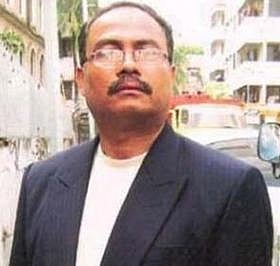
ULFA's Rajkhowa seeks Chetia's return
Released from jail, the ULFA chairman calls upon India and Bangladesh to facilitate return of Anup Chetia to Assam.
bdnews24.com News Service
bdnews24.com
Published :
01 Jan 2011, 12:24 PM
Updated :
10 Aug 2022, 04:07 PM
bdnews24.com New Delhi correspondent
New Delhi, Jan 1 (bdnews24.com)—Over a year after tacit cooperation between Dhaka and New Delhi landed him in the custody of the security forces of India, the ULFA chairman Arabinda Rajkhowa walked out from a jail in the north-eastern Indian state of Assam on Saturday.
The top insurgent leader was bailed out to facilitate a peace process between the ULFA and the government of India. The government did not oppose his bail petition as he has already signaled his willingness to enter into peace talks.
Immediately after his release, Rajkhowa called upon the governments of both India and Bangladesh to facilitate return of ULFA general secretary Anup Chetia to Assam at the earliest to take part in the peace-process.
Chetia (real name Golap Barua) was arrested in Dhaka on December 21, 1997, under the Foreigners Act and Passports Act for illegally entering into Bangladesh and for carrying foreign currencies and satellite phone.
He was sentenced to seven years' imprisonment by a court. Though Chetia already served his sentence, he is understood to be still in the protective custody of the authorities in Bangladesh.
His petition seeking political asylum in Bangladesh is also reportedly pending in the court and the government in Dhaka has apparently not yet taken a decision on him.
Addressing a public meeting soon after his release from jail in Assam's main city Guwahati on Saturday, Rajkhowa expressed hope that Dhaka and Delhi would take "urgent steps" to ensure Chetia's early return to India to expedite the peace process.
Rajkhowa's call signaled that the ULFA might not enter into the peace process without Chetia being involved in it and mount pressure on the Congress-led United Progressive Alliance government in New Delhi to urgently pursue with Dhaka the issue of Chetia's repatriation to India.
The Congress also runs the state government in Assam. The election of the state's legislative assembly is due in the middle of 2011. The Congress hopes to cash in on the peace-process to get yet another five-year term in power in the state.
The ULFA has since 1979 been waging an armed rebellion against the government of India with the professed objective of liberating Assam from what it terms as 'colonial rule' of New Delhi.
Rajkhowa was among several top ULFA leaders, who had landed in the custody of the security forces of India after being spotted on the Sylhet-Meghalaya sector of the country's border with Bangladesh towards the end of December.
It is believed the tacit cooperation between New Delhi and Dhaka resulted in the arrest of the top ULFA leaders, which finally made the insurgent organisation signal its willingness to enter into peace-talks.
With both the central government of India and state government of Assam keen to find a political solution to end the insurgency waged by the ULFA; efforts are on to start peace-talks with the proscribed organisation.
The Indian government appointed a former chief of its Intelligence Bureau P C Halder as the principal interlocutor for the peace-process with the ULFA.
Apart from Rajkhowa, several other top ULFA leaders – including some arrested as a result of tacit cooperation between Bangladesh and India – were also released from jail on bail over the past few months to create an atmosphere conducive for peace-talks.
Unlike in the case of Chetia, Rajkhowa or other ULFA leaders, who had landed in the custody of the security forces of India in November and December 2009, had not been arrested in Bangladesh.
Neither Dhaka, nor Delhi ever publicly recognised the tacit cooperation between the security agencies of both the countries in creating the situation leading to their detention.
Chetia could not be handed over to India after his arrest in 1997 due to absence of any Extradition Treaty. New Delhi is believed to have been requesting Dhaka to hand him over to India.
But Bangladesh government reportedly clarified that Chetia could not be handed over under the Agreement on Transfer of Sentenced Persons, signed during prime minister Sheikh Hasina's visit to India in January 2010, as it only covered people who were still serving sentences.
bdnews24.com/corr/bd/1756h