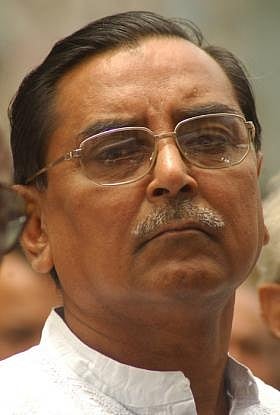
SCRAPPING CG Talks with BNP were necessary: Menon
The Workers Party president says it would have been better had the government discussed with BNP before abolishing the caretaker provision. Updates
bdnews24.com News Service
bdnews24.com
Published :
02 Jul 2011, 07:46 AM
Updated :
10 Aug 2022, 05:02 PM
Dhaka, July 2 (bdnews24.com) — President of Workers Party of Bangladesh Rashed Khan Menon MP has acknowledged that the decision to scrap the caretaker government system should have been made in consultation with BNP.
"It was not fair to unilaterally repeal the caretaker government provision. The government should have discussed it with the BNP," he said on Saturday.
He was talking to reporters at a media briefing in the city, organised on behalf of six members of parliament belonging to the parties that forged alliance with Awami League.
Menon, however, said the government had offered talks with the BNP and "the main opposition should have joined the discussions and given its proposals."
Jatiya Samajtantrik Dal (JaSaD) president Hasanul Haq Inu, MP, National Awami Party (NAP) presidium member Amina Ahmed, MP, and Workers Party politburo member Fazle Hossain Badsha, MP were also present at the briefing held at Col Taher Auditorium in the JaSaD office.
Two other MPs — Moinuddin Khan Badal of JaSaD and Shah Zikrul Ahmed of NAP — could not be present at the press conference as they were out of town.
Parliament passed the 15th constitution amendment bill into law on Thursday, annulling the caretaker government system, and retaining Islam as the state region and 'Bismillah' in its preamble.
BNP rejected the amendment while several allies of the Awami League and the left and left-leaning political parties, including the Workers Party and JaSaD, are opposing Islam as the state religion.
Although the six MPs of the three parties made some proposals for amendments to 'Bismillah', Islam as state religion, religion-based politics, nationality and recognition of the indigenous people, those were rejected in voice votes.
Parliament passed the bill amid protests by various quarters, including the BNP-led opposition. Thirty-six members of the BNP, two of Bangladesh Jamaat-e-Islami and the lone member of Bangladesh Jatiya Party were absent.
Menon and Inu, who were the members of the special parliamentary committee on constitution amendment, voiced against some issues, including keeping Islam as state language and 'Bismillah' in the preamble of the constitution.
During the passage of the bill in parliament, they showed reluctance in giving 'yes' votes and then agreed upon requests from senior Awami League leaders.
Explaining their positions on giving 'yes' votes in passing the bill even after refusal of their amendment proposals, Menon said, "We wanted our proposals to be raised 'clause by clause', but as the Speaker, with the consent of parliament, placed all the proposals for votes at a time we had to do nothing."
"But on some issues, our stance will remain the same as it was in the past," he said.
Asked whether it was possible to maintain secularism by retaining 'Bismillah' and Islam as the state religion, both Menon and Inu said it was "contradictory".
They, however, find the restoration of four fundamental principles that include secularism a progress towards returning to the 1972 constitution.
Expressing his firmness in keeping intact their unity under the Awami League-led grand alliance despite some disagreements on the constitution amendment issue, Inu said, "We had forged the unity to protect our constitution, culture and politics. The unity will be maintained to face Jamaat and its collaborators."
Replying to a question on whether it would be possible to hold free and fair elections after the annulment of caretaker government system, he said, "It's certainly possible by strengthening the Election Commission."
The JaSaD president, however, stressed the need for discussions on the form of the interim government and ways to strengthen the Election Commission.
"Decisions on the issues have to be made in consultation with all concerned, including BNP," he said.
Replying to Khaleda Zia's comment that "confrontation is inevitable", Inu said, "Not confrontation, discussion is inevitable as all problems can be resolved only through talks."
bdnews24.com/mk/mi/sht/sam/1340h