Sayedee's lawyers walk out of ICT
The defence protests evidence procedure
bdnews24.com News Service
bdnews24.com
Published :
10 Apr 2012, 10:12 AM
Updated :
09 Aug 2022, 03:39 PM
Tanim Ahmed
Dhaka, Apr 10 (bdnews24.com)—Defence lawyers of Jamaat-e-Islami leader Delwar Hossain Sayedee walked out of the war crimes tribunal protesting evidence procedure on Tuesday.
The disagreement was triggered by the inclusion of five volumes of foreign press reports as evidence against Jamaat executive council member Sayedee.
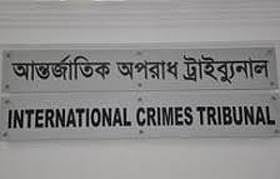
The International Crimes Tribunal-1, set up to address crimes against humanity during the 1971 Liberation War, was forced to adjourn after the walkout as the accused had been allowed to leave the court on account of illness.
The three-judge tribunal, headed by Justice Mohammad Nizamul Huq, indicted Sayedee on Oct 3, 2011 on 20 counts of war crimes including murder, rape, arson and loot.
The tribunal deferred hearing defence argument in support of discharge petitions of two Jamaat assistant secretaries general, Abdul Quader Molla and Mohammad Kamaruzzaman, after the lunch recess as senior defence counsel Abdur Razzaq had requested.
The next date of hearing has been fixed on Apr 16, when Razzaq will be expected to also argue the cases of Jamaat chief Matiur Rahman Nizami and his number two, secretary general Ali Ahsan Mohammad Mujaheed.
Tuesday was the third day of deposition for the case investigation officer Mohammad Helal Uddin, which was conducted by Syed Haider Ali, the prosecutor handling Sayedee's case.
The volumes in question were a collection of foreign press reports seized from the Liberation War Museum which had been collected from one Abdul Matin.
Razzaq who had joined the court after lunch recess was at hand add to the arguments of his colleague on the defence team, Mizanul Islam, who protested the inclusion of the foreign press report collection.
ARGUMENT
Mizanul Islam said the collection of reports, as the defence put it, could not be copied since they were bound volumes and referred to a previous defence application asking for a copy of those documents.
The defence application was rejected because the prosecution said there was just one copy that the Liberation War Museum had. The defence could, however, examine the copies it had pointed out.
Mizanul Islam contended that if the prosecution could submit a copy of the documents that had been entered as exhibits, then it could also provide the defence with copies of the same documents.
He also suggested that the prosecution had not even submitted the copies to the tribunal.
Islam was followed by Abdur Razzaq who said that entering the press clippings as exhibits was a clear violation of the tribunal's evidence procedure which afforded the defence reasonable notice in advance and opportunity to inspect that the new evidence.
The senior defence counsel representing the Jamaat leadership said if the tribunal allowed this exhibit without the opportunity to examine it or without prior notice then it would prejudice the defence.
Prosecutor Haider Ali stood up to counter the arguments. He began by saying that he was having to make the same argument over and over again. "But that is not so bad. I am getting to know the law all the better."
The prosecutor said this was not new evidence. "We mentioned them in the seizure list and they could have always asked for an opportunity to inspect the volumes."
He went on to say that the volumes were with the tribunal at all times and there was no question of tendering them as new evidence.
Razzaq said if the prosecution could submit the volumes to the tribunal then another copy could also be supplied to the defence. "The prosecution is deliberately refusing to give us a copy."
Justice Nizamul Huq said the prosecution generally supplied three sets of each document to the tribunal. "But this one they only submitted one. Because they had seized the copy available at the Liberaiton War Museum."
Razzaq: But then if copies were given to you, we should have been informed of the matter.
Justice Huq: But you had the seizure list with you. Well at least your friend of the defence team had it.
Razzaq: We had asked for prosecution to supply us the un-served documents.
Justice Huq: It was not possible for the prosecution to file three copies of the volumes even. (Pointing to the volumes in front of the bench clerk) This was the only one they submitted. But you certainly have the right to inspect the documents. Perhaps you could have filed an application for inspection but I am not holding that against you. And as I have said before, there can be omissions on our part or your part.
Razzaq: My lord is committing wrong by allowing [the volumes] to be entered as exhibits without giving us the opportunity to inspect them. Before exhibiting these documents, we have the right to notice and the right to inspect them.
Justice Huq: So your submission is that we hold off on exhibiting those volumes for the day but include them in a day or two after you have inspected. You see we can always strike those out as exhibits if we find there is enough ground for doing that after hearing you.
Abdur Razzaq: I must be allowed to inspect them. Then your lordship will hear what I have to say about those volumes and then they may be exhibited.
Justice Huq: That is merely a technicality. And [Section] 19.1 (of the International Crimes Tribunals Act of 1973) says we are not bound by the technical rules of evidence.
Abdur Razzaq: Then I must say that we are failing to assist your lordship and we are failing to do justice to our client.
Justice Huq: That is not correct Mr Razzaq. But with all due respect to you, we reject it.
Abdur Razzaq: Then may we have your permission to leave to the court?
Justice Huq: That is your matter. It is not my lookout.
Abdur Razzaq: But what your lordship is doing is a violation of the [Section] 9.4 (of the International Crimes Tribunals Act of 1973).
(The section states that tendering further evidence or new witnesses is not precluded at any stage of the trial given the tribunal allows it, "Provided that notice shall be given to the defence of the additional witnesses intended to be called or additional evidence sought to be tendered by the prosecution.")
Justice Huq: You may say that it is not supported by the 9.4
Razzaq repeated as the tribunal chair advised, and went on to offer that the defence make copies of the documents at their own expense.
Justice Huq: If that is possible then the prosecution will be bound to make copies for you and they would gladly do it.
Razzaq: My humble submission then is that you adjourn the proceedings for the day to think over the matter during which time we will also think it over.
Justice Huq: We will certainly discuss the matter among ourselves. But there will be no adjournments, the deposition will continue but the matter of these volumes remains open.
Abdur Razzaq: And you will not accept more exhibits in a similar manner in future.
Justice Huq: I cannot vouch for the future.
Abdur Razzaq: Then may we leave the court, your honour?
Justice Huq: Yes you may.
Once the defence counsels left, the tribunal realised that Helal Uddin's deposition could not continue since Sayedee had been excused for feeling ill and there was not a single counsel left in the court representing Sayedee.
The tribunal chief then said the court would not excuse the accused any more on similar ground in future.
The prosecution suggested that the entire affair was planned beforehand and the defence staged the drama on purpose.
FIRST CASE TO TRIAL
Sayedee's is the first case to proceed to the trial stage at the tribunal. The prosecution on Sept 4 proposed framing of charges against him on 31 counts for crimes against humanity and genocide.
On Oct 3, the tribunal indicted Sayedee on 20 counts.
The tribunal also sent Jamaat's former chief Ghulam Azam to jail on Jan 11. His indictment hearing began on Feb 15 and the tribunal is set to give his indictment order on Apr 17.
Besides Sayedee, Jamaat chief Matiur Rahman Nizami, secretary general Ali Ahsan Mohammad Mujaheed and assistant secretaries general Mohammad Kamaruzzaman and Abdul Quader Molla, and Bangladesh Nationalist Party's standing committee member and MP Salauddin Quader Chowdhury have been detained on war crimes charges.
The tribunal granted conditional bail to former BNP lawmaker and minister Abdul Alim on March 31 last year. The court is scheduled to hear his case on Apr 24 when Alim has been ordered to be present in the court.
bdnews24.com/ta/bd/1632h