The verdicts also found the role of then Prime Minister Khaleda Zia in the incident ‘mysterious’.
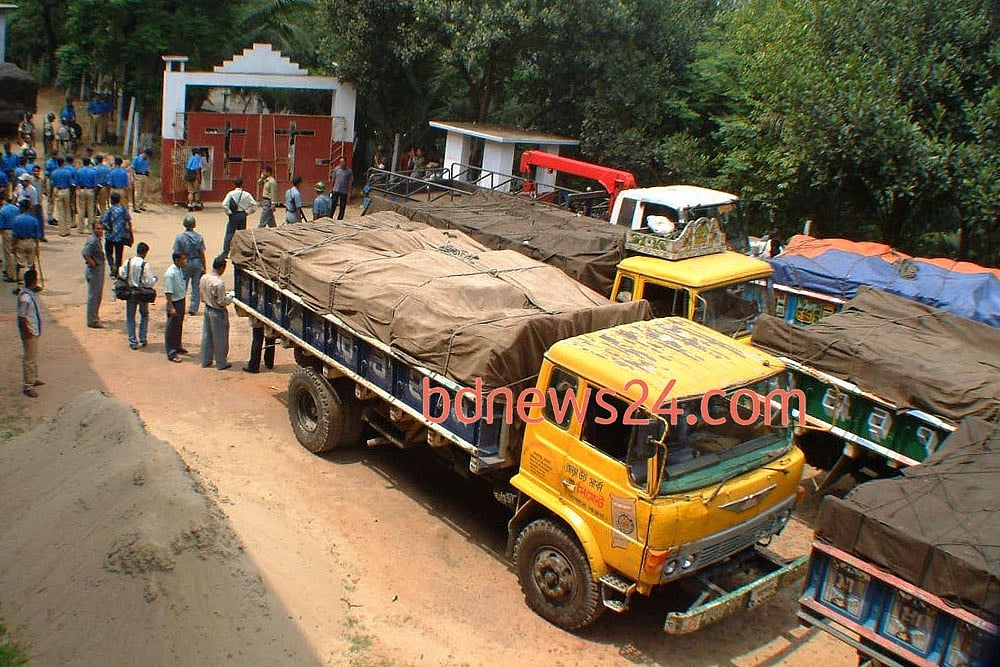
In its observation, the court said it would not have been possible to smuggle 10 trucks of arms and ammunition without the collusion of the ministers, military and civilian officials at that time.
The court also said it believes this smuggling was planned and orchestrated with India's separatist leader Paresh Barua, now on the run, and other convicts in the case.
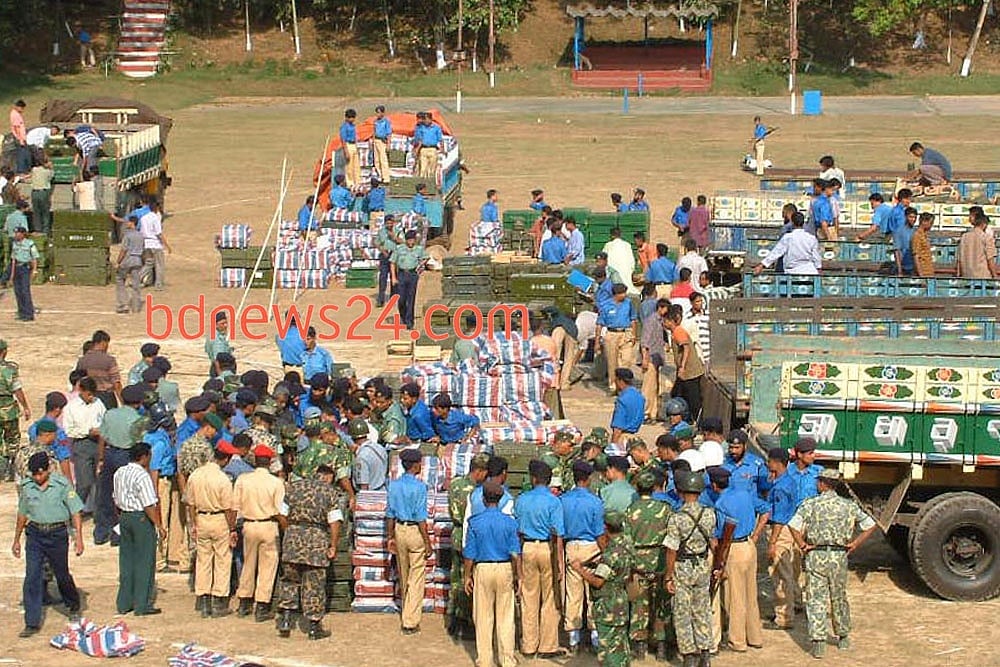
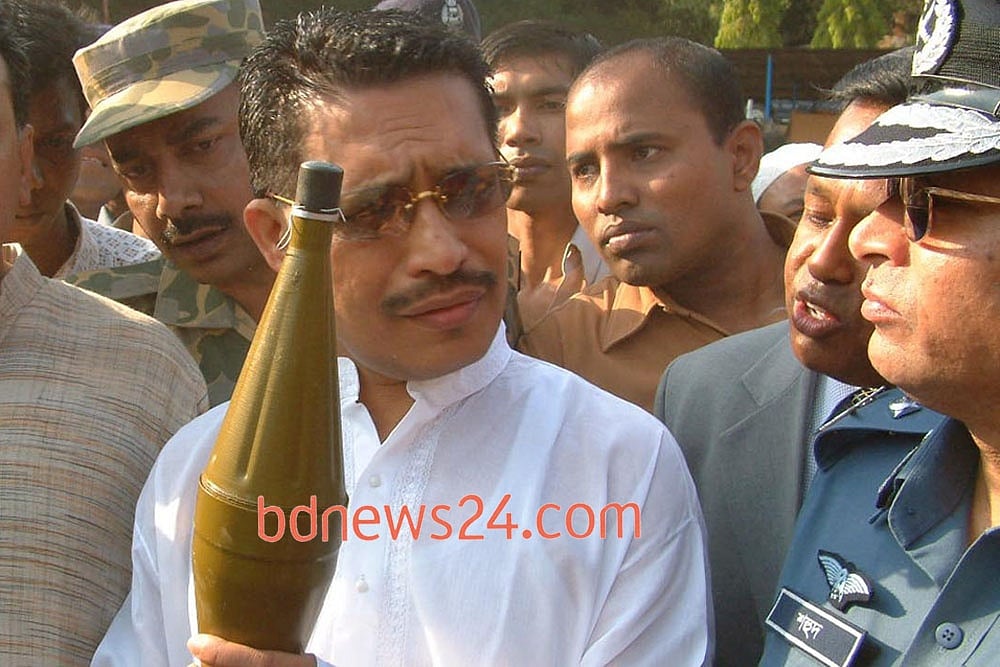
The weapons were seized by police at the state-owned Chittagong Urea Fertiliser Ltd jetty on the bank of Karnafuli River in Chittagong’s Anowara Upazila while they were being offloaded from two fishing trawlers on April 2, 2004.
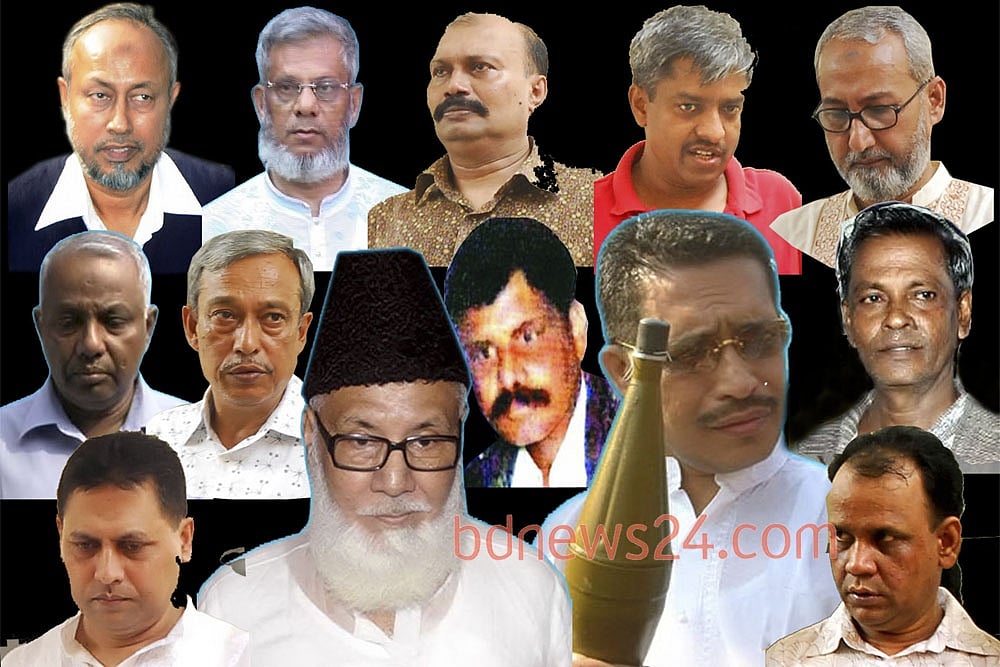
On Jan 30, a Chittagong court sentenced 14 people to death and life for their involvement in the arms trafficking.
Among the convicts are Jamaat-e-Islami chief Matiur Rahman Nizami, former State Minister for Home Lutfozzaman Babar, former Industries Secretary Nurul Amin, ULFA military wing chief Paresh Barua and two former chiefs of NSI, one of whom had served in a senior position in the DGFI as well.
Nizami served as Industries Minister and Babar as State Minister for Home under BNP chief Khaleda Zia, who ram the 2001-2006 coalition government as Prime Minister.
Both Jamaat and BNP had rubbished the verdicts as 'politically motivated'.
Four days after pronouncing the verdicts, Judge SM Mojibur Rahman of the Chittagong Metropolitan Sessions Judge’s Court and Special Tribunal-1 released the full texts of the 500-plus page verdicts of the two cases on Tuesday.
Of the cases, one was under the Special Powers Act and another under Arms Act.
Smugglers Hafizur Rahman, Deen Mohammad and their accomplice Haji Md Abdus Sobhan were also given death penalty in the case filed under Special Power Act for smuggling of arms.
'Collusion of military and civil officials'
In its observation, the court said military officials of state intelligence agencies - DGFI and NSI - had deep-rooted collusion with Barua in trafficking the arms and ammunition, which is established through evidence and statements of the witnesses.
The court also expressed surprise at such collusion.
"It transpired that the convicts had colluded with Barua to ruin our long-standing ties with the neighbouring country."
"Several misguided military and civilian officials had scandalised our glorious foreign policy by getting involved in the incident."
'Government backup'
Judge SM Mojibur Rahman was of the view that such large-scale trafficking of weapons was only possible because Barua was sheltered by NSI and DGFI personnel and because they enjoyed support of the government.
According to the verdict, "the evidence and statements of the arms haul cases reveals that this smuggling was done in collusion with the then government ministers, higher military and civil officials along with Barua,"
The court terms this collusion 'appalling'.
'
Babar was fully involved'
Based on important witnesses' statements, the court said it has found that the then State Minister for Home Lutfozzaman Babar was fully involved in the gunrunning.
Quoting the witnesses, it said he was instrumental in securing the release of five persons from the spot, forbidding then police officials from revealing the matter to the media and dropping the names of NSI officials from the home ministry's investigative report.
According to evidence and testimony, the court said, Babar, Nizami and some top official of the government who had served under them also knew about the arms haul.
Babar had also tried to cover up the incident instead of taking any step against those involved in it. He and Nizami had also said this incident involves Bangladesh's national interest, according to testimonies treated as evidence.
Even Sergeant Helal Uddin and Alauddin testified to the court that they were present during the seizure of the arms and were later arrested and tortured following the order of Babar, the verdicts say.
'
Khaleda's silence mysterious'
The judge, while delivering the verdict, said the then DGFI chief Maj Gen (rtd) Sadiq Hasan Rumi had informed the then Prime Minister Khaleda Zia about the situation over telephone.
But the Prime Minister did not react and said she was aware of the event. Khaleda had also ordered to form a committee at that time.
Regarding her aloofness, the verdict said, “It is mysterious that the then head of the government was silent when she was notified, and did not react sternly to such a huge event.”
'Negligence of the probe team'
The court in the verdict also said it was ‘unbelievable’ that the investigation committee,which was formed by the then government after the seizure,found the involvement of only three people.
The verdict also observed that it was surprising that the probe report did not even mention the name of ULFA leader Paresh Barua, who was one of the masterminds of the arms trafficking.
“This is unbelievable that only three people are capable of smuggling weapons and ammunition worth millions into Bangladesh through the international waters”, read the verdict.
'
Unique crime, maximum punishment'
The court in its observation said it was unaware whether any other incident similar to the 10-truck arms haul took place anywhere in the world.
The judge termed the incident where a huge cache of arms and ammunitions were smuggled through the waters and land of Bangladesh as ‘unheard-of and huge’ and the accused deserved the maximum punishment for such crime.