


Published : 04 Dec 2012, 07:44 PM
Updated : 09 Aug 2022, 04:35 PM


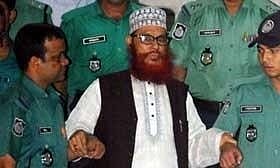
The first war crimes tribunal continued with Jamaat-e-Islami leader Delwar Hossain Sayedee's case amid the absence of his defence counsels on Tuesday.
Having explained to the Jamaat-e-Islami executive council member that the tribunal would consider a defence application, if there is one, to resume their closing argument, the tribunal ordered that the defence argument was closed.
Prosecutor Syed Haider Ali was then directed to reply to the points that the defence argument had raised thus far.
By the end of the day's proceedings, the war crimes tribunal clarified to the prosecutor that they would have to destroy the defence case and their alibis, and at the same time establish Sayedee's culpability beyond reasonable doubt.
The prosecutor is expected to resume on this point on Wednesday.
The International Crimes Tribunal-1, set up to try crimes against humanity during the Liberation War, indicted the Jamaat-e-Islami executive council member for 20 war crimes charges on Oct 3, 2011.
These charges, including murder, rape, arson and loot, are alleged to have been committed in and around Pirojpur's Parerhat area where the accused has been elected twice as MP.
The Jamaat leader's counsels, almost all of them belonging to the Islamist party, had remained absent presumably on account of the countrywide general strike called by their party.
Second chance
Tribunal Chairman Justice Mohammad Nizamul Huq addressed Sayedee as soon as he was brought in. "We have been hearing the argument of your lawyers for quite some time now. And we believe there is still a bit of it left. But there aren't anyone here today from the defence and we have to proceed. What are we to do?"
Sayedee said that the judges and the prosecutors could have come to the tribunal because they did not have to worry about security unlike his counsels.
Justice Huq pointed out that there were other people present at the court who did not have state security at their disposal and yet they were present. "It is only the defence lawyers that that are absent in both the courts."
The tribunal had ordered (http://bdnews24.com/details.php?id=224743&cid=2) on May 17, on the occasion of another opposition-led general strike, that the defence lawyers should seek security from the prosecution, if needed, on such occasions.
Sayedee then requested the tribunal that his lawyers be given a chance to finish their closing arguments, which the tribunal assured him it would. "If they file an application for hearing them, we will certainly consider it."
Justice Huq repeated to Sayedee, "I am not saying I won't hear them, I will."
Sayedee then asked that the tribunal relive him of the necessity to be present at the tribunal.
Justice Huq said that in the absence of defence counsels on the day, there was a legal problem to let the accused go. "You must stay," said the tribunal chief and asked Prosecutor Haider Ali to come forward.
In the meantime, the judge gave a short order and asked the prosecutor, already at the rostrum, to begin with his reply.
'Destroy defence case'
Haider Ali began his arguments trying to convince the tribunal about the intention and purview of the International Crimes Tribunal Act of 1973 in contrast to the Collaborators' Order of 1972 and that it was well within the capacity of the law to try the accused for crimes against humanity.
He said that the 1973 Act termed abetment as a principal offence and thus there were no bars to try those currently indicted. Haider Ali said this had been a topic of much debate and must be addressed once and for all.
The prosecutor also raised the issue of defence speaking to prosecution witnesses and whether that was at all allowed within the law. He was referring to Ganesh Chandra Saha who had come to testify as a defence witness although Saha was initially listed as prosecution witness.
"I would like to see that matter addressed in the order."
Justice Huq also recalled that there were news reports of witness interviews many months ago that had angered the tribunal. Abdur Razzaq, Jamaat's chief defence counsel, had apologised on behalf of those Jamaat-leaning news outfits when the court said it would go into action. "But he has presented those very reports for our consideration!"
As regards the 15 witness statements given to the investigator introduced as evidence against Sayedee citing unavailability of the witnesses, the prosecutor said that the court should consider the quality of the statements countering the defence position that such statements could only be relied upon for corroboration and not substantiation and that too if the investigator were considered unreliable.
Razzaq and MIzanul Islam, both defence counsels, had argued at length that the investigator was unreliable and thus statements were not to be considered as evidence, which automatically crushed four charges.
Haider Ali said that the investigator's reliability could easily be ascertained by comparing the statements he had recorded with the live testimony of witnesses who came to court.
He also said that the court should look at the quality of the statements and their probative value to decide upon how much to rely on them.
By the end of the day's proceedings, the tribunal pointed out to the prosecutor that he had to convince the judges that the defence witnesses must not be believed. The defence had established through their alibis that Sayedee had been living in Jessore town in early 1971 and fled to Mohiron village of Bagharpara Union via another safe shelter, in the same district. After about two and a half months or so he went away to his native village.
The alibis safely put Sayedee away from Pirojpur's Parerhat during the alleged time of his crimes.
Justice Huq said, "We must disbelieve the defence witnesses in order for us to not have any reasonable doubt." He then asked the prosecutor to show why the defence case had no merit besides proving that the prosecution was also watertight.
The prosecutor meant to argue that the prosecution claim of Sayedee being at a certain place should stand if the defence could not prove its case and the tribunal disagreed strongly.
"It is our contention that you won't get benefits from the defence failures."
Justice Huq explained that the prosecutor would have to destroy the defence case and at the same time prove his case in order to convince the court that Sayedee was guilty beyond reasonable doubt.
He said if the defence witnesses were to be believed and if there were a shred of doubt then the prosecution case would not stand.
Syed Haider Ali is expected to resume his reply on Wednesday and continue. This will presumably be followed by the defence resuming its closing arguments.
Defence counsel Mizanul Islam still has nine more charges to counter and deliberate on the defence case, alibis and the essential question of whether Sayedee was a Razakar at all.
First case to trial
Sayedee's is the first case to proceed to the trial stage in the war crimes tribunals. The prosecution on Sep 4, 2011 proposed framing of charges against him on 31 counts of crimes against humanity.
The tribunal also sent Jamaat's former chief Ghulam Azam to jail on Jan 11. His indictment hearing began on Feb 15 and the court charged him on May 13.
Jamaat chief Matiur Rahman Nizami, Secretary General Ali Ahsan Mohammad Mujaheed and assistant secretaries general Mohammad Kamaruzzaman and Abdul Quader Molla are also behind bars on war crimes charges. Jamaat financier Mir Quasem Ali was also arrested recently on similar charges as investigation continues into allegations against him.
BNP MP and Standing Committee member, Salauddin Quader Chowdhury, also behind bars, was indicted for 23 charges on Apr 4.
Former BNP lawmaker and minister Abdul Alim is the only one out on bail. All cases have already entered the trial phase.







