ICT to accept 15 statements as evidence
The prosecution had petitioned the court to receive 46 witness statements, taken down by the investigation officer, Tanim Ahmed reports.
bdnews24.com News Service
bdnews24.com
Published :
29 Mar 2012, 07:51 AM
Updated :
09 Aug 2022, 03:36 PM
Tanim Ahmed
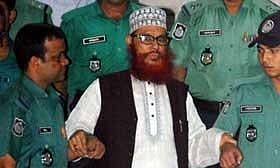
Dhaka, Mar 29 (bdnews24.com) — The war crimes tribunal will receive statements of 15 witnesses given to the investigation officer as evidence in a case against Jamaat-e-Islami leader Delwar Hossain Sayedee.
The International Crimes Tribunal, set up to deal with crimes against humanity during the 1971 Liberation War, on Thursday however, rejected the petition for 31 other witnesses.
The three-judge tribunal, headed by Justice Nizamul Huq, indicted Jamaat executive council member Sayedee on 20 counts that include murder, rape, arson and loot.
The prosecution had petitioned the court to receive 46 witness statements, taken down by the investigation officer, as evidence because those people could not be produced without delay or cost.
Prosecutor Syed Haider Ali referred to 19.2 of the International Crimes (Tribunal) Act of 1973 which allows such a provision in case of dead witnesses or those who cannot be produced at the court without delay or expense that the "Tribunal considers unreasonable".
The court granted the petition in part saying that a successful case had been made in case of 15 witnesses but rejected the petition in respect of other witnesses.
However, it mentioned in the order that it would keep in mind that these witnesses were not cross-examined, suggesting that weight of these 15 statements would depend on the discretion of the court.
After passing the order the tribunal asked prosecutor Syed Haider Ali whether he would bring further witnesses, to which the prosecutor said he would conclude with the investigation officer and bring no further witnesses.
The tribunal decided that this would have to be scheduled for several consecutive days, especially after Haider Ali indicated that he would require around three days to fully depose Mohammad Helaluddin.
Justice Huq then adjourned proceedings of Sayedee's case until Apr 8 when Haider Ali will be expected to begin his examination of the investigation officer.
Order
The tribunal mentioned the names of 15 witnesses in its order, whose statements it would receive as evidence.
Tribunal member Judge A K M Zaheer Ahmed pointed out in the middle of the order that the tribunal would not 'accept' but 'receive' as evidence as the legal provision states.
Justice Huq noted the arguments of both prosecutor Syed Haider Ali and senior defence counsel Abdur Razzaq.
The order said the prosecutor had satisfactorily demonstrated, through two reports of the investigation officer, that one of the witnesses was too ill to travel and would not be able to bear the exertion of travelling to Dhaka.
Regarding three other witnesses, those that the prosecution said on Feb 2 were 'lost'— Samar Mistri, Ashish Kumar Mandal and Sumati Rani Mandal — had returned to their village home in the end of January and lived there for a few days.
Investigations into the whereabouts of these three witnesses revealed that they had lived in their houses for a few days but were not seen since then. According to reports of the investigation quoting local police reports, the trio has most likely left for India.
As regards other witnesses, the tribunal found the investigation officer's report relating to Sayedee's armed cadres threatening witnesses and forcing them to move out of their houses satisfactory.
Thus, Justice Huq said in regard to those 15 witnesses, "We give the order to receive in evidence the statements made by them to the investigation officer."
The order then mentioned that the tribunal would remain "cautious" that these prosecution witnesses will not be produced in court, nor will they be cross-examined. "The evidence will only be received as such."
Observations
The tribunal in its order made two observations drawing upon the submissions of defence counsel Abdur Razzaq who had referred to certain newspaper clippings.
The reports investigated the reason behind the prosecution not being able to produce its witnesses in the court.
In doing so, however, the daily Naya Diganta had gone off to speak to witnesses and published their conversations with the investigation officer in some cases, delving into a matter that was pending in the courts.
Justice Huq said, "We wonder how a journalist could talk to a witness." He mentioned that it was a subj udice matter and highly contemptuous.
He mentioned in the order that the judges had wanted to issue notice to the Naya Diganta reporter and the authorities.
However, upon Abdur Razzaq's submissions the tribunal decided to "refrain from issuing the notice". But the tribunal chairman continued in an agitated voice that this should be a caution to the individual reporter, whose name Justice Huq said he would not mention in the order, as well as the press at large.
The tribunal also observed after having perused to the newspaper articles that "people in support of the accused are actually going to the witnesses".
The order continued to state these people were not only talking to the witnesses but also terrorising them to prevent them from coming to the tribunal and testifying against the accused.
FIRST CASE TO TRIAL
Sayedee's is the first case to proceed to the trial stage at the tribunal. The prosecution on Sept 4 last year proposed framing of charges against him on 31 counts for crimes against humanity and genocide.
On Oct 3 the same year, the tribunal indicted Sayedee on 20 counts including murder, rape, arson and loot.
The tribunal also sent Jamaat's former chief Ghulam Azam to jail on Jan 11. His indictment hearing began on Feb 15.
Besides Sayedee, Jamaat chief Matiur Rahman Nizami, secretary general Ali Ahsan Mohammad Mujaheed and assistant secretaries general Mohammad Kamaruzzaman and Abdul Quader Molla, and Bangladesh Nationalist Party's standing committee member and MP Salauddin Quader Chowdhury have been detained on war crimes charges.
The tribunal granted conditional bail to former BNP lawmaker and minister Abdul Alim on Mar 31 last year. The bail was extended on Mar 27 and Alim has been asked to submit a full medical report on Apr 22 when the prosecution has been ordered to place its formal charges against the BNP leader.
bdnews24.com/ta/bd/1411h