


Published : 01 Apr 2022, 02:33 AM
Updated : 03 Aug 2022, 11:41 AM


The prime minister was addressing events on Thursday to celebrate the UN resolution for Bangladesh’s graduation to a developing nation. One of the events was organised at the beach of Cox’s Bazar.
“This is my promise to the people of Bangladesh, including the people of Cox's Bazar: I will shed blood and sacrifice my life like my father did to change the destiny of the people. I will stand by your side and work for your development until my last breath,” she said from the Ganabhaban via a video link.
Bangladesh completed all the procedures to graduate from the least developed country category when the United Nations General Assembly adopted the resolution on Nov 24, 2021.
After making significant progress in economic growth, poverty alleviation, women empowerment and many other areas, Bangladesh aims to achieve the status of a developed nation by 2041.
The British quit the Indian sub-continent in 1947, but the people of Bangladesh were left shackled by Pakistani oppression for decades before Bangabandhu led the Bengalis to independence through a nine-month Liberation War in 1971.
As the Bengalis were preparing for an armed struggle after he called for independence in his historic March 7 speech in 1971, the Pakistani forces swooped down on innocent civilians in one of the most horrific genocides in history on the night of Mar 25 that year. Before being arrested by the Pakistani forces, Bangabandhu formally declared independence on Mar 26.
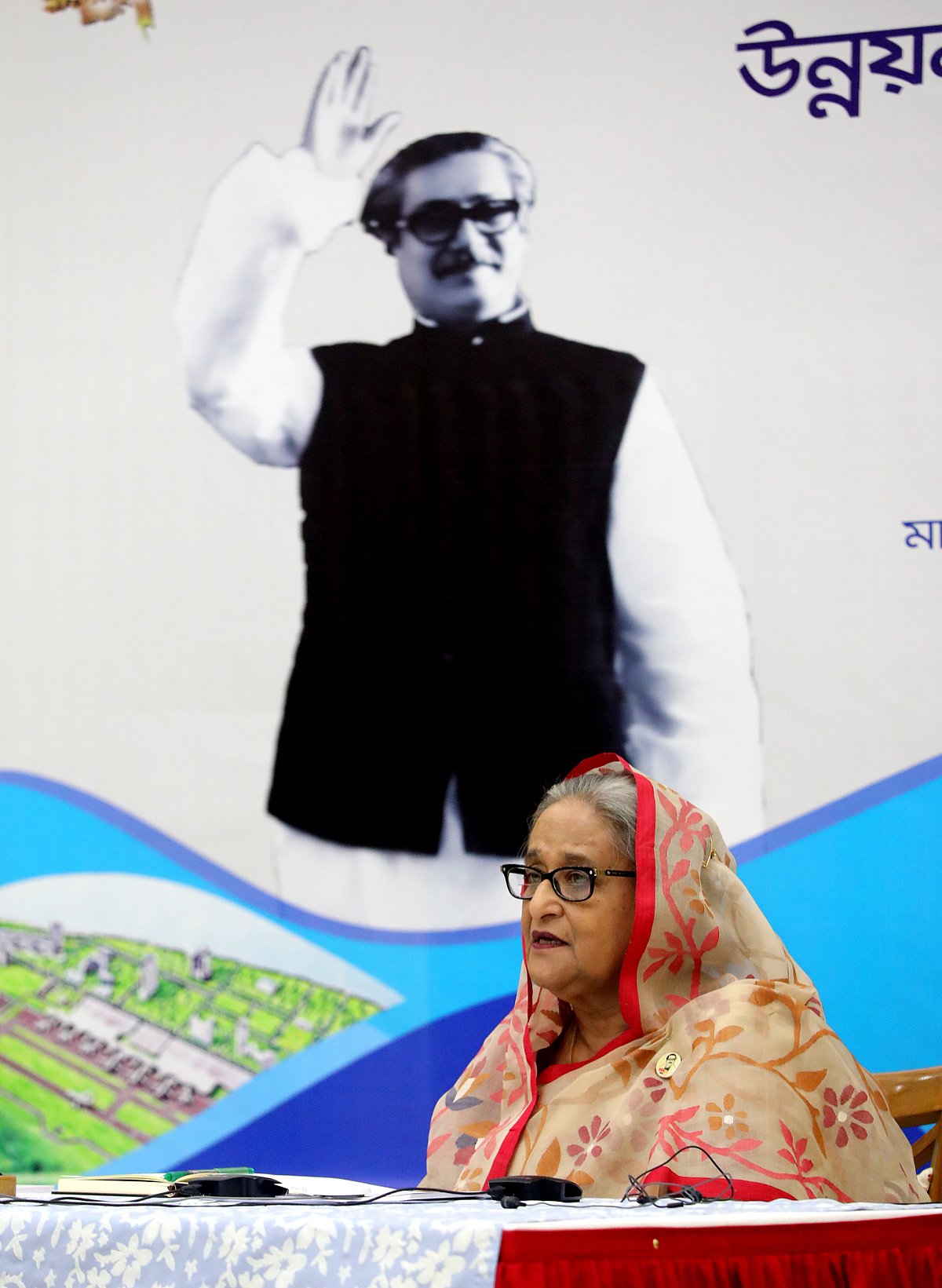
The independence hero was assassinated in the massacre of his family three and a half years later after he had laid the foundation for development while rebuilding the war-torn nation.
Decades after the country’s journey backwards during military rules, the Awami League returned to power with Bangabandhu’s daughter Hasina at the helm, taking the charge to sail the nation towards the path of development.
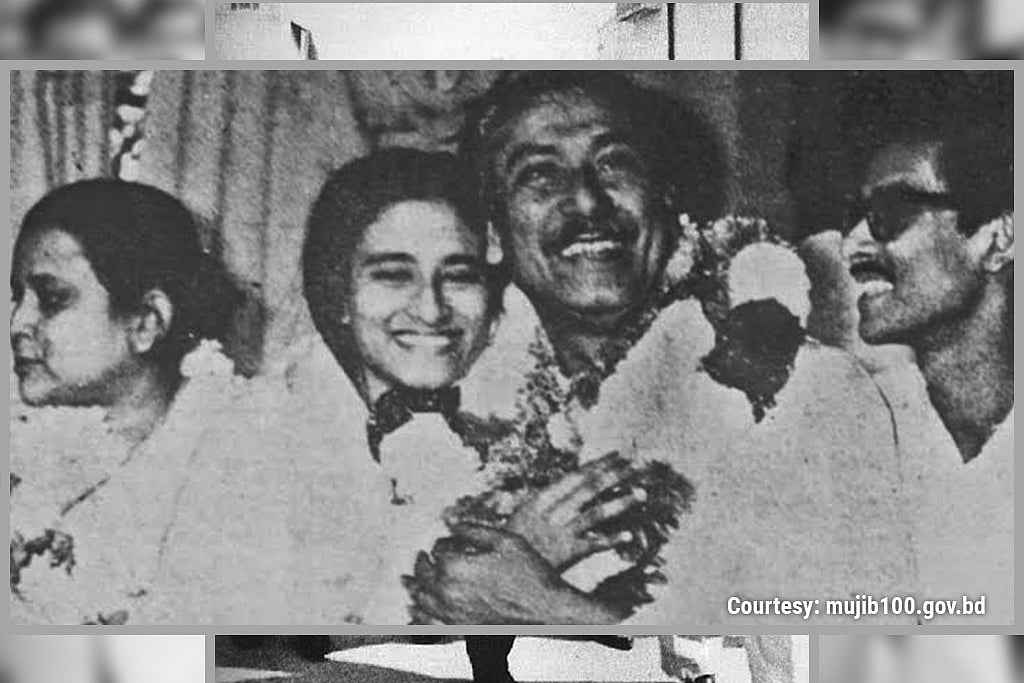
Hasina lost almost all of her family members in the 1975 massacre, but she and her sister Sheikh Rehana escaped the carnage as they were abroad at the time.
Barred from entering Bangladesh for a long time, Hasina was elected president of the Awami League in absentia in February 1981. She returned home on May 17 the same year.
She spearheaded the Awami League's successful campaign along with other political parties and alliances to restore democracy in 1990.
Recalling her homecoming, Hasina said, “I didn't see my parents and siblings when I got back, but I got hundreds of thousands of people who braved storms to receive me.”
“They've been my beloved ones from that day. The people of Bangladesh are the members of my family. They're everything to me. I'm working for them. I consider them as my family.”
“I got back the lost love of my parents and brothers from you. So I won’t hesitate to sacrifice my life for you. I'll work to change your destiny no matter what challenges I face so that everyone gets a beautiful life.”













