Published :
09 Feb 2013, 03:32 PM
Updated :
09 Aug 2022, 10:12 AM
According to the Ministry of Foreign Affairs, the Washington Times has carried its ‘full’ rejoinder on Feb 6 on its online edition and an ‘edited’ version on Feb 7 broadsheet.
Bangladesh’s Ambassador in Washington Akramul Qader wrote it titled ‘Counterpoint on Bangladesh’s Democracy.’

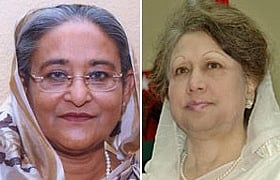
The BNP Chairperson on Jan 30 wrote the column titled “The thankless role in saving democracy in Bangladesh” with key focus on restoring the caretaker government system for national elections that the incumbent Awami League-led government annulled through a constitutional amendment.
Khaleda criticised Sheikh Hasina’s regime and to convince the US particularly mentioned the name of Muhammad Yunus, who lost his post as the Managing Director of the Grameen Bank during the regime of the current government after a court battle.
She also suggested the US and other western allies to slap economic sanctions, sought Bangladesh’s expulsion from trade preferences and targeted travel sanctions.
The rejoinder – a point by point rebuttal of the allegations raised by the BNP Chairperson - took a personal dig at Khaleda’s family as well as her regime.
“Ironically, the appeal comes from none other than a tarnished politician, as she probably is to Bangladesh and the rest of the world, whose immediate past regime was termed as a “brutal kleptocracy” by the Economist magazine,” the ambassador wrote.
He also referred to the Feb 15, 1996 elections overseen by the BNP government and boycotted by major political parties including the Awami League.
“She may like to hide it but even the most oblivious sections of foreign press covering Bangladesh politics have not forgotten that since Bangladesh’s democratization in the early 1990s, it is she who presided over the holding of the just democratised nation’s most shameful one-party election (on 15 February 1996).”
He wrote while her party and other allies have been ‘terrorising’ the country to bring back a non-elected caretaker government to hold the next parliamentary elections, “the people of Bangladesh have good reasons to question her actual intention.”
“Her government extended the retirement age of Supreme Court judges to ensure one particular retired chief justice runs the show.
“Her chosen Chief Election Commissioner gifted the nation a voters list that carried 13 million of non-existing voters.
“The result was an unfortunate halt to Bangladesh’s democratic governance and an undemocratic army-backed regime clinging on to power for two long years.”
As Khaleda sought western support to save Bangladesh’s democracy, the rejoinder said her readiness to gain political edge “at the cost of surrender to foreign power/s would not surprise others when the ideology of her party and that of her allies are so deeply opposed to Bangladesh’s very independence.”
“Begum Zia was quite right to comment, if Bangladesh succumbs to the rule of one family [emphasis added], it would be a major step backward for the region”.
“She cannot be more true. Only in case the readers are not just sure what family she actually meant by that phrasing; that must be hers.
“Bangladesh’s central bank with support from the FBI and anti-corruption bodies of several other countries could so far bring back only a small portion of the money her two sons had smuggled out.
“One of her sons has been fleeing justice since a Court has ordered his jail term. When she suggested targeted travel (restrictions), her sympathizers might be slightly worried that her family members have a fair chance to top that list!”
Countering the call of economic sanctions, the rejoinder said: “Her observation comes when Bangladesh features in all four presidential initiatives of the current Obama administration and the two nations have successfully held the first ever partnership dialogue.”
It also highlighted ‘a flourishing bilateral trade’ relations of Bangladesh and the US and said both nations expect ‘a more robust’ economic presence of the US companies in Bangladesh in the near future.
.
“The USA is presently Bangladesh’s single largest source of overseas investment.”
“The US investments are likely to come in some of the less charted sectors including exploration of offshore oil and gas resources the scope of which has brightened with Bangladesh’s successful resolution of maritime disputes with Myanmar.”
“Ms. Khaleda needs to realise that US-Bangladesh relations are founded on the time-tested principles of democracy and equality that have only been complemented by the similarities in both peoples’ democratic aspirations.”
The rejoinder termed Khaleda’s comment on Yunus issue as ‘tantamount to the contempt of Bangladesh’s highest court’ as it was settled through a legal process.
“While it is not possible to make any comment on an issue settled through a legal procedure, her administration’s past track record of encouraging religious fundamentalism would befool none what harm those radical clerics stand to do to a Bank 95 percent of whose borrowers are poor women.”
The rejoinder ended with quote from Goethe: “It is in the half fools and half wise that the greatest danger lies.”