Ghulam Azam hearing Tuesday
Sayedee hearing also that day while Kamaruzzaman's on Mar 29. Full story
bdnews24.com News Service
bdnews24.com
Published :
25 Mar 2012, 09:09 AM
Updated :
09 Aug 2022, 03:35 PM
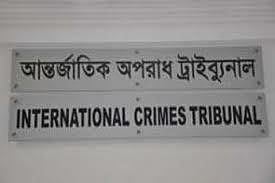
Dhaka, Mar 25 (benews24.com) — The war crimes tribunal has adjourned hearing Jamaat-e-Islami guru Ghulam Azam's discharge petition to Mar 27.
The International Crimes Tribunal, set up to deal with crimes against during the 1971 Liberation War, also decided to adjourn proceedings of two other cases that were scheduled for Sunday considering that Azam's petitions would take up the better part of the day.
The defence of Jamaat assistant secretary general Mohammad Kamaruzzaman was scheduled to present its arguments against his indictment. That hearing has been adjourned to Mar 29.
The tribunal adjourned hearing an application of the prosecution in Jamaat executive council member Delwar Hossain Sayedee's case to Mar 27. The prosecution's application regarding its future course of action regarding witnesses has become a point of serious concern for the defence.
Abdur Razzaq, the senior counsel representing the entire Jamaat leadership that is currently behind bars charged with crimes against humanity, took the podium and began moving his applications.
Razzaq first sought modification of a tribunal order allowing the former Jamaat chief to have home cooked food in jail.
The counsel pointed out to a condition that Ghulam Azam's family would be held responsible if his health deteriorated for supplying him with home cooked food. The lawyer said this was too much of a risk for Azam's family since there were no guarantees on what could happen with the food between the time it is handed over for examination by the prison authorities and when it is given to Azam.
The tribunal chairman, Justice Nizamul Huq, flanked on his right by the newly appointed Justice Mohammad Anwarul Haque, said, "We must rely on the system, until there is a prima facie case for not doing so."
He said the conditions and formulation of the order were important because otherwise there would be a flood of similar applications for unconvicted, on-trial prisoners of Bangladesh. He said there were 50,000 such people in the jails.
Justice A T M Fazle Kabir, who had been a member of this tribunal, has been appointed chairman of the second war crimes tribunal and replaced by Justice Mohammad Anwarul Haque.
This application remained with the counsel and the tribunal both implicitly agreeing that they would think over the matter and take it up later.
It was followed by a lengthy discharge petition that was read out partially by the senior counsel and partially by Tanvir Ahmed Al-Amin, a junior colleague of Razzaq's on the defence team.
ARGUMENTS
Countering the prosecution's prayer for indicting the former Jamaat chief, Azam's senior counsel argued that the case had been brought 40 years later and suggested "malafide intentions".
Razzaq said the case had a "political purpose" behind it. "This case would not have been brought up if Jamaat-e-Islami were [politically aligned] with the Awami League."
He said the only reason that the case had been brought against his client was that Jamaat had become a major political factor opposed to the ruling party. Razzaq recalled occasions when the Awami League had no qualms with conducting agitation programmes and campaigns jointly with the Jamaat.
Referring to the definition of 'auxiliary forces' in the International Crimes (Tribunal) Act 1973 — "includes forces placed under the control of the Armed Forces for operational, administrative, static and other purposes" — Razzaq said Razakars, Al Badr, Al Shams and such fronts mobilised by Jamaat and its student wing, did not constitute auxiliary force.
The lawyer said a force had to be directly under military control that Razakars or the likes of Al Badr and such fronts, which committed heinous atrocities to thwart the liberation effort, were not.
Delving into the historical context of the law enacted in 1973, he said this piece of legislation was exclusively for trying around 195 and did not apply to persons like Ghulam Azam.
The counsel also contended that whatever amendments there were, unless specifically mentioned by parliament the law must not have retrospective effect. He said retrospectivity was the domain of parliament and only the legislature had the authority to exercise that right.
This came in reference to the 1973 Act going through amendments during the tenure of the current ruling government.
Abdur Razzaq also said there was no apparent case against his client as regards 61 counts which mainly included incitement, conspiracy and planning, and abetment.
He said while there was a chance of double jeopardy for his client being convicted on two counts for the same offence, the allegations against Azam were not concrete either.
Razzaq pointed to several instances where Azam has been accused of complicity as well as of conspiracy for the same action — mainly speeches across Bangladesh as the head of Jamaat's East Pakistan Unit.
Further, Razzaq argued that the prosecution had failed to establish any direct links with Azam's speech and atrocities. "[The prosecution] has not been able to show it was due a certain lecture of Ghulam Azam that certain crimes were committed."
The senior lawyer also pointed to the "inordinate delay" in bringing the case against his client. He argued that it had been 40 years since the Liberation War but there were no reasons given for the delay.
Razzaq also mentioned ministers made comments about the tribunal's proceedings which impeded fair trial.
JAMAAT GURU IN ICT
On Dec 12, the prosecution brought a 52-point charter of charges against Azam and appealed for his arrest. Later, following the tribunal order, charges were re-arranged and presented to the tribunal on Jan 5.
He was produced before the tribunal by it order on Jan 11 and sent to jail on the same day. Since that evening Ghulam Azam has been shifted to the prison cell of the Bangabandhu medical university for better treatment considering his delicate health.
Azam had allegedly lead the infamous 'peace committees' and collaborated with the Pakistan Army during the Liberation War. He also spoke in favour of Pakistan to the Middle Eastern countries during the war, according to the prosecution.
He stayed in London for seven years after 1971 and returned to Bangladesh in 1978 during Ziaur Rahman's rule. Having led Jamaat for long, Azam retired from active politics in 1999.
bdnews24.com/ta/bd/1621h