Published :
09 Feb 2013, 02:17 PM
Updated :
09 Aug 2022, 10:12 AM
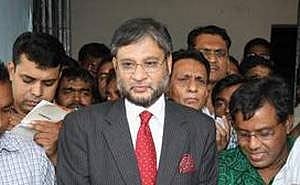
He told bdnews24.com that a police team came to his office in Dhaka’s Naya Paltan area at 5pm Saturday and wanted to carry out a raid.
“They were told they won’t be allowed to carry out a raid without a warrant. We also informed them (police) of a court order that barred law enforcers from disturbing the activities of prosecution lawyers of the tribunal,” he said.
The chief defence counsel’s co-workers said lawyers of the Jamaat leaders at the two tribunals hold regular meetings Saturday.
Razzaq, also an Assistant Secretary General of the Islamist party, said the law enforcers left his office ‘showing respect to them’.

When bdnews24.com contacted Paltan police over the matter, Officer in-Charge Golam Sarowar said no policeman from his station had gone to Razzaq’s office.
The Jamaat top brass is currently standing trial at the two war crimes tribunals of Bangladesh on a raft of war crimes charges.
The Sheikh Hasina-led government set up tribunals to try those who had opposed the nation’s struggle for freedom in 1971.
In its maiden verdict, on Jan 21 this year, the second tribunal handed down death sentence to a former Jamaat leader Abul Kalam Azad, popularly known as Bachchu Razakar, who was tried in absentia. On Feb 5, the same tribunal sentenced Jamaat Assistant Secretary General Abdul Quader Molla to life term in jail.
The second verdict prompted a countrywide protest seeking death sentence for Molla. Over 100,000 people thronged the capital’s Shahbagh intersection protesting the sentence.
In both sentences, the tribunal observed that the Islamist party had substantially contributed to the formation of auxiliary forces during the 1971 Liberation War to help the Pakistan army thwart the nation’s struggle for freedom.
The Islamist party has been accusing the Awami League-led government of carrying out a political vendetta in the guise of trials. BNP chief Khaleda Zia, a former Prime Minister and key ally of Jamaat, has dubbed the trial as a ‘farce’.
According to official estimates, around 3 million people were killed during the 1971 Liberation War and hundreds of thousands were left homeless. Around 10 million Bangladeshis were forced to take refuge in India.