Published :
02 Jun 2011, 04:58 PM
Updated :
10 Aug 2022, 04:53 PM
Dhaka, June 2 (bdnews24.com) —The Chittagong Hill Tracts affairs state minister has alleged that opposition BNP and Jamaat-e-Islami are behind the ongoing unrest in the hill region, home to 11 indigenous communities.
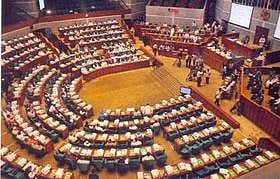
Dipankar Talukdar told parliament on Thursday that the opposition allies did not want implementation of the CHT Peace Accord inked in 1997 to end the decade-long conflict in the hill.
Responding to a supplementary question put by reserved seat MP Mamtaz Begum, Dipankar said: "BNP-Jamaat do not want to see the execution of the peace accord."
Home state minister Shamsul Haque Tuku echoed Dipankar's view.
The accord, singed between the then Awami League government and Parbatya Chattagram Jana Sanghati Samity (PCJSS), ended the decade-long bush war between the indigenous people and the army.
But, due to the prevailing land disputes and presence of military in the area, bloody clashes still take place between indigenous people and Bangalee settlers as well as between two groups of aboriginals.
In April 17 violence at Ramgarh and Manikchari in Khagrachari four Bengali settlers were killed, scores of hill people injured and their homes burnt.
And on May 21, four tribal people were killed following a fierce gun-battle between PCJSS and United People's Democratic Front, opposing the accord.
The UN Permanent Forum on Indigenous Issues (UNPFII) in its 10th session in New York last week urged the Bangladesh government to expedite the accord's implementation and expressing its grave concern over the delay, which is causing violence in the region.
At the end of the session, the forum also asked Bangladesh to set a timeframe for the process and to sketch modalities for implementation of the accord.
Dipankar claimed that Awami League government in its previous term until 2001 implemented many provisions of the accord.
"But the BNP-Jamaat government did not take any measure, rather tried to obstruct [its implementation]," he said.
Terming the land-related issues the main reason behind the ongoing unrest, he said measures would be taken to amend the disputed provisions of the Land Commission Law.
The government, in line with the peace accord, formed the Land Commission in 2001 to resolve the issues of repatriation and rehabilitation of the indigenous people fled to India during violence at different times and of those internally displaced.
In a study report placed at the UNPFII stated: "The current chairperson of the Land Commission made a number of controversial decisions that, in effect, paralysed the activities of that commission."
bdnews24.com/mhc/pd/pks/ssr/2035h