


Published : 22 Jul 2020, 12:16 PM
Updated : 08 Apr 2022, 02:38 AM


Now al-Bashir is being called to account for his actions.
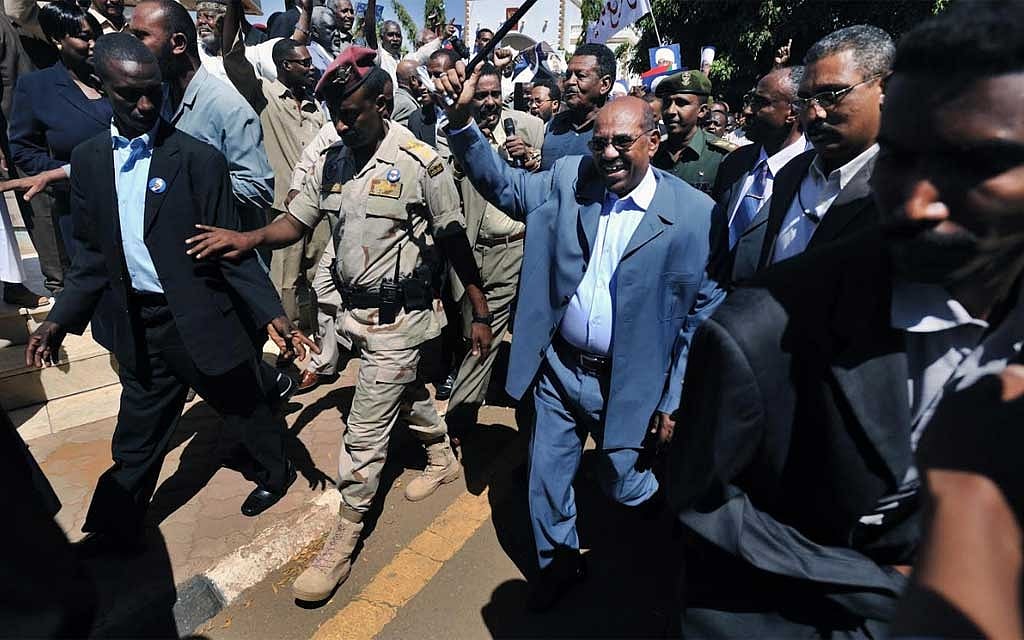
The autocrat, 76, who was ousted last year following street protests, was led into a courtroom in Khartoum on Tuesday to stand trial for his role in the bloodless 1989 coup that toppled the democratically elected government of Prime Minister Sadiq al-Mahdi. Also in the dock were 27 of al-Bashir’s most senior officials, including former vice-presidents, ministers, governors and military officers.
Al-Bashir, who was sentenced to two years imprisonment last year on separate corruption charges, faces the death penalty if convicted.
Armed policemen wielding batons and tear gas canisters stood guard outside the courthouse, where the accused were led into cages for a brief hearing. Dozens of relatives gathered outside the building, jeering and shouting slogans including “God is great!”
The prosecution is a rare instance of a dictator being forced to answer for the putsch that catapulted him to power — even if in al-Bashir’s case, a key accomplice has already evaded justice. The Islamist cleric Hassan al-Turabi, widely seen as the true architect of the 1989 coup, and the power behind al-Bashir for many years until they had a falling out, died in 2016 without facing trial.
For al-Bashir, this is one prosecution among many. During last year’s corruption trial, he admitted taking $90 million in bribes from Saudi Arabia’s rulers. But the gravest charges have yet to come before a court.
For over a decade, the International Criminal Court at The Hague has sought al-Bashir over his role in the conflict in the western region of Darfur, where Sudanese troops and allied militias killed, pillaged and raped in a yearslong campaign of ethnically driven violence that resulted in several hundred thousand deaths.
When al-Bashir, a brigade commander, took over in 1989, the country was sinking into decline. The army was battling a tenacious uprising in the south, and al-Mahdi’s elected government was unpopular and beleaguered.
After he seized power, al-Bashir suspended the Parliament and other state institutions, closed Khartoum airport and announced the coup over the radio. Later, he embarked on a vicious purge of potential rivals, imposed Islamic law and introduced harsh laws that severely restricted freedoms for Sudanese, especially for women.
Al-Bashir’s iron grip collapsed in April 2019 when, after months of street protests triggered by the price of bread, his own army lieutenants decided his rule had become untenable and ousted him from power.
Al-Bashir has dismissed the charges over the 1989 coup as politically motivated — “a political trial par excellence,” one of his lawyers told reporters in December — and footage of Tuesday’s proceedings broadcast on state TV focused on the judge and did not show the ousted autocrat in the packed courtroom. For many Sudanese, though, it was also striking to see the former vice presidents Ali Osman Taha and Bakri Hassan Saleh on trial.
Without hearing statements or arguments, the judge adjourned the trial until Aug 11, when he said it would reconvene in a larger courtroom with more space for relatives and the defendants.
c.2020 The New York Times Company













