



Published : 31 Dec 2021, 03:36 AM
Updated : 22 Jul 2022, 03:03 AM


My last meeting with him was at the Russian Cultural Centre in Dhanmondi. A programme had just concluded and with a friend, I wondered whether there was any place for us to have coffee there. I suddenly noticed him waving at me. My friend and I went up to him, happy that a man in his socially elevated position had thought it fit to notice us. He wanted us to stay a little longer, but since my friend, an educationist who needed to be back home in Uttara with her family, was in a bit of a hurry, we took leave of him. His parting words to me were, "Let's meet up again, and soon."
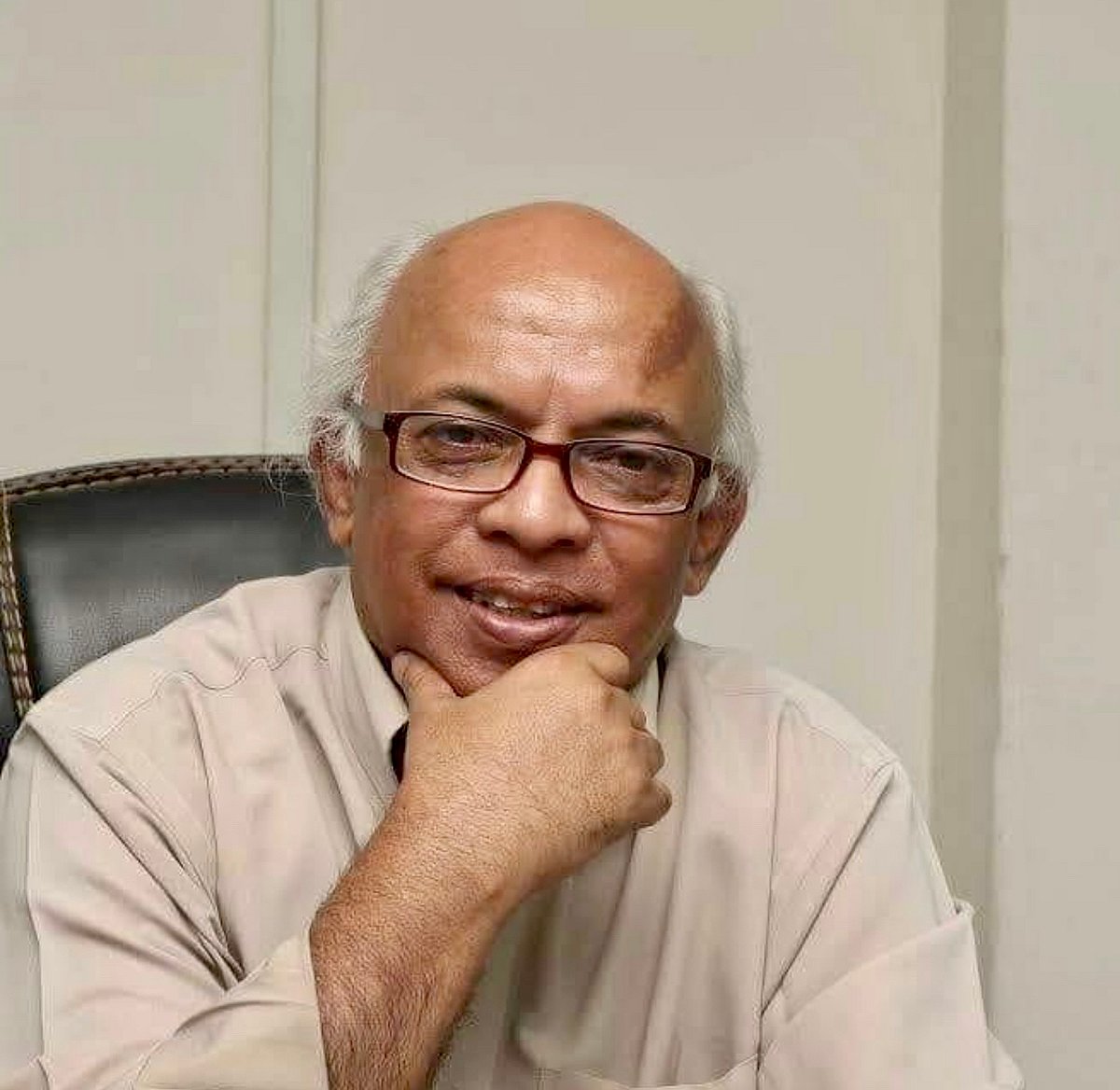
That was the last I saw of Justice KM Subhan. On the last day of December that year, he passed on to the Great Beyond. It was a death that, for me and for thousands of his admirers and loyalists, was all too sudden. There were yet so many responsibilities the judge needed to carry out as part of the nation's intellectual class. In him there was that image of morality, emblematic of individuals whose love of land and humanity was paramount, that could not be missed. Justice Subhan was representative of the morality the country needed at precisely that moment when he passed on.
In recalling Justice Subhan, there arises in the deep recesses of my memory the personal which comes heavily tinged with the impersonal. My first meeting with him was toward the end of the 1980s, along with some other elderly individuals who for me have remained the wise men I have learned from. The occasion was a discussion in Banani and these wise men had somehow got in touch with a rather young me. The plan, in those days of the lingering darkness sweeping across Bangladesh — darkness brought on by the tragedy the country had been pushed into in August-November 1975 — the wise men wondered if I could be part of an enterprise they were about to give shape to. The enterprise was one of preparing and publishing a comprehensive work on Bangabandhu Sheikh Mujibur Rahman. The wise men thought I could be responsible for the editing and writing aspects of the project. It was an era when not very many people thought of putting the achievements of the Father of the Nation on the record. A dark age, if you recall. The nation was under the oppressive shadow of its second military dictatorship.
That was the beginning of my interaction with Justice Subhan. In the months and years which followed, I came across him at different seminars. He it was who made it a point to walk toward me, hold out his hand, with that inimitable smile revealing the inner beauty of his personality, and opening the door to a new conversation. There was the time when he asked me to visit his home in Malibagh, which I did one morning. It was a delightful session that had us engage in a revealing conversation on history, politics and the rule of law. For me, that meeting and indeed every meeting with Justice Subhan was a learning curve. I was always enlightened in his presence and by his conversation, for it all came beautifully wrapped in the humility which underpinned his personality.
And yet behind that humility lay moral strength, of the kind that men driven by patriotism are capable of calling forth. Justice Subhan, along with others of his colleagues, suffered under the Ershad regime. But he and his colleagues did not genuflect before the forces of unconstitutional rule. Many were the attempts by the regime to heap charges of malfeasance on Justice Subhan, attempts which obviously did not go anywhere. The judge was, after all, part of a tradition that had always kept the votaries of illegitimately acquired power on their toes. There were before him the instances of Justice MR Kayani and Justice SM Murshid in pre-1971 Pakistan. And with him, in his times, were Justice Syed Mohammad Hussain, Justice Kemaluddin and Justice Abdur Rahman Chowdhury. Justice Subhan was thus of a class that stands out in the annals of our times, judicial as also political, indeed in the history of Bangladesh.
Justice Subhan's association with the Ekattorer Ghatak Dalal Nirmul Committee has always shone a light on the boldness with which he approached issues that necessarily involved the larger national interest. His bonding with Jahanara Imam gave the movement its inner strength and the resilience which, at a time when the 1971 collaborators were beginning to make their way back to politics per courtesy of their friends in the 'Bangladeshi nationalism' camp, was a historical requirement of the moment. Justice Subhan's belief in the rule of law came in close linkage with his conviction that anti-national elements possessed no right to be part of the national political landscape. And he was never willing to give any quarter to the forces of medievalism. When a band of fanatics arrogated to themselves the ugly right to put a price on Taslima Nasrin, Justice Subhan emerged to loudly condemn their audacity. When the Khatme Nabuwat outfit went after the Ahmadiyya community in Bangladesh, it was again Justice Subhan who elected to man the ramparts of decency and the law. There was no stopping him.
The future of the nation, Justice Subhan made abundantly clear through his speeches and his writings, lay in an upholding of the politics and vision of Bangabandhu Sheikh Mujibur Rahman. He was a powerful component of the Bangabandhu Parishad. He was thrilled, like millions across the country, when Sheikh Hasina led the Awami League back to power in June 1996. He was not demonstrating the partisan here. He was simply celebrating the restoration of the principles upon which the Bengali nation had waged war for freedom in 1971.
Many were the threats hurled at him by the denizens of darkness, but that did not make him stop in his tracks. His crusading zeal in ensuring the return of the country to its roots was all that mattered. He loved walking, which gave him not just physical energy but a zest for life. He made friends easily with people and was happy to engage in conversations with them.
Among the stories of men and women who have struggled long and hard to uphold the heritage of this country, through the long tunnels of darkness and through the deep wilderness, the tale of Justice K.M. Subhan deserves serious and focused study. That will be our tribute to him.
(Justice KM Subhan, born on July 25, 1924, passed away on Dec 31, 2007)







