


Published : 10 Jan 2022, 04:16 AM
Updated : 22 Jul 2022, 03:03 AM


We often come across a well-thought-out and –designed development project, implemented on time and on scope, and then compare the final data against baseline and conclude whether a project did well or not. However, it is different when you aspire to really get to lasting changes or transformational impact, a change that can keep accelerating well beyond the "lie" of the project. While transformational and lasting change is not easy to attribute to one factor or other, there is plenty of evidence that the development activities that keep women empowerment, gender equality and women leadership in the centre are able to create lasting changes in households and the communities around. It is very evident that when the opportunity for participation and leadership is ensured equally to men, women, girls and boys, the entire society benefits.
Although the world currently is experiencing an unprecedented time of female leadership, however, majority of women in urban and rural contexts are confined in the walls of a home, burdened with domestic chores, family responsibilities and the uneven wage gap for those who are lucky enough to work. Sadly, women's power and strength are underrepresented and undermined in daily life. But, when they are passed the torch to contribute to the well-being of society, they feel seen and heard. And when they speak, they speak with a point of view that takes every aspect into consideration – herself, her family, her neighbours, her environment – everything. It is this wholesome view of the self and the surroundings that makes women ideal candidates for leading change.
Years and decades of experience show that when women and girls, no matter the age or background, are given the right tools to lead, the changes multiply. As a humanitarian and development organisation, CARE believes in harnessing this inner strength and power of women and using that to bring about lasting changes to society. And this is why CARE has always focused its work around women – their empowerment and equality, fighting for their rights and enabling them with skills and knowledge that helps realise their full potential for the greater good.
CARE in Bangladesh shares a long history of being a development and humanitarian agency, one that has over seven decades of presence and partnership with Bangladeshi communities, civil society, and government as well as the private sector. During this time, CARE has supported a post-Liberation War country with many relevant rebuilding and recovery programmes and projects; remnants of which can still be found in some of the most remote areas of the country, and some in the memories of the elders, like the tales of the old days. Even in those tales, you will hear mention of how CARE Bangladesh had involved women in its core project functions and how these women had endured many social obstacles – but nothing could stop them once they were determined to work towards a positive change, for themselves, for their country.
Rooted in the belief to empower women with the right knowledge and tools, CARE Bangladesh currently has a number of programmes to work with adolescent girls and women for their rights and well-being – both physical and mental.
One of CARE Bangladesh's projects, known as the Tipping Point Initiative, works with adolescent groups to reduce child marriage rates. Bangladesh is ranked among the top 10 countries in the world with the highest level of child marriage, the highest prevalence in South Asia, and home to some 38 million child brides, including currently married girls along with women who were married before their 18th birthday and 13 million married before age 15 (UNICEF, 2020). The Tipping Point Initiative focuses on identifying the root causes of child, early, and forced marriage (CEFM) by promoting the rights of adolescent girls through community-level programming, evidence generation, multi-level advocacy, and cross-learning efforts across the globe. Based on this work, the project also seeks to influence the way policymakers, donors, researchers, and civil society approach the issue of child marriage, specifically to steer the global discourse beyond short-term solutions. Through activities such as Football for Girls, Tea Stall Conversation, Intergroup/Intergenerational Dialogue, Community Talk Show, Girl Centric Movement and much more, the project is enabling young girls to challenge social norms, establish their rights in the community and prevent child marriage. One of the major impacts that this project is able to make is that girls in rural areas of Bangladesh are now freer and more outspoken; dowry is unacceptable to the groups who were exposed to Tipping Point's messaging, both youths and adults. Moreover, the male population has also shown a changed mindset about sharing household chores. With the help of the project, girls from different parts of Bangladesh formed a network called 'Living out Loud' (LoL). This network will help them engage with larger and established women rights movement spaces to expand their commitment towards their own empowerment. At an advocacy level, several donors and research institutes have expressed their interest in collaborating with Tipping Point to work against CEFM.
This project is just one example of how CARE's work is designed to create ripple effects, not just in present but also in future. Enriched with the right knowledge, the girls will become advocates of their own rights in present and for generations to come.
"At one point in my life, I used to think that raising children after marriage, taking care of everyone in the family, doing household chores are the only duties of a girl. Apart from these, a girl cannot do anything else. Today, I believe that my perceptions were wrong. If given a chance, girls can make the impossible possible. They can conquer life," said university-going Yasmin from CARE Bangladesh's IMAGINE project that works with adolescent groups and young married couples to delay the birth of the first child by at least six months to two years and enhance their skills for better financial independence. Being a part of the project, Yasmin learned about all the adverse health effects of early marriage and childbirth on a women's body. She also received ICT training from the project which now helps her earn a handsome amount of money to support her family while still continuing her own studies. CARE's support encouraged her to speak for her rights and delay an otherwise early marriage that would have painted a very different future for her.
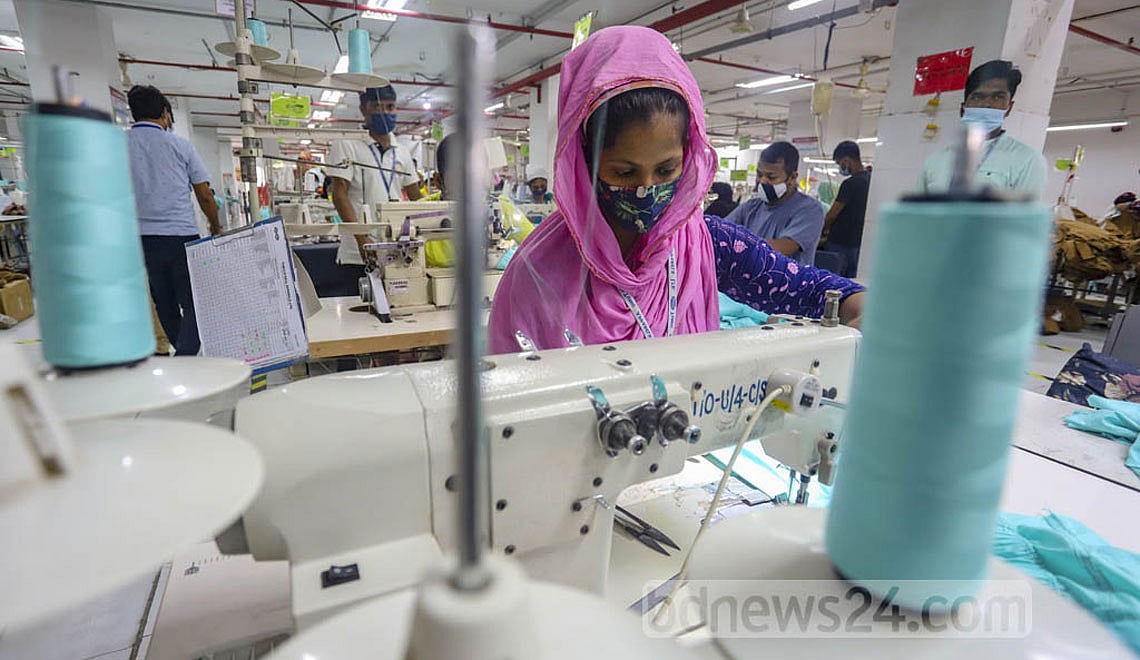
Aside from working with youths, adolescents and young couples in rural regions, CARE Bangladesh has made significant progress for women in the readymade garment sector as well. The majority of the staff in the RMG sector consist of women. However big the number may be, women are still stuck at the bottom of the chain working on the production floor. To enable and encourage more women to rise to management roles, CARE is working in several garment factories to raise awareness about women's rights under the labour law as well as provide them with skills and training that make them eligible for higher positions in the RMG factories. "I am better at balancing my work and housework now. The training has not only taught me to be a better worker but also encouraged me to share household responsibilities with other family members. Beforehand, I did not have the courage to speak directly with our managers or buyers; but now I can and I feel empowered as I do so. With the knowledge and skill from CARE's training, nothing can stop me from advancing in my career!" said Afroza, who is part of CARE Bangladesh's work in the RMG sector.
In August 2017, the whole world was witness to an act of great inhumanity and that was the mass exodus of the Rohingya from their homeland. Since the onset of this event, CARE has been on the field with humanitarian aid and services focused on the needs of women and children. One of the key areas of work for CARE has been gender-based violence where CARE has provided preventive and response services for the women in the Rohingya refugee community. By establishing Women and Girls' Safe Space, popularly known as Shantikhana, CARE is delivering psychological first aid, psychosocial counselling and recreational activities, life skills opportunity to GBV survivors, including individual and group counselling. "When I started coming to Shantikhana, I got a chance to interact with others. The time I spent here helped me forget about the bad memories of coming to Bangladesh," said Sufiara, a Rohingya girl frequently visiting Shantikhana. "Life is not easy in the camps. It is hot. We worry about our safety, and we have to go to collect rations, cook and look after the children. But when I am here sewing, I forget all my worries, all my losses. I feel happy!" said Hasina with a spark in her eyes who visits the Shantikhana to use the sewing machines.
As CARE embarks on another year's journey in Bangladesh with many days to observe that celebrates women's strength; it is an excellent time to remind ourselves that the fight for women's rights and empowerment is not about days, weeks, or even months; it is a continuous act towards which we must all act. While women are an integral part of the development process of a country, they still need our constant support – at the personal level, at the organisational level, and at the national level. And so, it is not one person or one organisation's job to keep the torch burning, rather a united effort from all parties and stakeholders.
Famous author C JoyBell C has remarked, "Every girl and every woman has the potential to make this world a better place, and that potential lies in the act of thinking higher thoughts and feeling deeper things. When women and girls, everywhere, begin to see themselves as more than inanimate objects; but as beautiful beings capable of deep feelings and high thoughts, this has the capacity to create change all around. The kind of change that is for the better." – and I have witnessed the same in all my years as a development practitioner in different countries across the globe.










