


Published : 14 Jan 2015, 10:38 PM
Updated : 08 Aug 2022, 04:36 PM


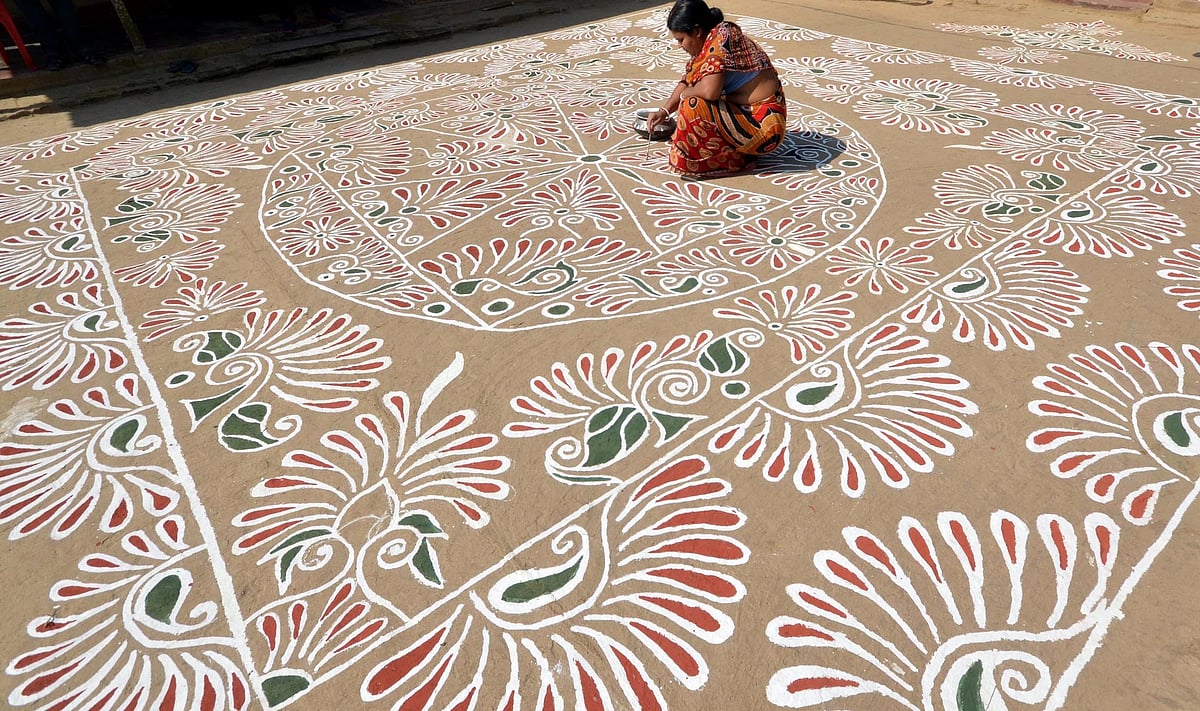
Women clean their houses and decorate courtyards with rangoli designs called alpanas during this festival.
Rangoli is a traditional Indian folk art in which decorative designs are made on floors of houses and courtyards during Hindu festivals.
These decorative patterns are created by the women to welcome goddess Lakshmi with good fortune, health and wealth.
Usually, household stuff like rice flour, lime, coloured mud, leaves, and flowers are used to make these patterns but synthetic colours are also in vogue these days.
Women also grind rice flour in traditional ways from the winter harvest and make rice cakes to welcome relatives.
Though the festival is no longer celebrated in a big way in the cities, it remains an important one in villages.
Makar means Capricorn and Sankranti, transition. As per the Gregorian calendar, the sun begins its northward journey on this day, called the Uttarayan, marking the beginning of the end of winter.
On Sankranti, millions of devotees are expected to throng the ghats of the Ganga to take a holy dip.
Bathing at the Sangam also marks the beginning of Uttarayan. Usually it falls on January 14 every year, but there can be a shift of one day.







