


Published : 19 Dec 2019, 01:52 AM
Updated : 17 Oct 2022, 11:50 AM


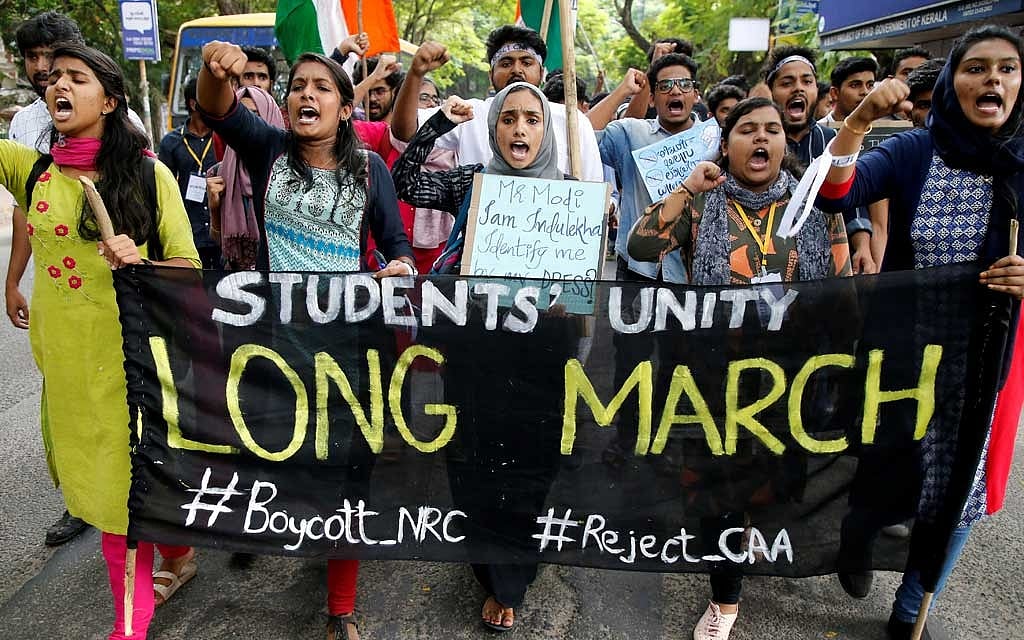
Prime Minister Narendra Modi's government says the Citizenship Amendment Act (CAA) is intended to address the persecution of non-Muslim minorities such as Hindus, Sikhs and Christians from Afghanistan, Bangladesh and Pakistan.
Those groups, many of whom have been languishing in India for years without rights, will now get an automatic path to Indian nationality if they came from these three countries before 2015.
India's Supreme Court turned down a plea on Wednesday to stop the implementation of the law but said it would hold hearings next month on the sweeping measure, which critics have described as anti-Muslim.
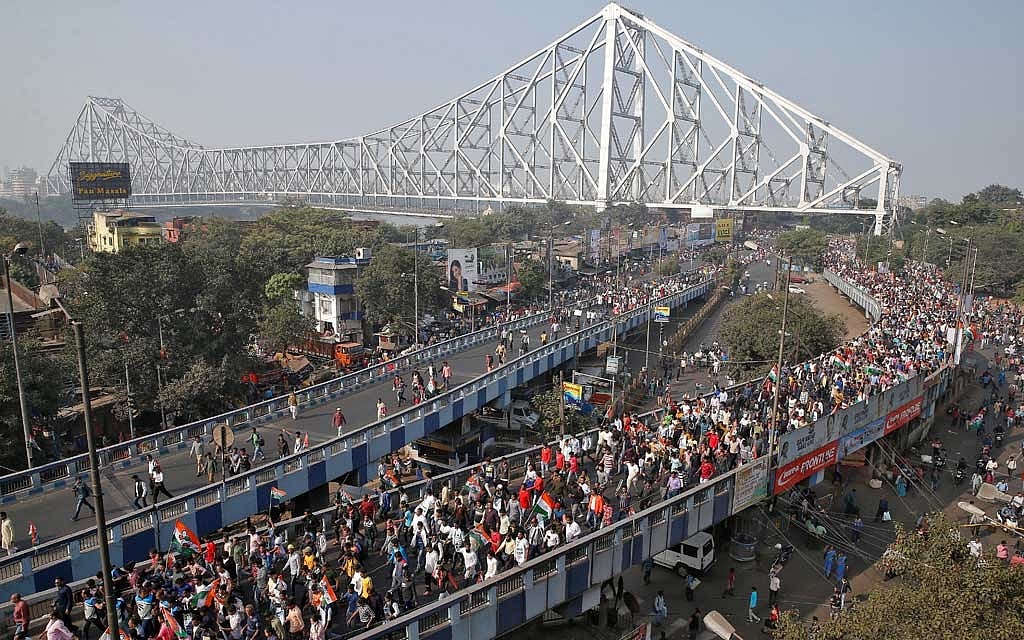
Supporters of Mamata Banerjee, the Chief Minister of West Bengal, attend a protest march against the National Register of Citizens (NRC) and a new citizenship law, in Kolkata, India, December 18, 2019. REUTERS
With more demonstrations likely, authorities in the southern state of Karnataka have moved to ban large public gatherings in at least three major cities, a police official said.
The restrictions will come into force on Thursday morning, including in the state capital Bengaluru where offices of dozens of multinational companies including Walmart Inc's Flipkart, Uber, Infosys and Wipro, are based.
"People are using this opportunity to create problems and we want to keep Bengaluru peaceful," police officer Umesh Kumar told Reuters.
Similar restrictions will also be imposed in Lucknow, capital of northern Uttar Pradesh state, to head off protests, a local official said.
"SECOND-CLASS CITIZENS"
The new measure follows the revocation of the special status of India's Muslim-majority Kashmir region, and a court ruling clearing the way for the construction of a Hindu temple on the site of a mosque razed by Hindu zealots.
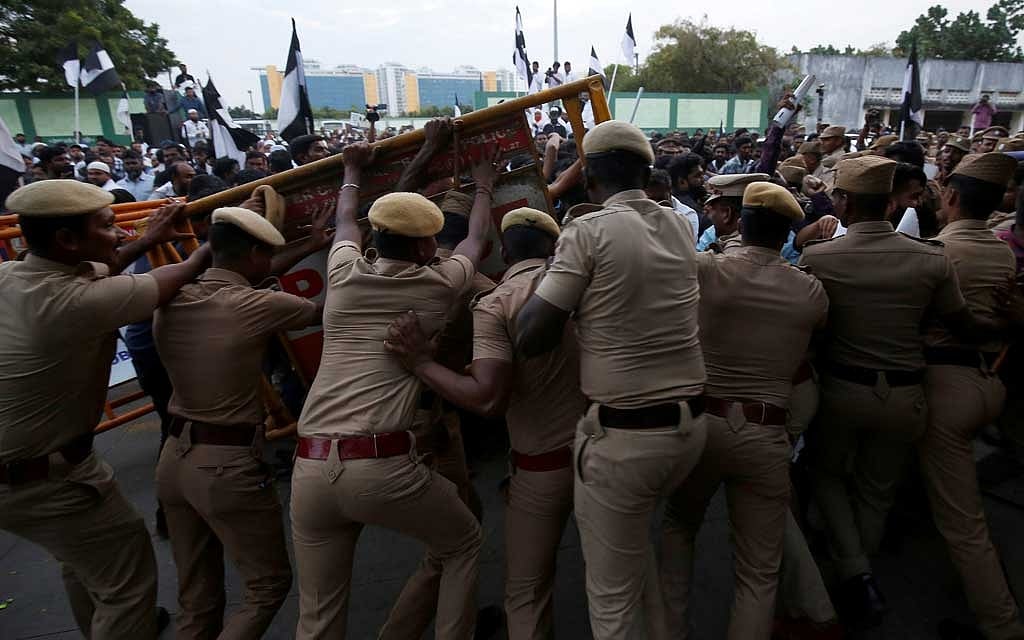
Police stop demonstrators during a protest against a new citizenship law, in Chennai, India, December 18, 2019. REUTERS
"This government wants to turn us into second-class citizens," he said, as several hundred protesters around him raised slogans, held up banners, and waved the Indian flag.
On Wednesday, police fired shots in the air in a Muslim-dominated part of Delhi to repel thousands of demonstrators throwing stones and glass bottles, demanding the law be withdrawn.
In the northeastern state of Assam, which has seen some of the most violent protests against the CAA, thousands of people came out on the streets of several cities on Wednesday.
"We shall continue with our agitation till we get a favourable response from the Supreme Court," said Samujjal Bhattacharya of the All Assam Students' Union.
In West Bengal state, where some protests have also turned violent, four people were injured in scuffles in the Uttar Dinajpur district after a procession against the CAA, local official Arvind Meena said.










