


Published : 02 Jul 2019, 07:05 PM
Updated : 17 Oct 2022, 11:42 AM


Rakhine state, a ribbon of marsh and mountain on the western coast of Myanmar, is isolated in the best of times, racked by guerrilla warfare and ethnic violence that takes place far from international scrutiny.
Now, an internet blackout has all but severed parts of the state from the outside world, in a dramatic display of how easily a government can silence a population in the digital age.
“The internet will resume when stability is restored in that area,” said Myo Swe, chief engineer for Myanmar Posts and Telecommunications.
The blackout, which came at the behest of the Ministry of Transport and Communications, was “for the benefit of the people,” Myo Swe said.
Government-mandated internet or social media shutdowns, which have occurred with increasing frequency in places like Sri Lanka, Indonesia and Sudan, are often deemed necessary for silencing the kind of innuendo and rumour that causes online mobs to catalyse real ones.
But such telecommunications embargoes can be designed to foil members of the political opposition as well. And they can particularly hurt vulnerable communities in conflict areas, who depend on internet connections to keep them out of the crossfire or publicise abuses in remote locations.
“I’m worried that there will be more human rights violations during the internet shutdown,” said Aung Thaung Shwe, a member of Parliament from Buthidaung Township in northern Rakhine state, where civilians have been killed as hostilities have increased between insurgents from the Rakhine ethnic group and the Myanmar military.
“It seems like the internet shutdown is only for the military’s sake,” he added. “It destroys the rule of law and security.”
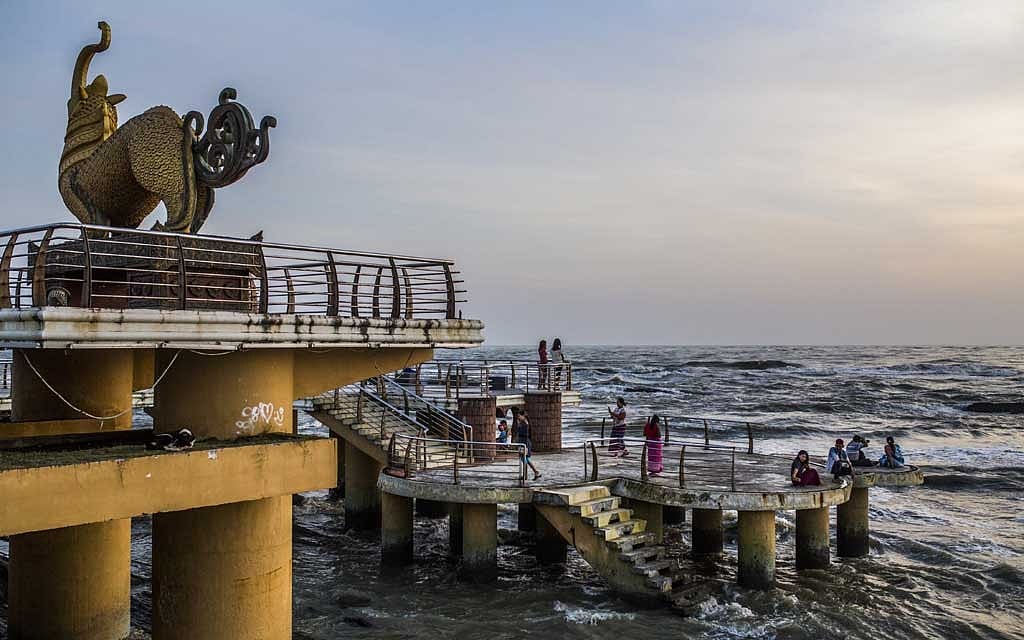
A seaside scene in Sittwe, the capital of Rakhine State in Myanmar's far west, Sept. 8, 2018. As the suffering of Rohingya Muslims wins global sympathy, the Buddhist Rakhine ethnic group in the country’s far west seeks recognition of its own oppression. (Minzayar Oo/The New York Times)
Telenor Myanmar, one of the nation’s largest cellular providers, said in a statement that “freedom of expression through access to telecoms services should be maintained for humanitarian purposes, especially during times of conflict.”
The United States joined the condemnation, saying that the shutdown “has curtailed some forms of internet-based communication for as many as one million people,” according to a statement by Morgan Ortagus, a State Department spokeswoman.
“Internet service should be restored without delay,” Ortagus said, to “limit further damage to Burma’s international reputation.”
The United States refers to Myanmar by its previous name, Burma.
Once hailed for what its army leaders portrayed as a peaceful transition toward democratic governance, Myanmar has had its reputation battered by continuing military aggression, most notably against ethnic minorities, who make up at least one-third of the nation’s population.
The nation’s civilian leader, Aung San Suu Kyi, the recipient of a Nobel Peace Prize, has declined to speak up for besieged groups or to publicly hold the military to account.
Since 2017, more than 700,000 Rohingya Muslims have been expelled from Myanmar, in a murderous campaign that some United Nations officials say may constitute genocide. The pogroms by the Myanmar military were aided by mobs of ethnic Rakhine Buddhists.
This year, a long-simmering ethnic Rakhine insurgency exploded as well, complicating the security landscape in an already wounded region. The Arakan Army, an ethnic Rakhine armed group that claims 7,000 soldiers, has launched fatal raids on Myanmar soldiers.
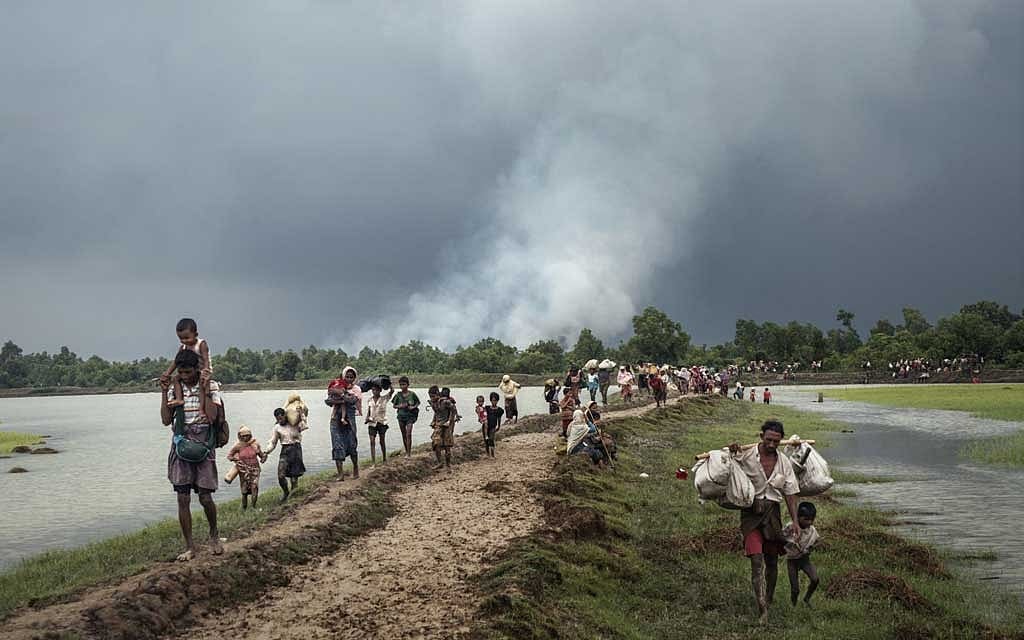
FILE -- Rohingya refugees press on after crossing the Naf River, as villages in Myanmar burned in the distance, near Palong Khali, Bangladesh, Sept. 4, 2017. The release of two journalists after 16 months in prison does not otherwise move the needle for freedom of expression and other rights that are in jeopardy in Myanmar, analysts and activists said. (Adam Dean/The New York Times)
Yanghee Lee, the UN special rapporteur on human rights in Myanmar, said that the internet suspension could be designed to cloak abuses by the military, known as the Tatmadaw.
“I am told that the Tatmadaw is now conducting a ‘clearance operation,’ which we all know by now can be a cover for committing gross human rights violations against the civilian population,” Lee said. “We must not forget that these are the same security forces that have so far avoided accountability for the atrocities committed against the Rohingya in Rakhine state less than two years ago.”
Lee, who has spoken out in defence of Myanmar’s persecuted ethnic groups, has been barred from the country.
This time around, the internet blackout in Rakhine was again due to social media excesses, said Brig. Gen. Zaw Min Tun, a spokesman for the Myanmar military.
“There is racial hatred in Rakhine,” he said, “because of racial hate speech and propaganda on social media.”
Under pressure for having allowed hate speech to fester on its platform, Facebook has taken down accounts associated with the Arakan Army and the Myanmar commander in chief. But far more incendiary accounts have not been banned.
© 2019 New York Times News Service







