


Published : 02 May 2016, 01:27 AM
Updated : 19 Oct 2022, 05:14 PM


An embassy statement used the word to refer to the stateless Muslims in western Myanmar’s Rakhine State. The protesters chanted slogans such as “those who use the word Rohingya are our enemies!”
“This was unthinkable even a few months before,” said Editor-in-Chief and Managing Director of Mizzima Media Group Soe Myint.
“They could not speak in the past. Now everybody is talking. Everybody is demanding something,” he told a group of Bangladesh journalists currently visiting Yangon, the former capital of Myanmar.
Aung San Suu Kyi’s National League of Democracy (NLD) took office on Mar 30, ending over five decades of military rules and opening a new era in Myanmar’s history.
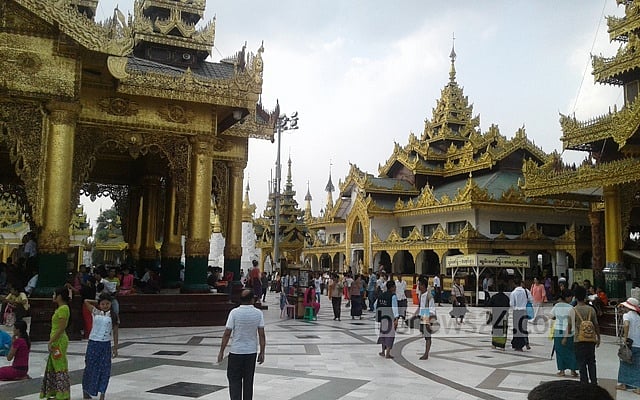
Western tourists have started descending on the once-secluded southeast Asian state. They have even wrapped around sarongs which is known as lungis, traditional attire for Burmese men and women.
Tourists abuzz in Yangon
The decades of isolation has crippled the economy of Myanmar which is otherwise rich in resources including oil, gas and timber.
The new government’s to-do list is getting longer as the people are raising their voices.
“We always had electricity and gas crises. Now people want them. They make demands. Earlier, they could not do that. Now everybody’s expectation is very high,” Myint said.
“The government is struggling. They had taken 100 days agenda to meet public demands.”
Though the first general election since 1962 installed Suu Kyi in power last month, the reform process began some five years back when the country opened up to the world with the lifting of western sanctions.
In 2009, a mobile-phone SIM card would cost $2000, now it is only $1.5.
Mobile-phone users has jumped quickly to 87 percent of the population. Even in 2011, less than 2 percent people had internet access. But now, the editor-in-chief says, it is over 70 percent.
People have taken to social media to make demands. “They are even writing about the traffic problem on Facebook,” he said.
“The reform process basically started after 2012,” said Thiha Saw, Executive Director of Myanmar Journalism Institute.
Tourists start crowding Mya
Now things have totally changed. Journalists are working to update policies to become “self-regulated”.
But the military has not relinquished its grip on power as it still retains control of three key ministries –defence, home affairs and border affairs.
It also has 25 percent of the seats in the parliament that means the Suu Kyi government cannot change Constitution. To do that, she will need 75 percent plus one majority.
But she is smart, Saw said. “She is working with everybody who shows efficiency, honesty and loyalty.”
“In the foreign policy she has already hinted that she will come up with a new approach. She will work closely with the neighbours,” he said.
The Bangladesh embassy in Yangon has also stepped up efforts to close the “gap in understanding” between the countries.
It has arranged a series of meetings with the senior journalists and the ruling party representatives in Yangon for the visiting journalists to improve the people-to-people contact.
The relations have strategic importance, since Myanmar is the gateway to China and ASEAN economies besides being a potential supplier of natural gas.
But the new Myanmar could be a challenge for Bangladesh, as it also stitches clothes.
Bangladesh is a leading exporter of readymade apparels to Europe and the US, mainly due to its cheap labour.
But with rising labour costs, and Bangladesh not being able to supply a wide variety of clothes particularly for women, buyers are looking for new markets.
The new stable Myanmar could be the next destination for the buyers, analysts say.













