


Published : 11 Apr 2019, 02:33 AM
Updated : 17 Oct 2022, 11:38 AM


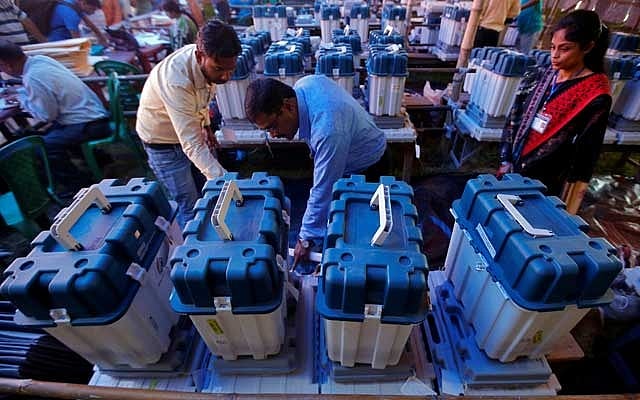
Voting in the first of seven rounds will be held in 91 constituencies across 20 states and federally-administered regions, amid tightened security, stepped up after violence killed seven people on Tuesday.
Pollsters say Modi's ruling Hindu nationalist Bharatiya Janata Party (BJP) has been riding high on his tough stance against Pakistan, after aerial clashes between the nuclear-armed neighbours followed a February attack by an Islamist militant group that killed 40 Indian paratroopers in disputed Kashmir.
But the main opposition Congress party, which wrested three major farming states from the BJP in December by promising to waive the outstanding loans of distressed farmers, sought to corner the government on a lack of jobs and weak farm prices.
The election was open but in favour of Modi's coalition, said Gilles Verniers, a political science professor at Ashoka University near New Delhi.
"The gap between Congress and the BJP is still enormous, so no one is seriously thinking that Congress is going to fill that gap," he added. "The opposition landscape remains heavily fragmented."
The alliance led by Modi's BJP is poised to win a narrow majority of 273 of the 543 seats at stake, an average of four opinion polls showed.
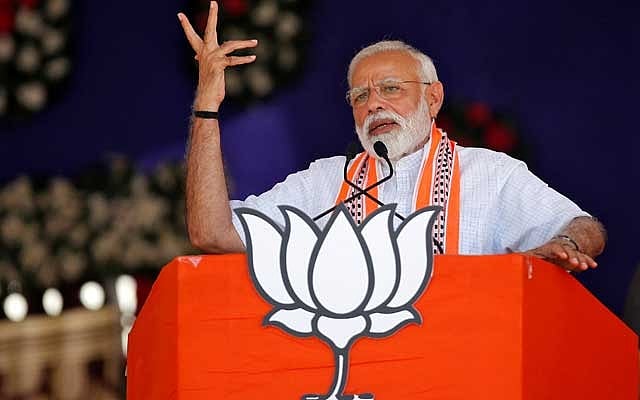
India's Prime Minister Narendra Modi addresses an election campaign rally in Junagadh, Gujarat, India, April 10, 2019. Reuters
In the northern state of Uttar Pradesh, which sends more lawmakers to parliament than any other, Ajesh Kumar, who runs a roadside restaurant, said he voted for the BJP in 2014, when Hindu-Muslims riots in the area killed at least 65 people, and would do so again.
"But jobs are a problem here," he said, echoing government and private statistics that show Modi's government has failed to create enough jobs for the burgeoning workforce in a population of 1.3 billion.
More than 142 million Indians are eligible to vote in the first phase, of a total of 898.9 million. Votes in the seven rounds, spread over 39 days, will be counted on May 23.
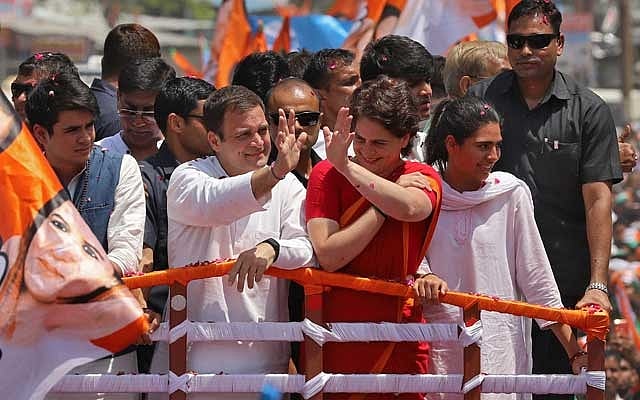
Rahul Gandhi, President of India's main opposition Congress party, and his sister Priyanka Gandhi Vadra wave towards their supporters before Rahul filed his nomination papers for the general election, in Amethi in the northern state of Uttar Pradesh, India, April 10, 2019. Reuters
A Reuters analysis of 50 pledges from the BJP’s 2014 manifesto showed Modi only partly fulfilled, or did not fulfil, most promises on the economy and business.
Congress, which won only 44 seats last time around, is betting a promise of monthly handouts of 6,000 rupees ($86.59) for the poorest families will boost its performance now.
It hopes to win enough seats to lure regional parties opposed to Modi to back it after the election and form the government. ($1=69.2900 Indian rupees)







