


Published : 07 May 2016, 04:38 PM
Updated : 11 Apr 2022, 09:53 PM


"When we say we have a new variant of Agni missile, the media starts saying we can now hit Chinese cities like Beijing and Shanghai," said the former army chief."That upsets our neighbours."
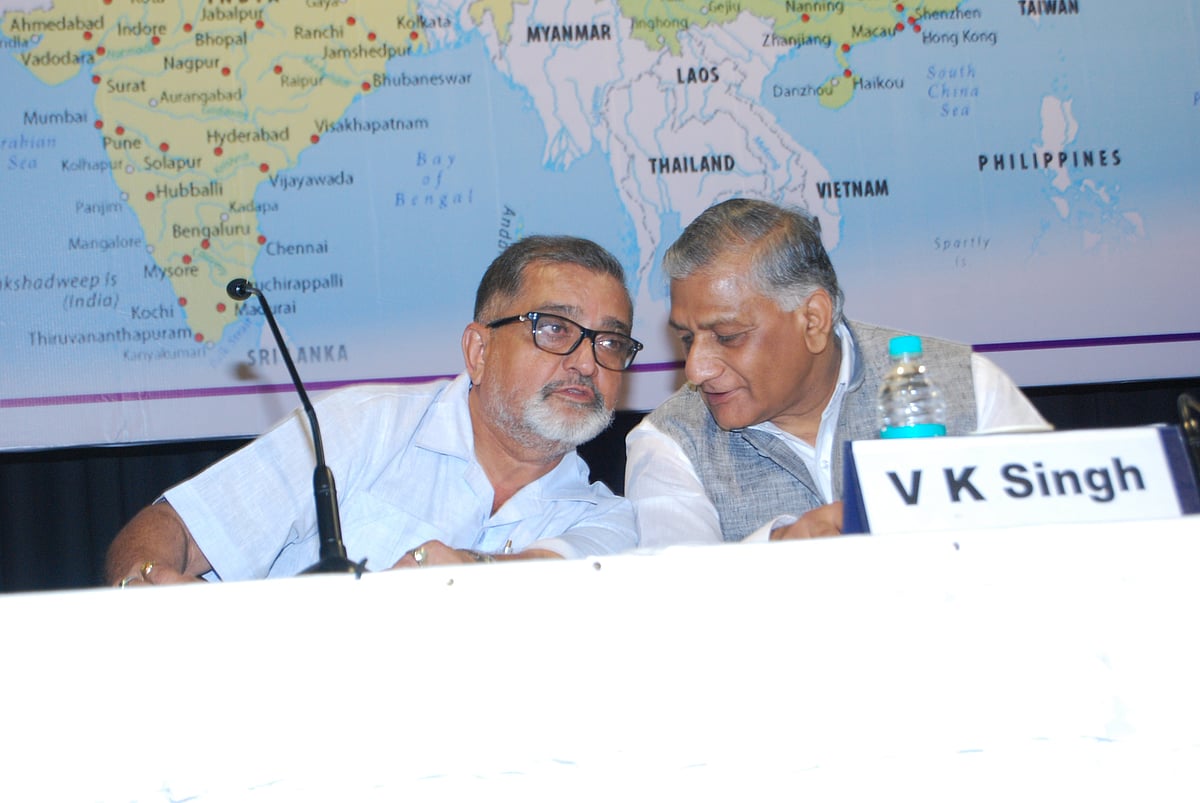
Delivering the valedictory speech at a seminar on India-China relations organised by Calcutta-based think tank CENERS-K, Singh said 'aimless speculations in the media often has adverse reactions in our neighbourhood'.
"Sometimes, I have been told by officials of our neighbouring countries about the need to control Indian media. I told them it is not possible but I must advise the media to carefully report developments between India and other countries," retired General V K Singh said.
Though the seminar organisers left no time for interaction, some journalists tried to point to the crisis in India-Myanmar relations last year that was caused by politicians rather than the media.
It was Singh's colleague and fellow soldier RS Rathore who had caused a flutter when he told a TV channel that Indian special forces had entered Myanmar to attack rebel bases.
"Myanmar was so upset that Indian ministers had made it public that refused to extend any further cooperation on tackling insurgency. National Security Adviser Ajit Doval and Foreign Secretary S Jaishanker had to rush to Yangon to control the damage," said senior journalist Samir Purkayastha.
In his career, Purkayastha had also illegally crossed into Myanmar to meet Naga rebel leader SS Khaplang and interview him.
"But I was more responsible than Rathore. I never bragged about my border crossings, as some journalists do these days," he said.
But VK Singh was positive about the future of good relations with China.
"We need their investments, we need their capital, especially in infrastructure," he said.
Singh said the Modi government was 'realistic' in dealing with China.
"A good military is a country's insurance, we will not lower our guard, but we have many areas in which relations with China can and will improve."
Former national security adviser M Narayanan advised caution, saying the Chinese are tough negotiators and 'not easy to deal with.'
"They are focussed, they know their place in the world, and where they are going, so if we are not careful, we may lose out," Narayanan said.
But senior diplomat and ambassador TCA Rangachari said India should not practise 'double standards'
"If we seek Chinese investments in our infrastructure, why should we ask our neighbours not to accept them," he said.
He warned against 'trusting the US too much.’ "We should not get into a confrontation with China on US prodding. We should not forget 1971 and many such occasions when US has let us down," he said.
Former army chief Shankar Raychoudhury said India and China will move forward on three Cs—cooperation, competition and sometimes, confrontation.
Chinese consul-general Ma Zhanwu, however, disagreed that China and India can create 'a totally win-win situation and grow together'.
He said India and China can dramatically improve their relations with some focussed confidence building measures.
Most participants said China's special relations with Pakistan and the disputed boundary were the two major issues adversely impacting on bilateral relations.
"If these are tackled, the rest will fall in place," said former Indian ambassador to China CS Dasgupta.













