


Published : 11 Apr 2019, 10:24 AM
Updated : 08 Apr 2022, 02:07 PM


Here’s a short guide to the biggest election in history.
WHY DOES THIS ELECTION MATTER?
The governing party, led by Prime Minister Narendra Modi, has pushed a Hindu-nationalist ideology, including emphasizing Hindu religion in school textbooks and intensifying animosity with Muslims over holy sites. India’s minorities say they feel increasingly afraid.
If Modi wins again, experts expect the country’s religious divisions to widen. If the leading opposition party, the Indian National Congress, wins, some hope that minorities will be better protected. But the Congress party also has a long history of corruption.
Outside nations are watching closely. India is the world’s second-most populous country, after China, and maintains good relations with both Russia and the United States. U.S. officials would love to turn India into a close military ally to check China.
WHO IS RUNNING?
Modi’s Bharatiya Janata Party, India’s largest party, has dominated the government since 2014. It believes India should have a stronger Hindu identity, and Modi is known as a stirring orator and savvy tactician.
The Indian National Congress led India for most of the nation’s post-independence history. This secular, center-left party’s leader is Rahul Gandhi, whose father, grandmother and great-grandfather were prime ministers.
There are also five other national parties, 26 state parties and more than 2,000 smaller political parties registered in this year’s election.
WHEN WILL WE FIND OUT THE RESULTS?
Voting lasts five weeks — it’s held in seven stages beginning Thursday and ending May 19. All of the voting is electronic, and ballots will be counted May 23. Counting usually takes a couple of hours, and the results are announced that day.
Many Indians vote along caste or religious lines, but voters also tend to switch between the major parties from election to election. Turnout is high (it was nearly 70 percent during the last election), and Indian voters are famous for throwing out incumbents.
Rural and urban voters have their own core issues. Many farmers, in particular, are desperate for subsidies. Many urban dwellers face increasing pollution and overburdened transport networks. Megacities like New Delhi and Mumbai each have more than 20 million residents.
Urban voters are upset about how hard it is to find a job. India’s economy is still growing quickly — around 6.6 percent in 2017 — but more and more Indians are out of work. Couple that with rising oil prices that push up inflation, and many urban Indians say they are worse off than they were five years ago.
Yet most Indians still live in rural areas. In 2014, more than 60 percent of the votes BJP received were from rural voters. This year, intense economic stress caused by severe droughts and stagnant farm incomes has made the party less popular among the 260 million Indians in farm families.
The Congress party has tapped into this frustration, pledging to guarantee a minimum basic family income of around $1,000 a year.
WHO’S GOING TO WIN?
Gains are expected for the Congress party, which performed poorly in 2014. But the most recent polls predicted that the coalition of parties led by the BJP could keep its majority in Parliament, paving the way for Modi to secure another five-year term as prime minister.
The magic number is 272 seats. Whichever party hits that number, outright or by building a coalition, chooses the next prime minister.
HOW WILL CASTE AND RELIGION AFFECT THE ELECTION?
Centuries ago, Hindu scriptures laid out a strict social hierarchy based on occupation. In many places, especially rural areas, those strictures, known as the caste system, continue to influence daily life, including politics.
Since independence in 1947, India has struggled to de-weaponize caste.
The Constitution includes specific protections for Dalits, who are at the bottom of the social hierarchy and make up about 15 to 20 percent of the population. The Congress party has positioned itself as the champion for Dalits.
Among upper castes, affirmative action programs have generated deep resentment, which Modi’s party has promised to address. Indians in the lower castes are still alarmed at how often they are targeted by hate crimes that are seldom prosecuted.
In the last election, the BJP was able to win some support from the lower castes, getting around 24 percent of the Dalit vote — it’s usually about half that. Modi’s appeal was based largely on support for a Hindu-centric worldview and his vows to run a clean, corruption-free government dedicated to economic growth.
India’s Muslims — numbering around 200 million, roughly 15 percent of the country’s population — remain influential. The BJP’s Hindu-centric politics have alienated many Muslims, and Congress is expected to win most of the Muslim vote. But Congress politicians are wary to side too publicly with Muslims, worried about being accused of abandoning Hindu beliefs.
CAN POOR INDIANS GET AHEAD?
Caste and religious divisions are factors in keeping India tied to one of the lowest rankings of social mobility in the world.
Only about 8 percent of Indians whose parents were in the bottom half in educational attainment rose to the top quarter, while the figures in most other countries exceed 12 percent.
The share of wealth that the top 1 percent in India holds has been growing steadily, eclipsing the share of wealth of the bottom half.
HOW IS UNEMPLOYMENT AFFECTING INDIA?
Most Indians are employed in informal sectors, such as farmhands, domestic workers, rickshaw drivers and recyclers.
Across the economy, Indians — and particularly the highly educated — are struggling to find jobs. Surveys consistently rate this as the No 1 voter concern, particularly among the young. This year Modi was accused of suppressing an official report showing that unemployment had reached a 45-year high.
And India’s portion of the working-age population that is either employed or actively seeking work has consistently declined.
The Modi government has not created nearly as many jobs as it promised, and a dearth of professional jobs is also a crucial issue. The government has refused to release recent survey data, but according to the State of Working India report, there are about 23 million unemployed people in the country, and more than one-third of them have graduate or higher levels of education.
Almost 1 in 6 highly educated Indians is unemployed.
In recent decades, India has made enormous progress lifting hundreds of millions of people out of poverty, improving literacy and life span, and turning its economy into a global powerhouse. But much of its economic might is based purely on the size of its population — 1.3 billion. The average Indian makes around $5 a day, on par with developing countries in sub-Saharan Africa.
India’s population remains young (with more than half younger than 25) and is growing quickly (the United Nations estimates that India will overtake China’s population by 2024). That makes the need for job creation even more critical.
In the next 30 years, more than 200 million Indians will enter the workforce, increasing pressure on an economy that is already facing record unemployment.
HOW DO WOMEN FACTOR IN?
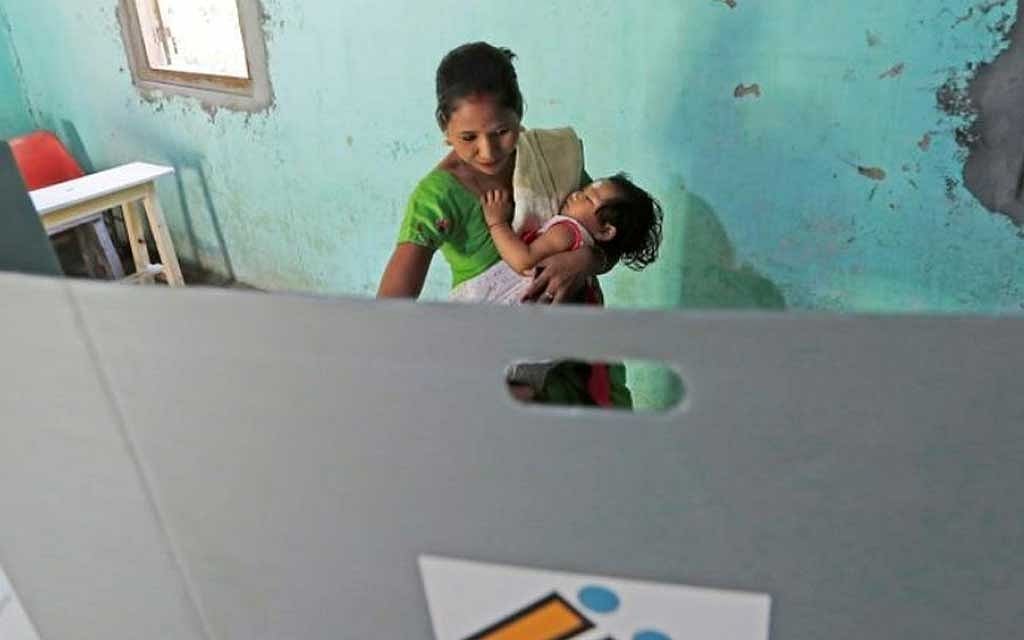
Women are a huge piece of India’s election puzzle, with a record number of female voters and candidates expected in this vote. But they are still often overlooked by the establishment: Women now hold only 11 percent of seats in the lower house, though they make up around 48 percent of registered voters. Forced marriage, forced labor and gang rape are distressingly common problems that Indian women still face.
Since December, Mafindo has documented a surge in political fake news using ethnicity and religion to target both candidates.
The organisation finds most worrisome the dozens of stories that paint electoral bodies as corrupt. This will be only Indonesia's fourth democratic presidential election.
Sasmito considers it a good result if fact-checked posts can reach even a small fraction of the audience the originals did.
Mafindo's work has made it some enemies. The group has received enough threats that it keeps its office address secret; Cefakta's website was hacked after a previous debate.







