


Published : 17 Dec 2019, 04:30 PM
Updated : 17 Oct 2022, 11:50 AM


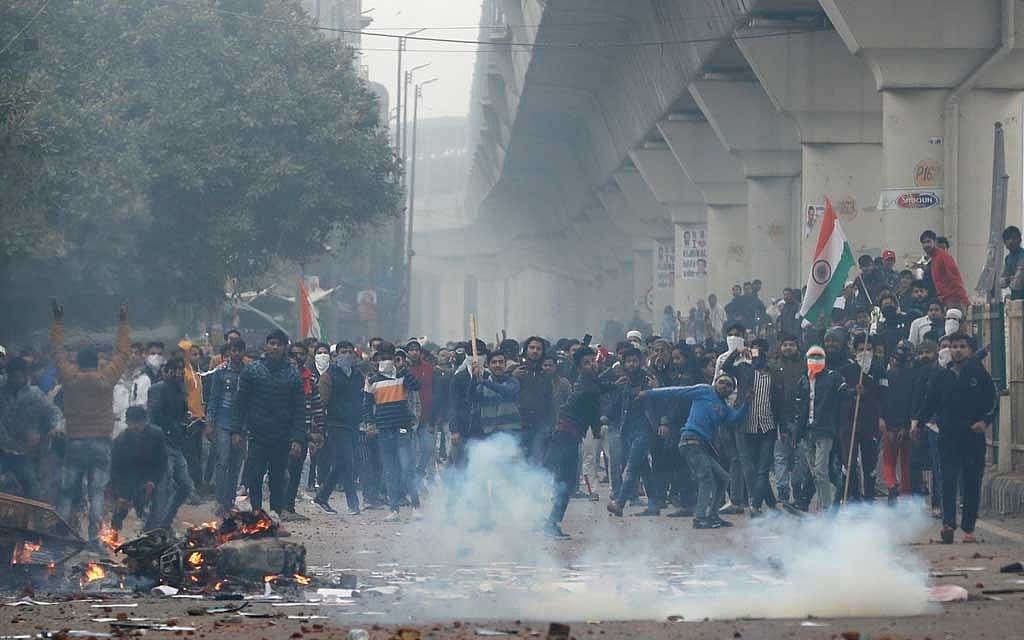
The situation spiralled out of control after demonstrators threw stones at policemen who were holding them at a barricade, police officer Rajendra Prasad Meena said.
In another demonstration in West Bengal state, protesters opposing the new laws hurled a homemade bomb at policemen, injuring three of them.
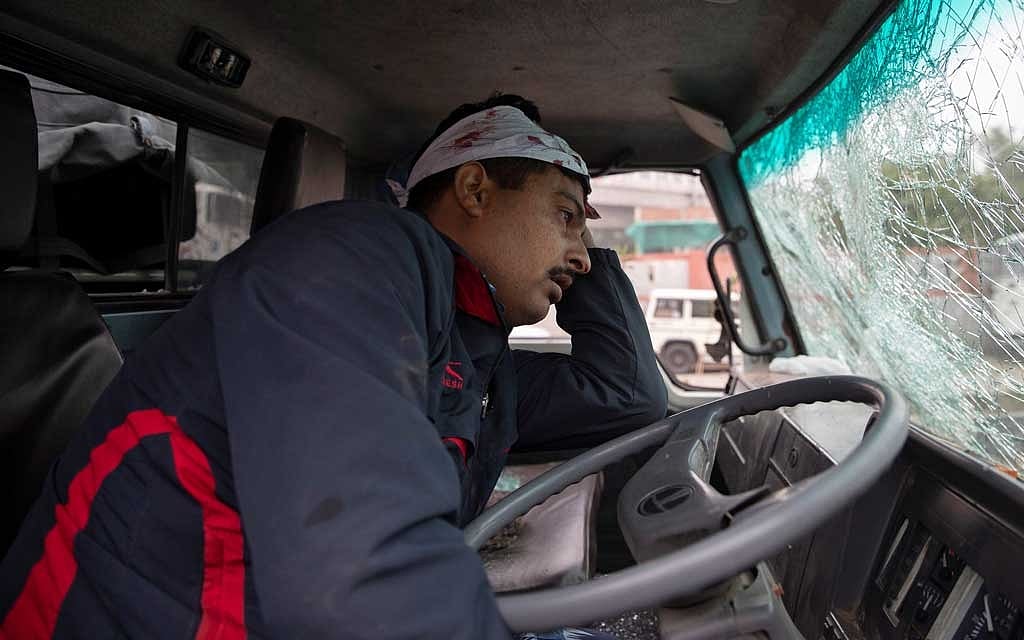
An injured policeman reacts after his truck was attacked by demonstrators during a protest against a new citizenship law in Seelampur, area of Delhi, India December 17, 2019. Reuters
Critics say it weakens India's secular foundations since it does not apply to Muslims, and fear it is part of a Hindu nationalist plan to marginalise the country's own Muslims.
Despite days of violent demonstrations, Prime Minister Narendra Modi's government dug in its heels on Tuesday.
"Both my government and I are firm like a rock that we will not budge or go back on the citizenship protests," Home Minister Amit Shah told the Times Network.
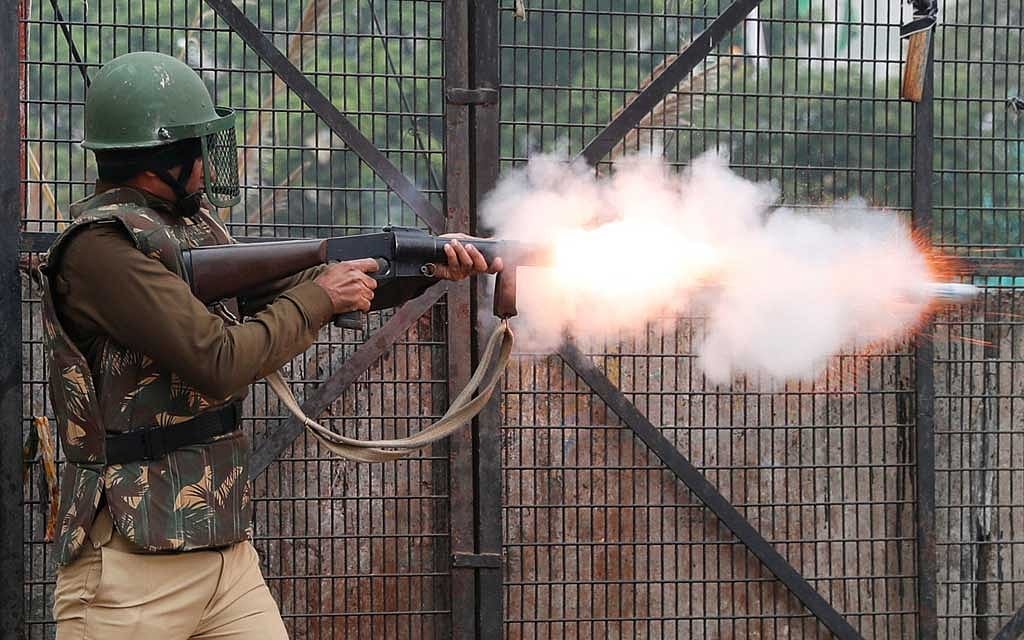
A riot police officer fires tear gas towards demonstrators during a protest against a new citizenship law in Seelampur, area of Delhi, India Dec 17, 2019. REUTERS
About 10 people, including policemen, had been brought in into the Jag Pravesh Chandra Hospital with injuries, a hospital official said.
A protester who gave his name as Sahil said the new law must be withdrawn.
"It is against the constitution," he said, holding up a poster as the crowd began to disperse.
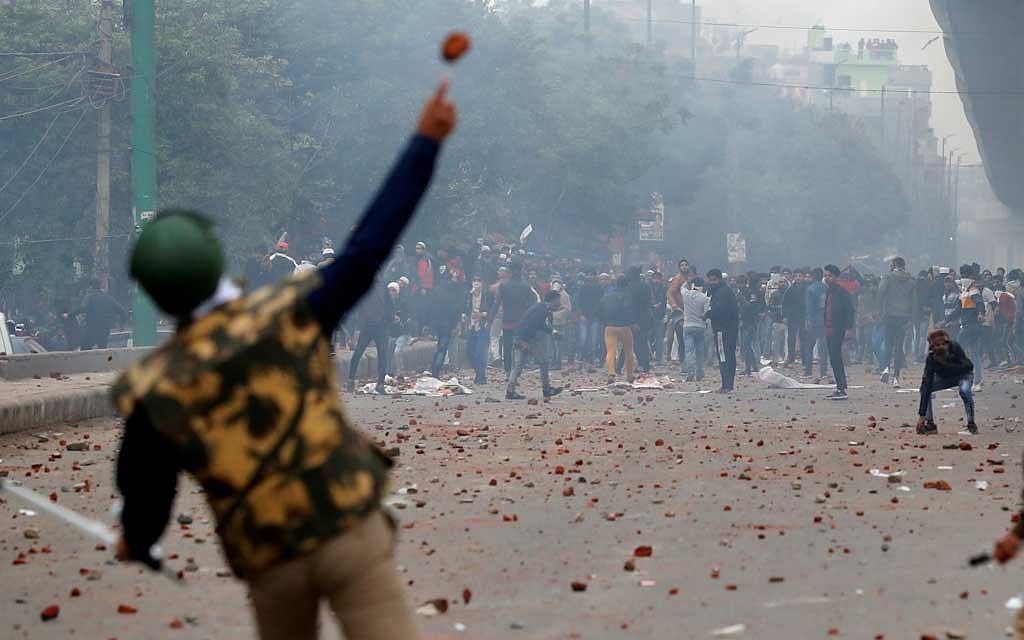
A police officer throws a piece of brick towards demonstrators during a protest against a new citizenship law in Seelampur, area of Delhi, India Dec 17, 2019. REUTERS
"We should protest against it, and we will protest against it. Neither is this a fight against the police, or a Hindu-Muslim issue. We only have a problem with the government," Daud said.
In Sankrail, West Bengal, protesters showered police with stones then hurled a homemade bomb at them, injuring three officers, a police official said.
Opposition against the Modi government's move has escalated in the eastern state in recent days, with its chief minister Mamata Banerjee leading large public rallies.
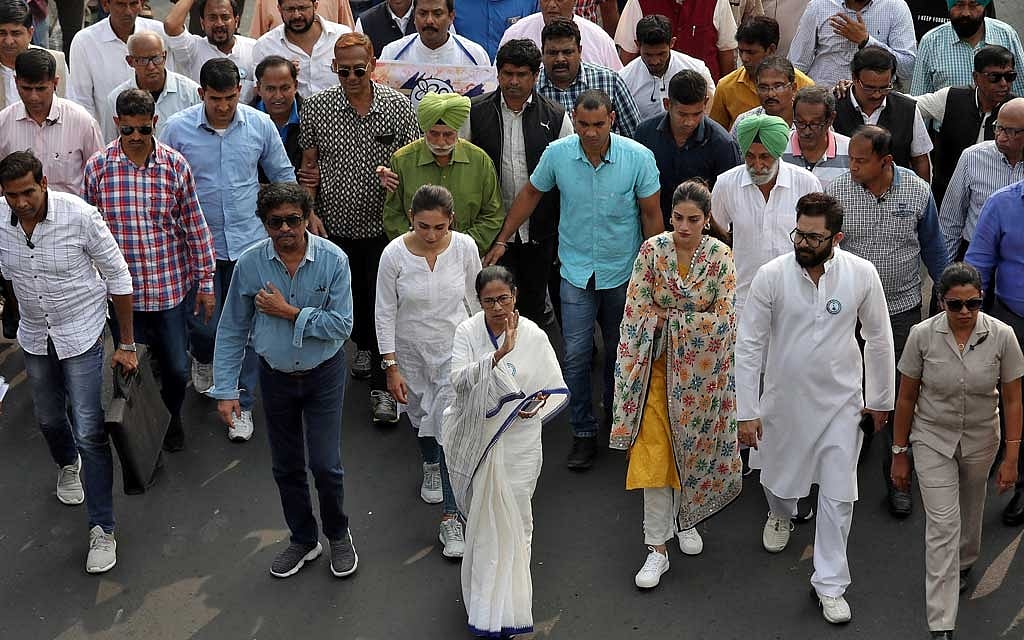
Mamata Banerjee, the Chief Minister of West Bengal, and her party supporters attend a protest march against the National Register of Citizens (NRC) and a new citizenship law, in Kolkata, India, December 17, 2019. Reuters
There have been growing questions about the stance of the government, led by Modi's Hindu nationalist party, towards India's 172 million Muslims, who make up 14% of the population.
The citizenship law follows the revocation of the special status of the Muslim-majority Kashmir region, and a court ruling clearing the way for the construction of a Hindu temple on the site of a mosque razed by Hindu zealots.
Pakistani Prime Minister Imran Khan said India's actions in Kashmir and on the citizenship law could drive Muslims from India and create a refugee crisis.
"We are worried there not only could be a refugee crisis, we are worried it could lead to a conflict between two nuclear-armed countries," Khan told the Global Forum on Refugees in Geneva.
Indian Foreign Ministry spokesman Raveesh Kumar said Khan was spreading "falsehoods".
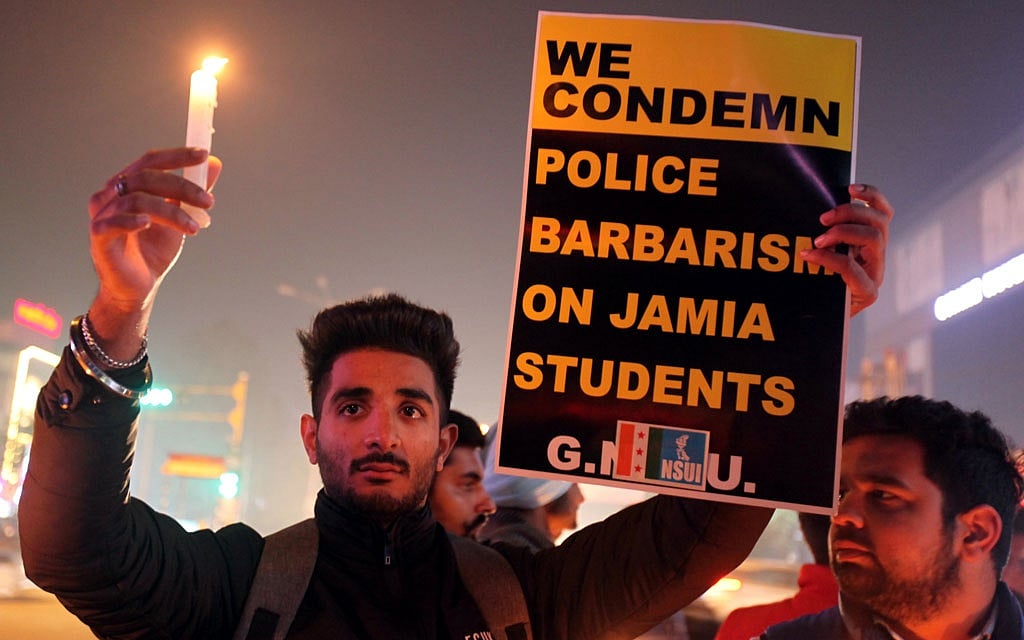
A demonstrator holding a candle and a placard attends a protest against a new citizenship law and to show solidarity with the students of New Delhi's Jamia Millia Islamia university after police entered the university campus on Sunday, following a protest against the new law, in Amritsar, India, December 17, 2019. Reuters
At least 100 people were wounded in the crackdown which has drawn criticism from rights groups.
Modi told a rally for a state election on Tuesday that his political rivals were trying to mislead students and others to stir up protests.
"This is guerrilla politics, they should stop doing this," Modi said.













